

Related Features
THE DANCE ENTHUSIAST ASKS: Daniel Gwirtzman Celebrates Pride & Creativity at New York City Center Studios
IMPRESSIONS: Dance Theatre of Harlem Presents New York City Center Season
IMPRESSIONS: Ballet Hispánico’s “Mujeres: Women in Motion” at New York City Center

By Lisa Jo Sagolla
View Profile |
More From This Author
Published on May 4, 2026
Stephanie Martinez's "Otra Vez." Photo: Steven Pisano
Línea Recta (Straight Line)
Choreography: Annabelle Lopez Ochoa
Music: Eric Vaarzon Morel // Costume Design: Danielle Truss // Lighting Design: Michael Mazzola
Lighting Reconstruction: Dominick Riches
Otra Vez, Otra Vez, Otra Vez (Again, Again, Again)
Choreography: Stephanie Martinez
Music: Francisco Tárrega & Andrew Vettoretti, Tárrega & Zane Merritt, Dolores Duran, Isolina Carrillo, Los Cuates
Costume Design: Holly Hynes // Set and Lighting Design: Julie Ballard
Tranca
Choreography: Cassi Abranches
Music: Beto Vilaris // Costume Design: Janaína Castro // Lighting Design: Clifton Taylor
Dancers: Amanda Bacallao, Amir J. Baldwin, Mia Bermudez, Thierry Blannchard, Antonio Cangiano, Francesca Levita, Matthew Mancuso, Dylan Dias McIntyre, Andrea Mish, Kevin Ortiz Lemus, Amanda Ostuni, Olivia Winston
April 23 - 26, 2026
Mujeres: Women in Motion, Ballet Hispánico New York’s two-program spring season at New York City Center, constitutes the third installment of the company’s Latina choreographer initiative, an effort started in 2017 to showcase work by Latina dance-makers.
I saw the opening-night Gala performance (Program B), which kicked off with the return of Annabelle Lopez Ochoa’s stunning Línea Recta (Straight Line), a 2016 piece introduced in the first Mujeres installment. It was followed by the company premiere of Stephanie Martinez’s Otra Vez, Otra Vez, Otra Vez (Again, Again, Again) (2019) and the world premiere of Tranca (Braid), an exhilarating contemporary dance by Brazilian choreographer Cassi Abranches.
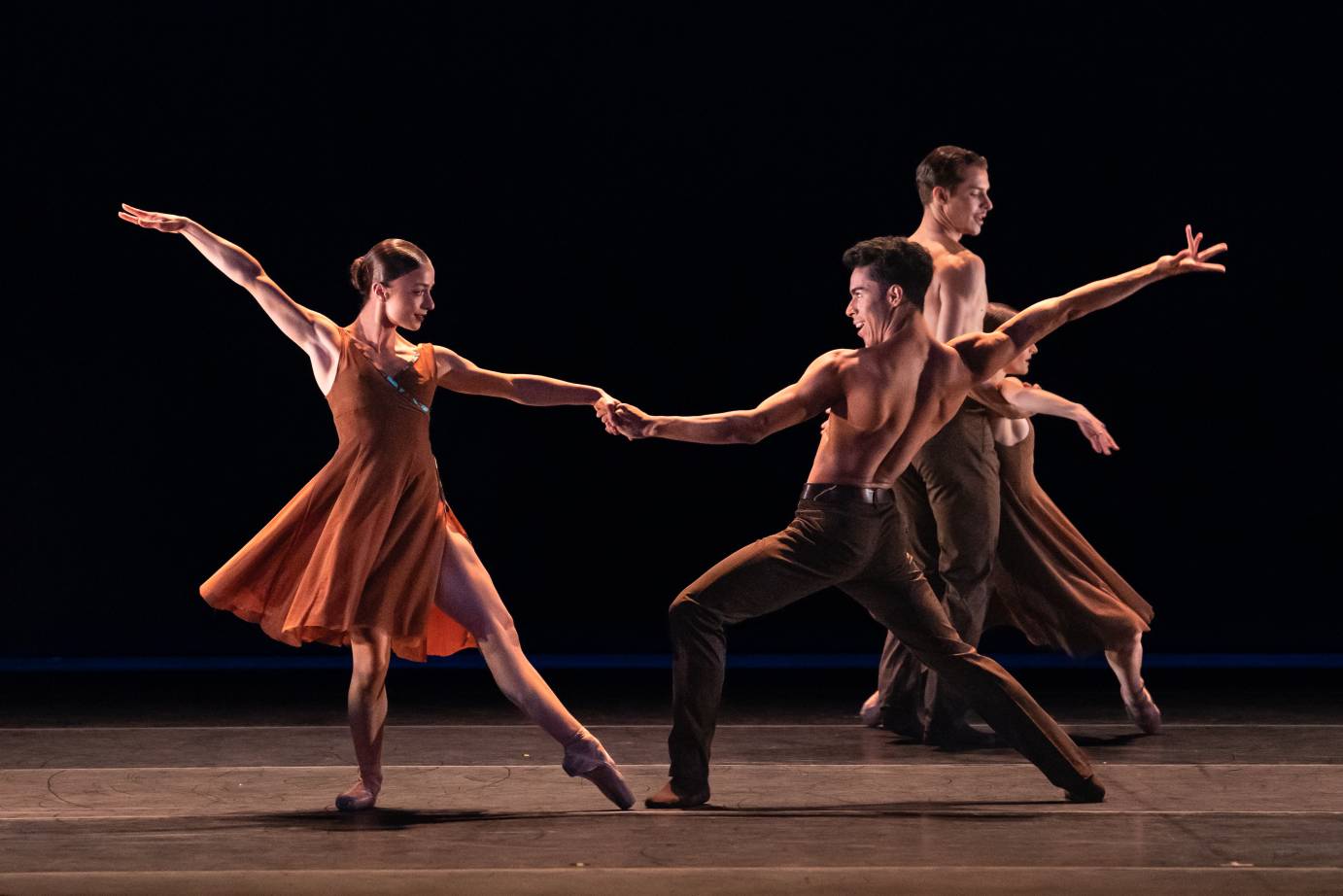
Amanda Ostuni, Thierry Blanchard, Dylan Dias McIntyre, Francesca Levita in Stephanie Martinez’s Otra Vez, Otra Vez, Otra Vez. Photo: Steven Pisano
Though the exciting program of three ensemble works spotlights the varying talents of its Latina choreographers, the real stars of the show are the Ballet Hispánico dancers who, under the artistic direction of Eduardo Vilaro, perform with fiery elegance, technical brilliance, and generous expressivity. There’s a uniformity to their sleek, contemporary-ballet approach that makes for wonderfully cohesive communal dancing, while in solo turns and partner-work individuals find distinct interpretive styles and heighten the movement kinetics, so we remain riveted by their performances, even in passages of lesser choreographic interest. (I’m thinking especially of Amir J. Baldwin and Amanda Ostuni, veteran company members whose dynamic dancing always catches my eye.)
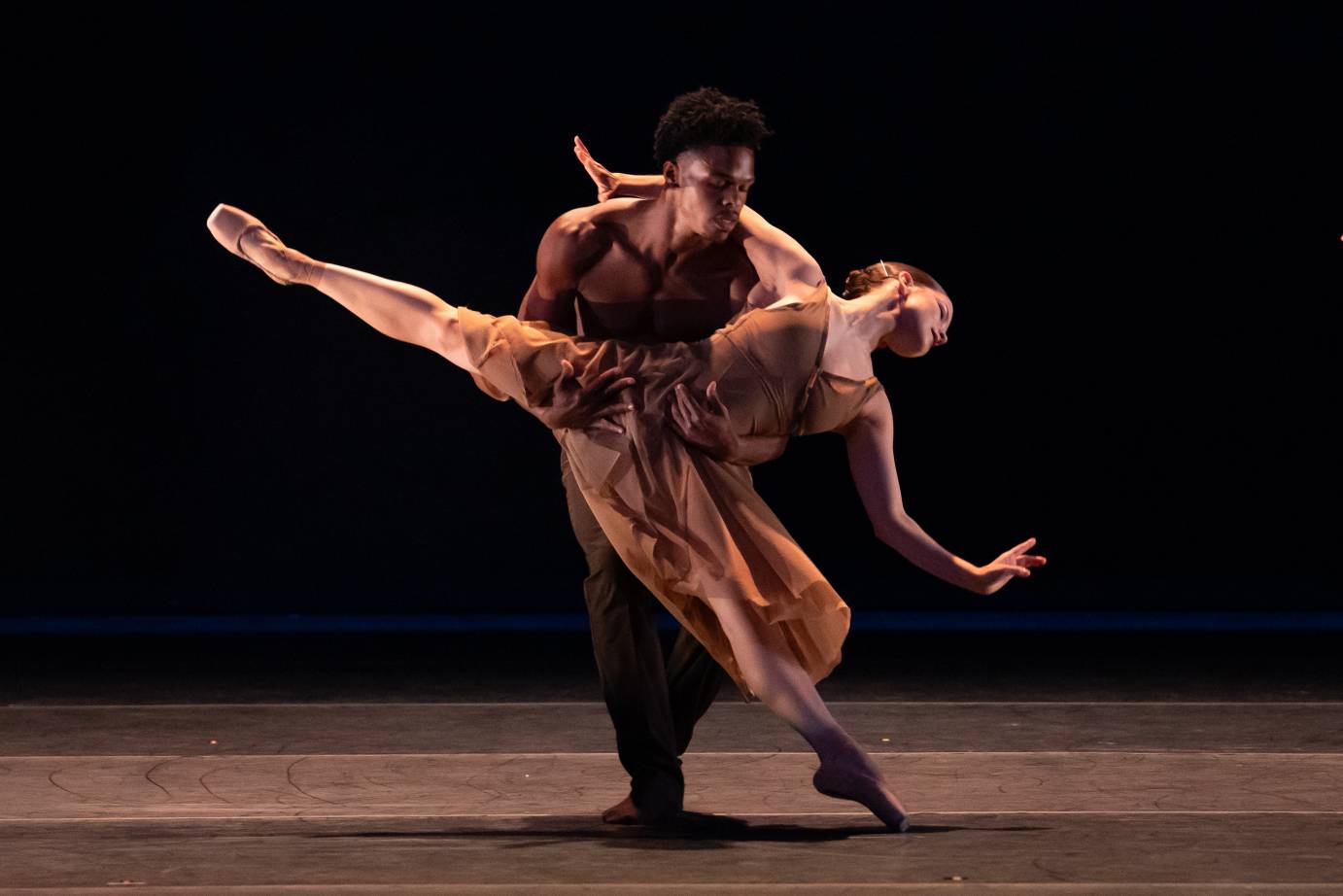
Amir J. Baldwin, Andrea Mish in Stephanie Martinez’s Otra Vez, Otra Vez, Otra Vez. Photo: Steven Pisano
Fittingly, the program opens with breathtaking suggestions of Spanish-inflected feminine beauty and leadership. The curtain ascends on Lopez Ochoa’s Línea Recta to reveal a lone female dancer. She stands center-stage, with her back to us, costumed in a fire-engine-red dress, flamenco’s traditional bata de cola, its long train fully stretched out along the stage floor. In silence, she entices with serpentine arm movements. As we start to hear the sounds of flamenco guitar, her dancing becomes full-bodied. She wraps herself in her train, grabs the skirt with her teeth, and is soon joined by a quartet of men to whom she lends her weight, and allows herself to be lifted, perched atop their shoulders or aloft in an arabesque position.
Program notes describe Lopez Ochoa’s piece as an exploration of partnering, an aspect of dance conspicuously absent from flamenco. But these men register not as the female’s partners, but rather her assistants. Though they twirl and flip her, she’s clearly in charge, demanding to be hoisted, or permitting the men to move in response to her moves. Her only real “partner” is her dress.
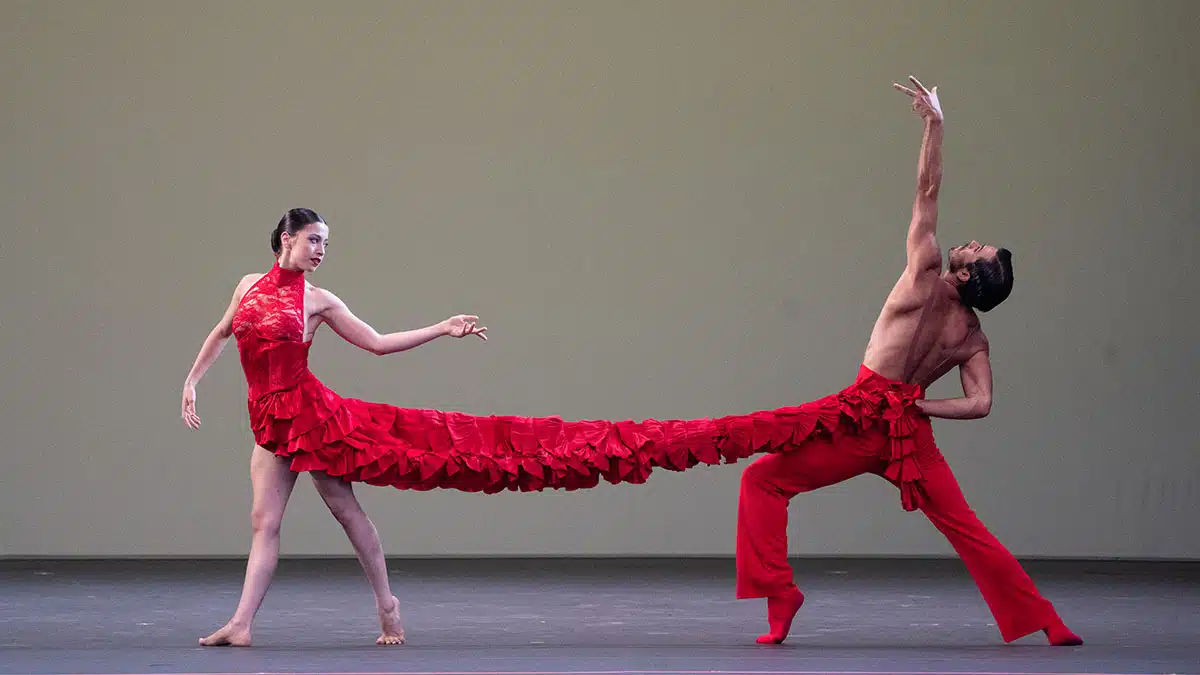
Annabelle Lopez Ochoa's Linea Recta. Photo (from previous performance) by Steven Pisano for 92Y
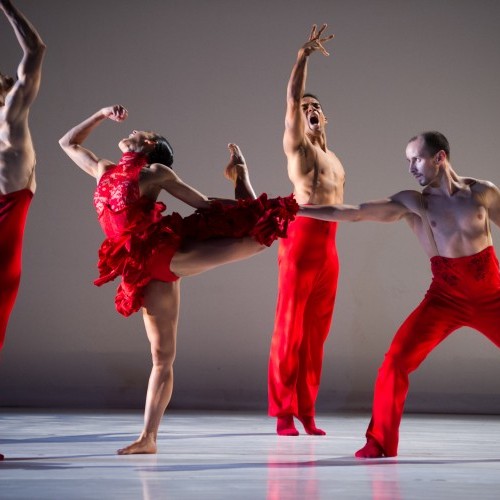
As the piece progresses, we also notice that she’s barefoot and the choreography is not purely flamenco, but rather the organic blend of ballet, modern, and Spanish dance genres that has formed Ballet Hispánico’s signature style Continuing to explore notions of partnership in a flamenco context, Lopez Ochoa’s neatly-crafted work proceeds through four additional segments, each “partnering” dancers with a different aesthetic element. First, it’s fans – held, fluttered, exchanged, and hidden behind, in ravishing reflection of tinkling guitar music and lacey lighting projections. Then to fast, furious guitar strumming, a quartet of women punctuate and propel their dancing with insistent hand clapping. A male foursome try teamwork. Lining up with arms around one another’s shoulders, they move majestically, contagiously, and acrobatically to deep, rich guitar melodies until a strong sense of camaraderie emerges. And finally, four couples wed with the spirit of the flamenco music as raucous vocals and driving rhythms push dancers to lift their flamenco footwork up onto relevé, take traditional shapes airborne into nifty leaps, and give themselves over to a stimulating music-movement partnership that’s terrifically entertaining to witness.
I have been watching Lopez Ochoa’s works since she made the decision, more than 20 years ago, to stop performing and devote herself fully to choreography, and I am never anything but blown away by her exquisite craftsmanship and the scope of her imagination — she never runs out of new ideas! One of the contemporary ballet world’s most prolific choreographers — Latina or otherwise — Lopez Ochoa was honored on this gala evening with Ballet Hispánico’s 2026 Artistic Inspiración Award.
Nevertheless, for me, the highpoint of the company’s performance was the program closer, Abranches’s alluring Tranca. Built of visually striking thematic vocabulary, its overall aesthetic combines a bare, exposed, earthiness with a stylish sauciness that makes it all feel grounded and natural, while simultaneously fresh and chic. Moving to a score that starts with watery, windy environmental sounds of nature and evolves into infectiously rhythmic, sometimes raw, often folksy, Brazilian music, the dancers first appear in tight beige and brown-toned leotards that make them look almost naked. They dance freely, barefoot, and joyously, their movements more modern-based than technically balletic. Even as the choreography takes on a Latin flavor, with undulating hip movements and fast foot steps reminiscent of Latin ballroom dancing, it’s as though we’re seeing the unadorned essence of those movements as they reside deep within the dancers’ bodies, not ornamented by swooshing skirts and shiny shoes.
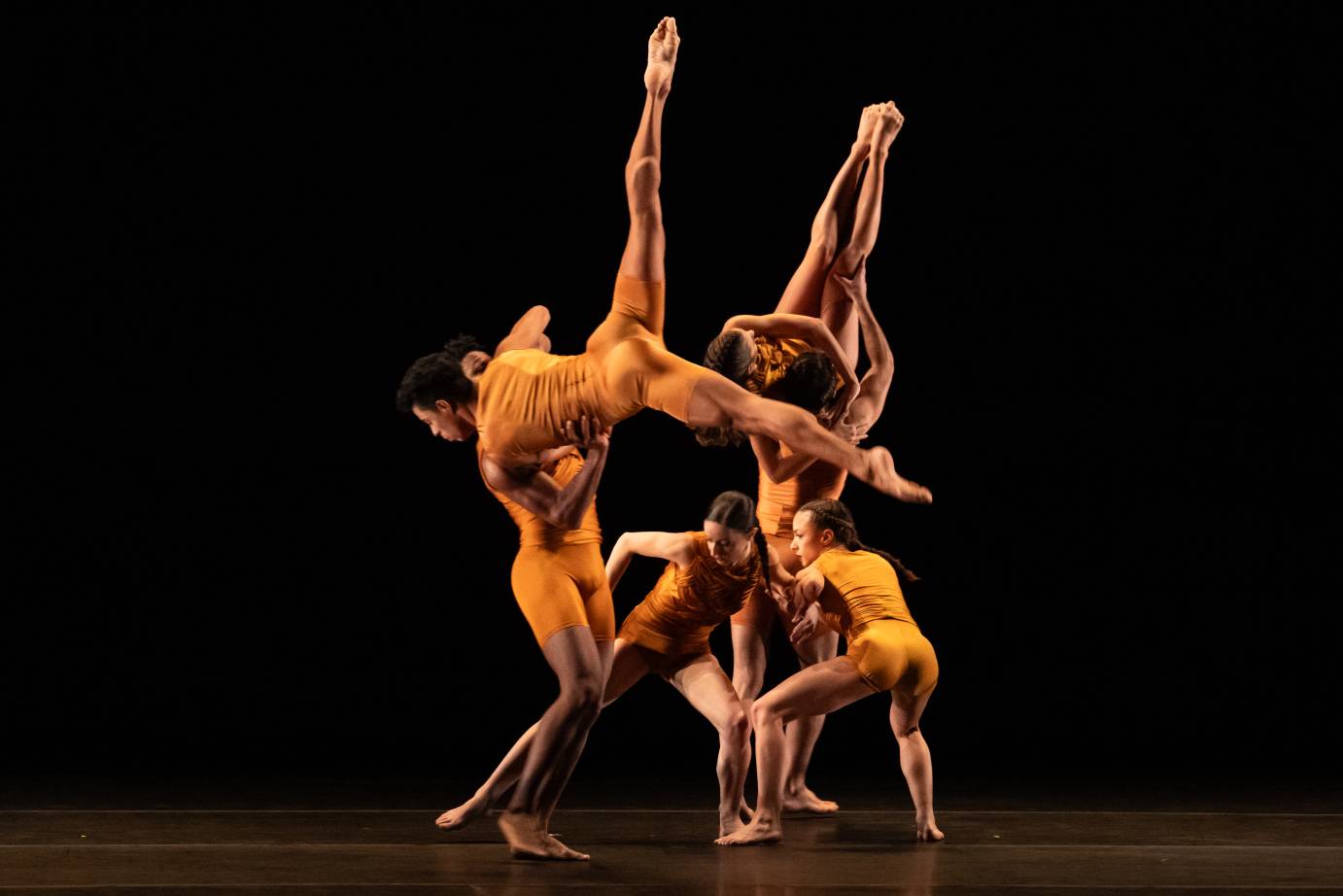
Amir J. Baldwin, Thierry Blanchard, Francesca Levita, Amanda Ostuni, Amanda Bacallao, Amir J. Baldwin in Cassi Abranches' Tranca. Photo: Steven Pisano
Though the pervading sensibility is untamed, the attention-snaring physical vocabulary is clean, cool, and precise. Dancers pulsate their chests with amazingly rapid, forceful, yet neatly isolated, contractions. They kick their legs up eye-high into elegant grand battements topped off with boldly flexed ankles. They form their arms into a bow-and-arrow shape, then quickly pull it in and pound their chest — as if to tell us their slick dancing is, nonetheless, “speaking from the heart.” And they do these funky little walks that epitomize “coolness.” With their torso tilted way back, they glide across the floor with impressive speed and fluidity, flicking their feet out in front of them on every step.
When a couple performs an amorous duet, they do so with a passion that feels honest, not dramatically over-heated. When they part, it’s sad, but that’s all, they don’t over-play it. And when the works builds to its electrifying finale, it’s the dancers’ revelatory embodiment of the choreography that generates the excitement. As the movements grow increasingly charged and accented, one “sees” the physical impulses surging through the dancers’ bodies in ways that really clarify our understanding of Abranches’s choreography.
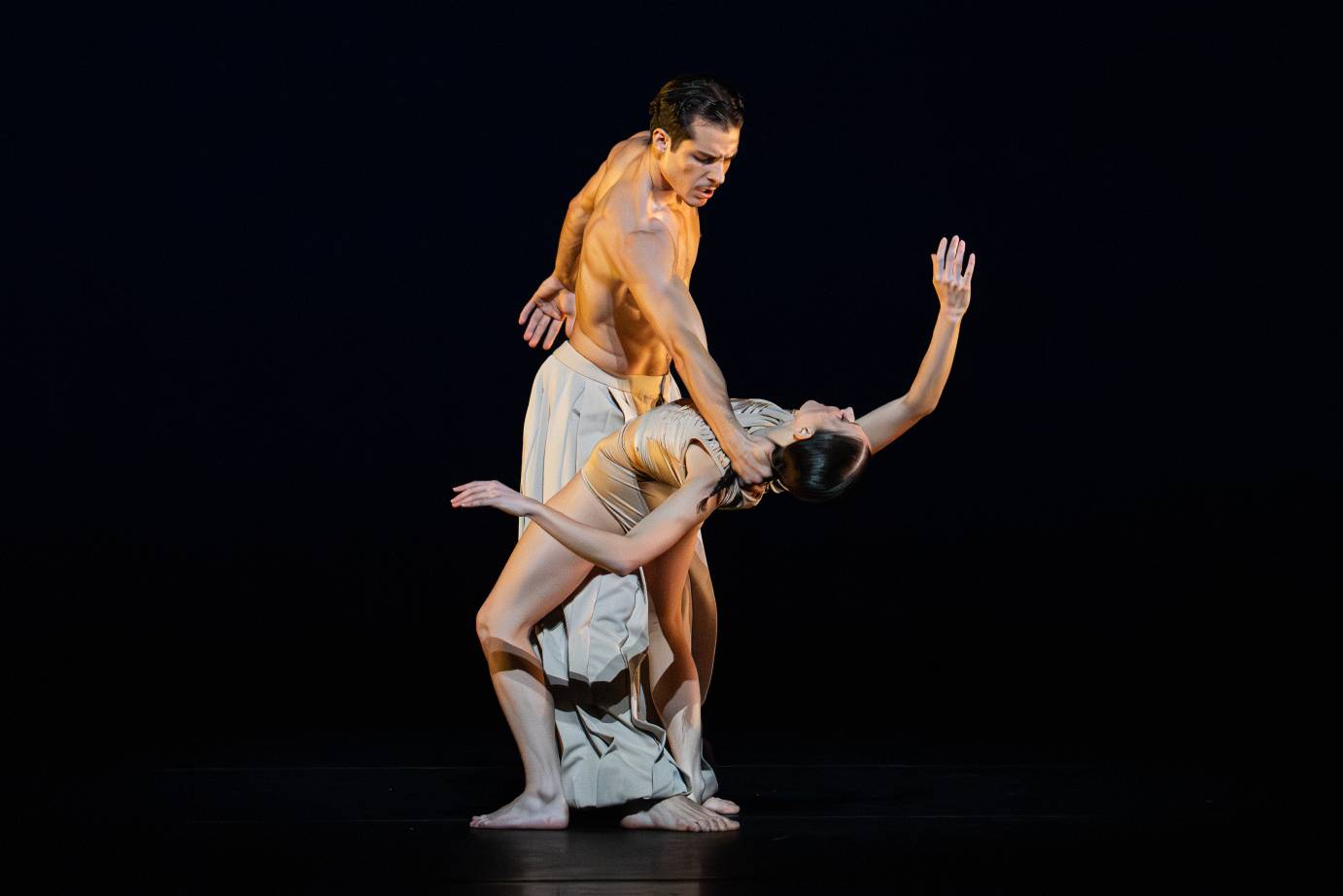
Dylan Dias McIntyre, Francesca Levita in Cassi Abranches' Tranca. Photo: Steven Pisano
Completing the program, Martinez’s Otra Vez also benefitted immeasurably from the dancers’ committed performances. Her contemporary ballet (the only piece on the program danced on pointe) was inspired by Picasso’s The Old Guitarist and reflections on the fleeting nature of human connections, yet such inspirations are not evident. What one sees is a disjointed ensemble work built of challenging, Forsythe-influenced, contemporary ballet vocabulary that changes very little from one section to the next, despite the wide range of moods put forth by its emotion-laden score of Spanish and Latin-American instrumental and vocal music.
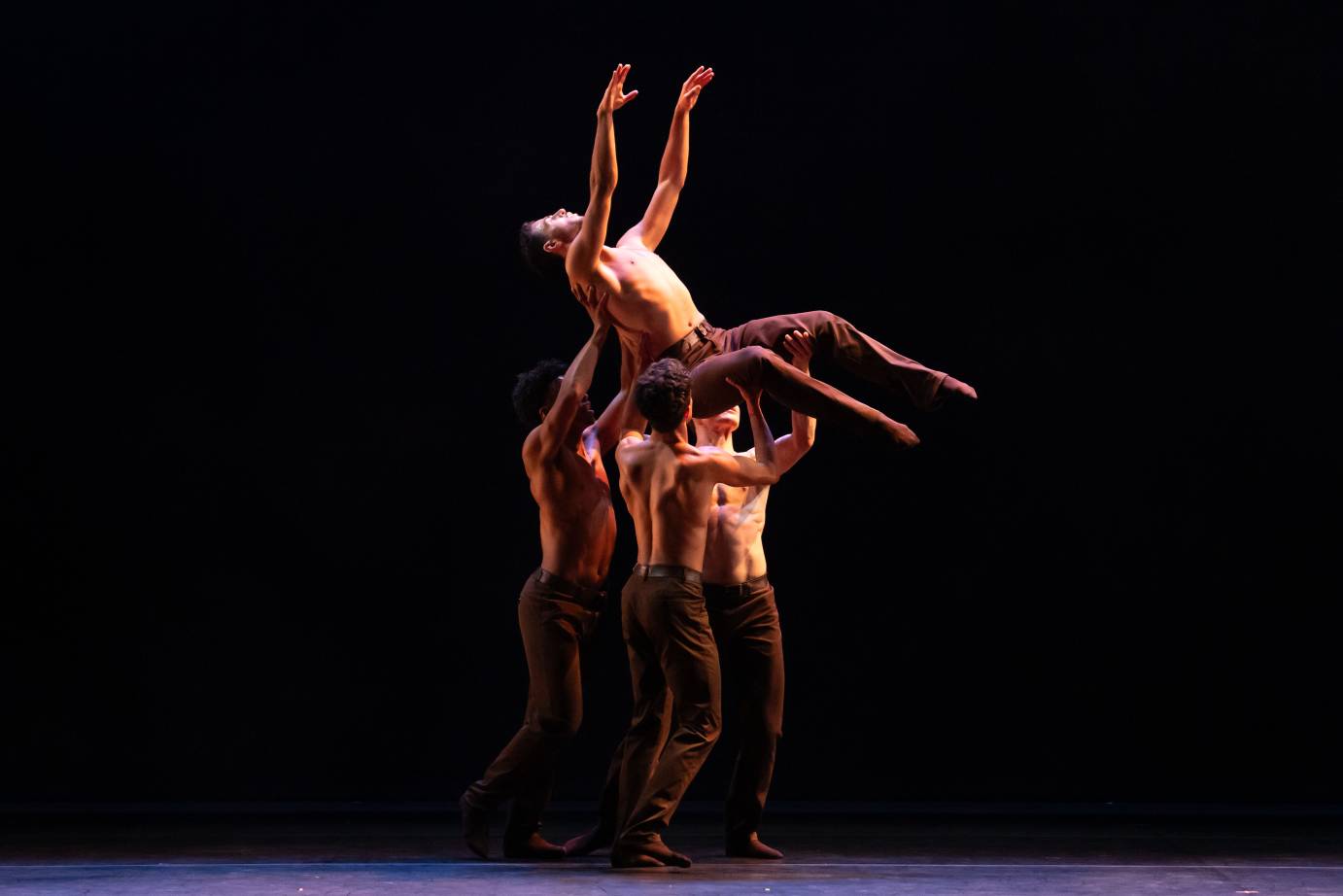
Amir J. Baldwin, Thierry Blanchard, Kevin Ortiz Lemus, Dylan Dias McIntyre in Stephanie Martinez’s Otra Vez, Otra Vez, Otra Vez. Photo: Steven Pisano
While Martinez’s choreography is very musical, in its formal echoing of the melodic arcs, rhythms, and phrasings of its rich and varied accompaniment, its unoriginal vocabulary and perplexing groupings serve to confound more than gratify the viewer. To the impassioned sounds of solo singing, Martinez populates the stage with couples and various individuals dancing “in their own worlds,” their actions baring little discernible relationship to one another. Who are these people, what are they doing, and why are they all here, we wonder, as they continue to perform similar movements and lifts (lots of lifts!) each time they appear and re-appear onstage. Sometimes the emotions they project differ from those heard in the music, which contributes to the confusion, as does a pole holding lighting instruments that moves up and down, inexplicably, to position itself at different levels throughout the piece.
Yet despite the repetition and opaqueness of the choreography, the dancers rendered the work without that detached, post-humanistic quality that often characterizes this style of contemporary ballet. Their dancing made the whole experience a compelling affair.
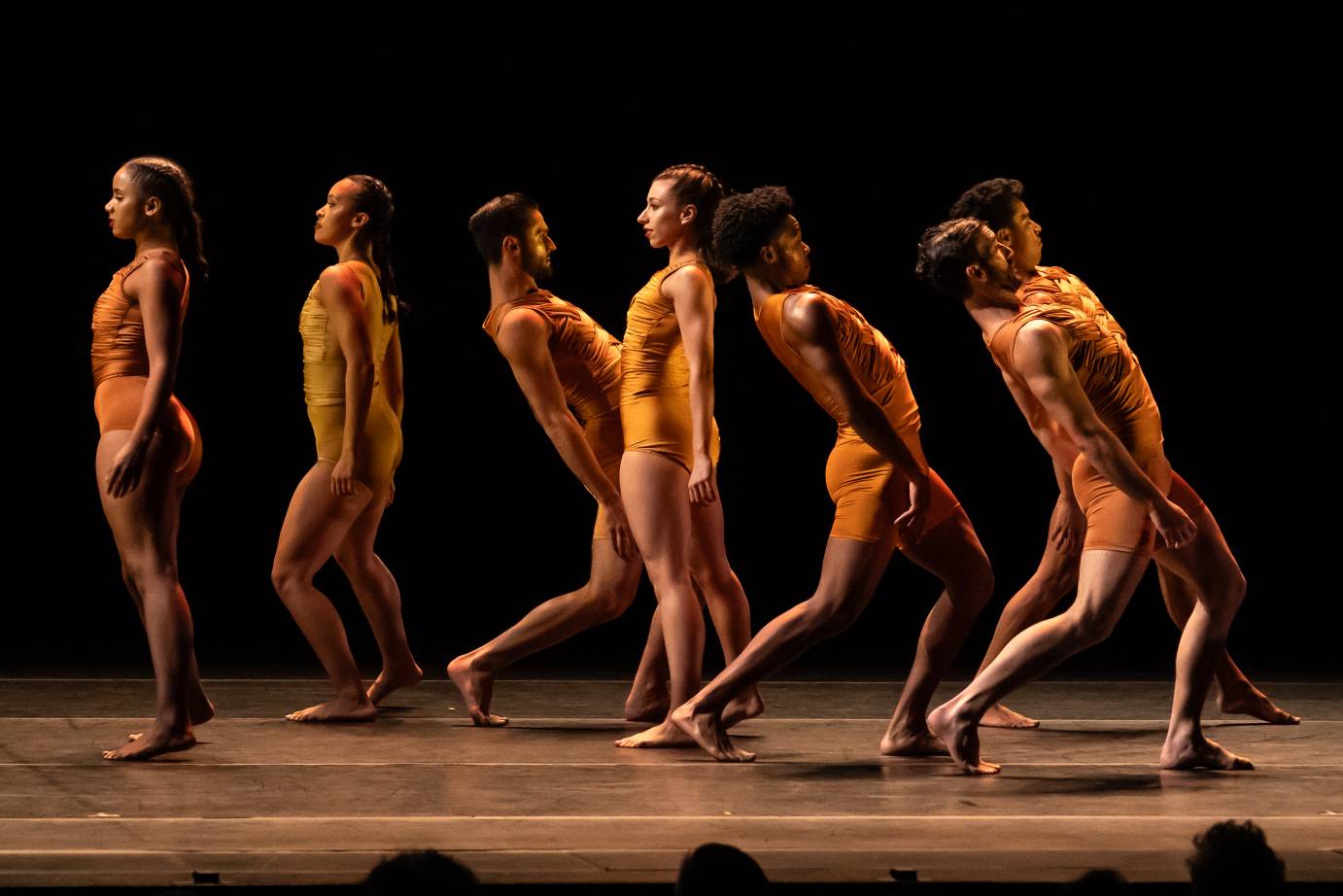
Olivia Winston, Mia Bermudez, Matthew Mancuso, Amanda Bacallao, Amir J. Baldwin, Antonio Cangiano,
Thierry Blanchard in Cassi Abranches' Tranca. Photo: Steven Pisano