



Related Features
DAY IN THE LIFE OF DANCE: In Motion with Jodi Melnick
IMPRESSIONS: "What Flows Between Us," Curated by Rachna Nivas, at 92NY
IMPRESSIONS: Jodi Melnick's "Superbloom (Dancing Into Choreographic Forms)" at the 92NY

By Kristen Hedberg/@kristen.hedberg on Instagram
View Profile |
More From This Author
Published on April 14, 2026
Sara Mearns; Photo: Julie Lemberger
Choreography: Jodi Melnick (with excerpts from Anna Sokolow, Sara Rudner)
Performers: Jodi Melnick, Sara Mearns, Tamisha Guy, Catherine Kirk, Amanda Kmett’Pendry
Set and Film Design: John Monti
Music/Sound Design: James Lo
Lighting Design: Jeanette Yew
Costumes/Clothes: Niall Jones and J.E.M.
Geffen Stage at Kaufmann Concert Hall at 92NY
March 28, 2026
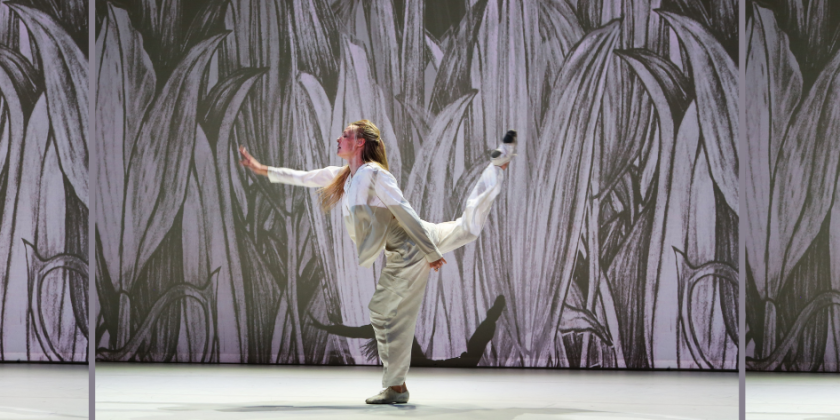
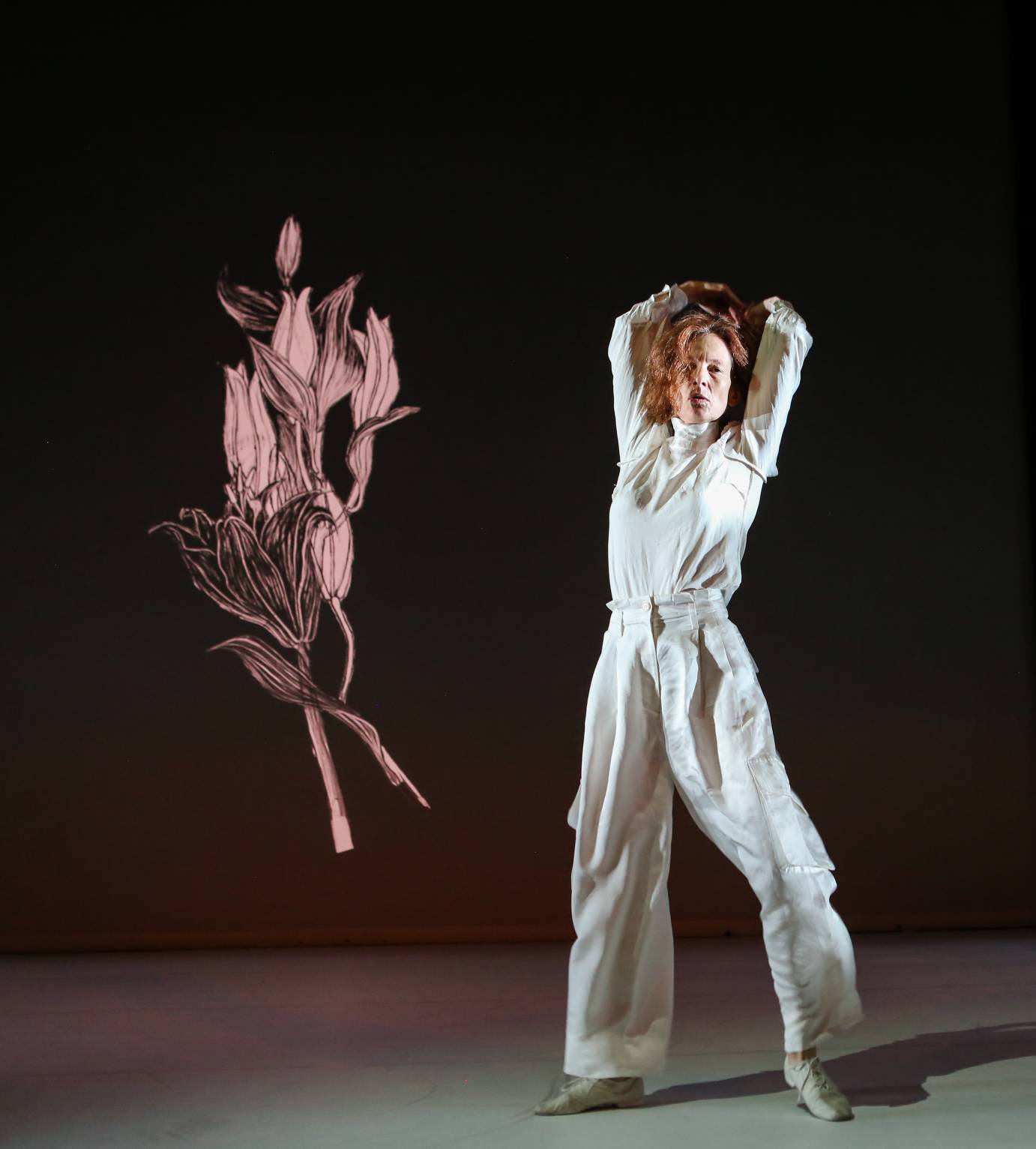
Green brushstrokes project onto 92NY’s Geffen Stage at Kaufmann Concert Hall before Superbloom (Dancing Into Choreographic Forms) bursts into life. At first glance, the earthy tones resemble blades of grass; slowly, I realize I am seeing long, painted strands of hair brushing against a woman’s eyes. Tall illustrations of flowers in black and white frame both sides of the stage: a garden suspended in stillness.
The woman-centered Superbloom: Dancing Into Choreographic Forms masterfully investigates lineage and future as part of “Women Move the World,” 92NY’s 2025/26 Harkness Mainstage Series. The evening-length work was born from a decade-long collaboration between postmodern dancer and choreographer Jodi Melnick and New York City Ballet principal dancer Sara Mearns. The work honors visionary choreographers who have informed modern and postmodern dance, as well as Melnick’s extensive performance career: Anna Sokolow, Sara Rudner, Trisha Brown, and Twyla Tharp, to name a few.
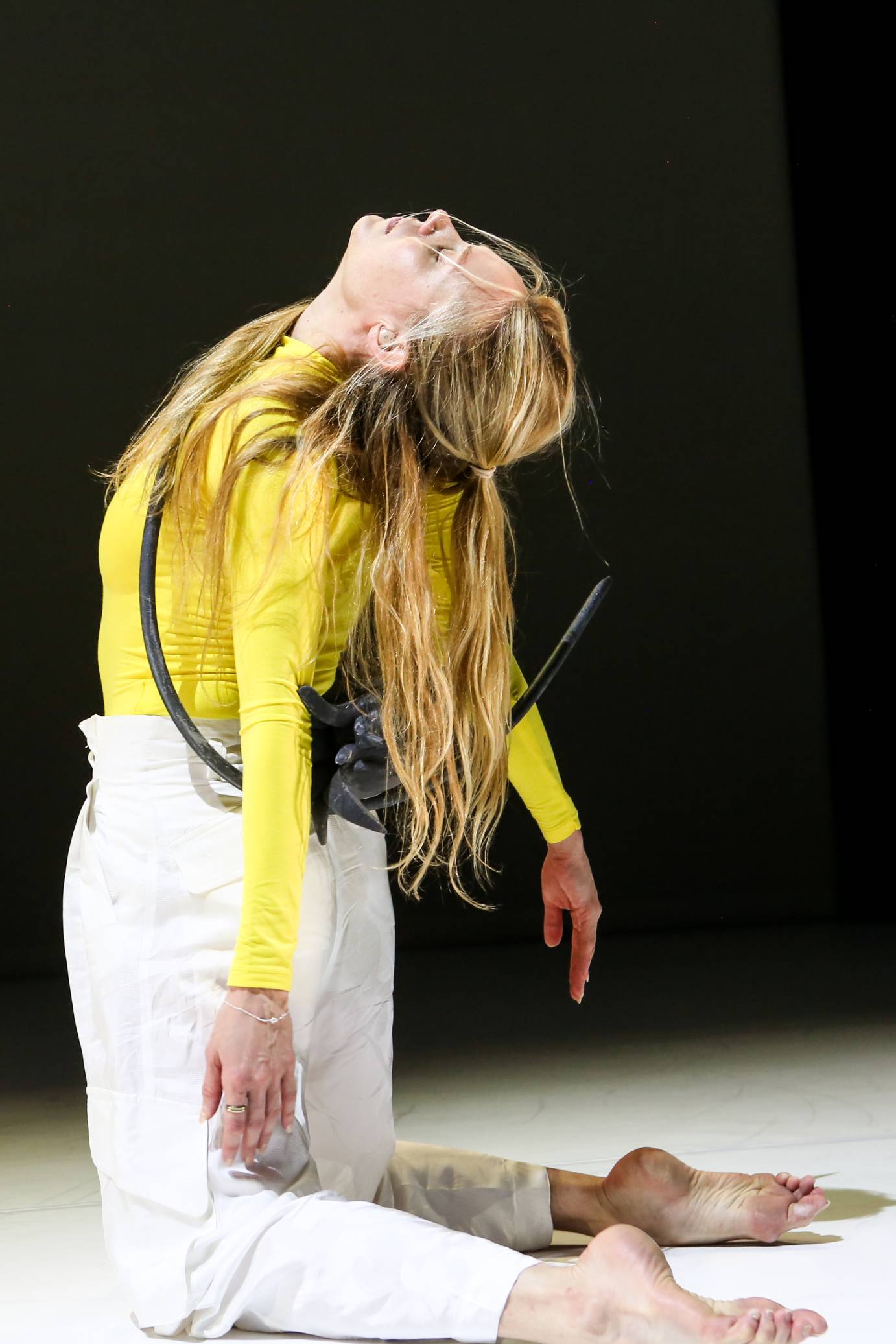
Short but poignant solos created by Sokolow and Rudner weave through the evening, offering a firsthand glimpse at the histories that have informed Melnick’s dancemaking and vision. Mearns inhabits the raw physicality of Sokolow to open the evening with visceral vulnerability. Watching her, I feel urgency through each tremble, hinge, and step. Her intent carries through each reaching gesture. The following solo, danced by Melnick, brings a softer, sublime nature. These compelling introductory solos not only represent the voices that have so deeply and beautifully informed Melnick’s journey, but they also set the tone for how each artistic voice illustrates our history, portraying it into the present.
Amanda Kmett’Pendry, Catherine Kirk, and Tamisha Guy fill out Superbloom’s superb intergenerational cast, mobilizing the space with buoyancy and intricacy alongside Melnick and Mearns. Beyond the excerpts from Sokolow and Rudner, the movement is Melnick’s, a synthesis of her experiences, which she and each of the dancers interpret with their unique voices. I hungrily absorb the cast’s constantly changing movement qualities as multiple phrases occur simultaneously, shifting between pedestrian movements, sustained balances, and swift eruptions that propel them across the stage.
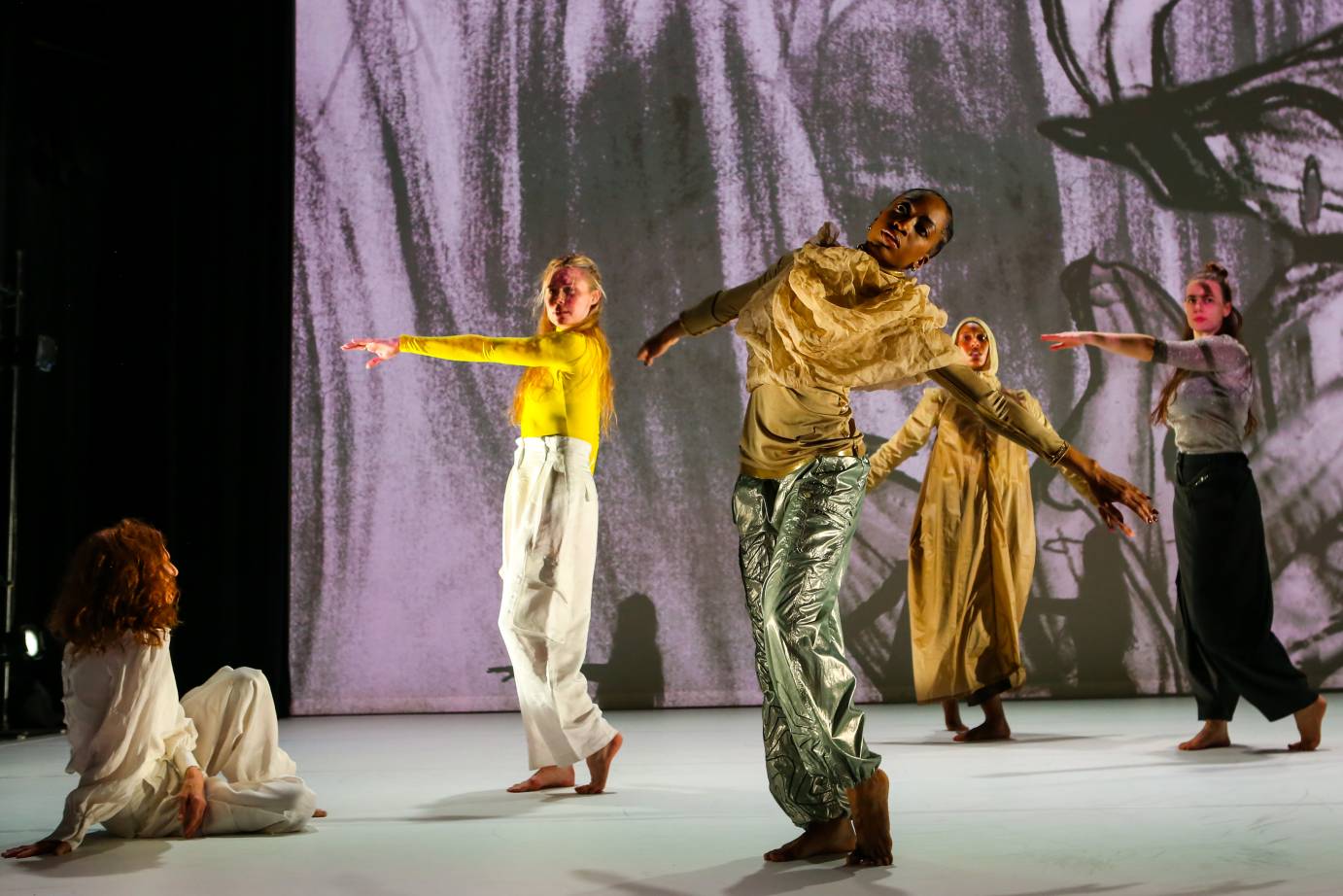
From a natural walk to a hand resting on the sternum to loping gallops that land with a thud, every moment exists with intent. One dancer’s movements might serve as a catalyst for a new phrase to begin, or for one to join another’s already occurring dance. It is organic and charged. Power lives in their authenticity.
The work’s score, by James Lo, incorporates sounds of birds, water, and voiceover into melodies that thread through the evening—as does silence. In both realms, the dancers’ movement unfolds independently from sound. Drawings transformed into sweeping animations, designed by Jeanette Yew, feature flowers, grass, and leaves that continually flash and rise across the projection screen to accentuate the atmosphere.
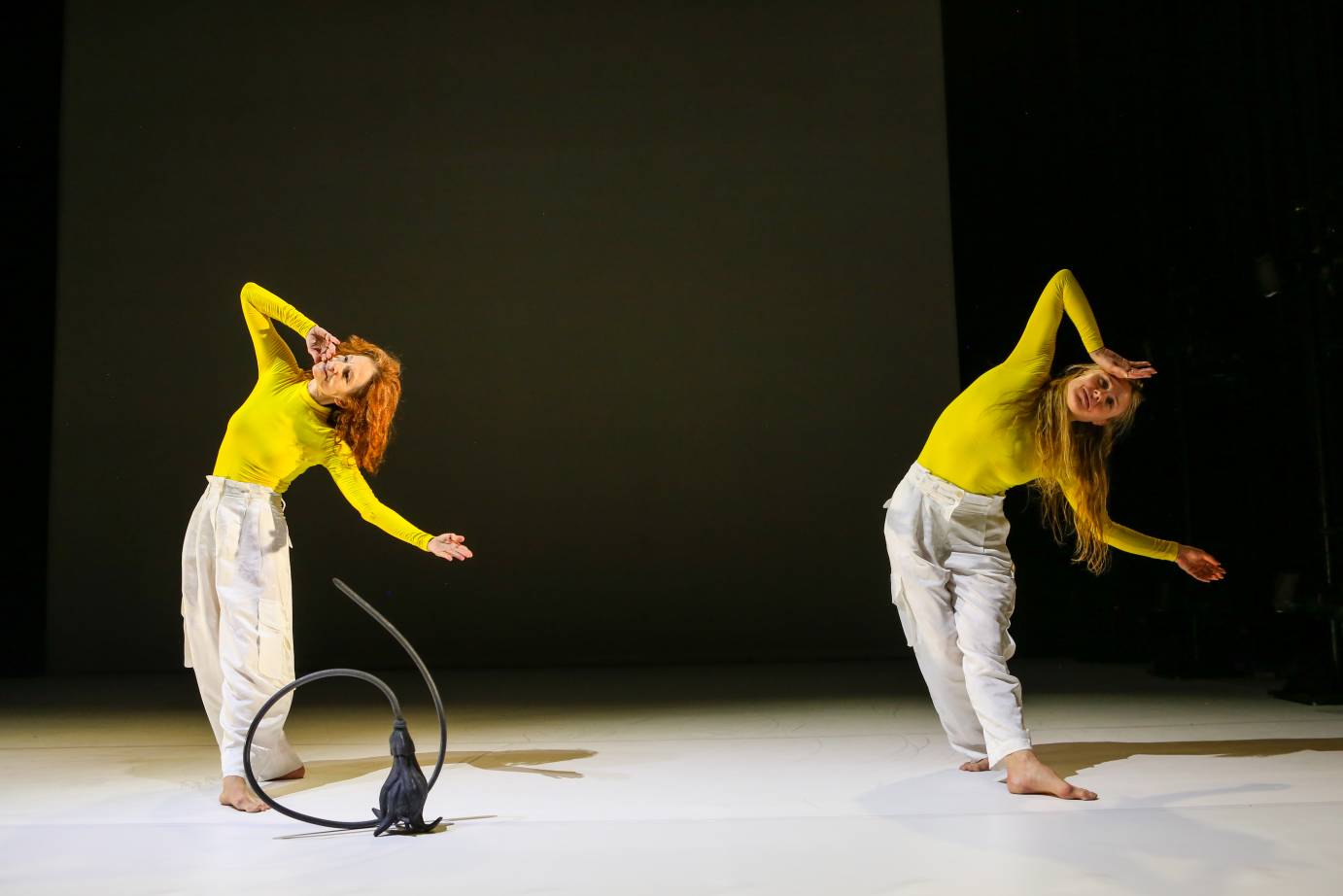
One of the most arresting moments occurs as Melnick and Mearns, in a meditative duet, envelop their bodies into looped sculptures of flowers. With this image, it is as if they become flowers themselves: representing not only the beauty of a fully realized bloom, but also the process of getting to that place: a process full of grit, effort, and tireless care. This image of the two women encompassed in sculpture as they continue to advance, rotate, unite, and dance in tandem becomes a significant turning point in the work.
The work settles at its conclusion, as the cast comes together in a tableau vivant. Their bodies ripple together, their sternums softly undulating as they breathe. As the lights dim, a final projection beams onto the center of the screen above them: a small, green flower. The image flickers, growing bigger, until it engulfs the entire screen and the stage goes dark—a sudden, stark activation propelling us forward.