

Related Features

DANCE NEWS: These Are Works & Process’ 2026-2027 Curated and Open Call Residency Artists
IMPRESSIONS: Works & Process Presents a Summer Preview of Jacob’s Pillow Dance Festival 2026
IMPRESSIONS: Lucinda Childs’ Early Works from 1963-1973 at the Guggenheim’s Rotunda


By Catherine Tharin
View Profile |
More From This Author
Published on April 2, 2026
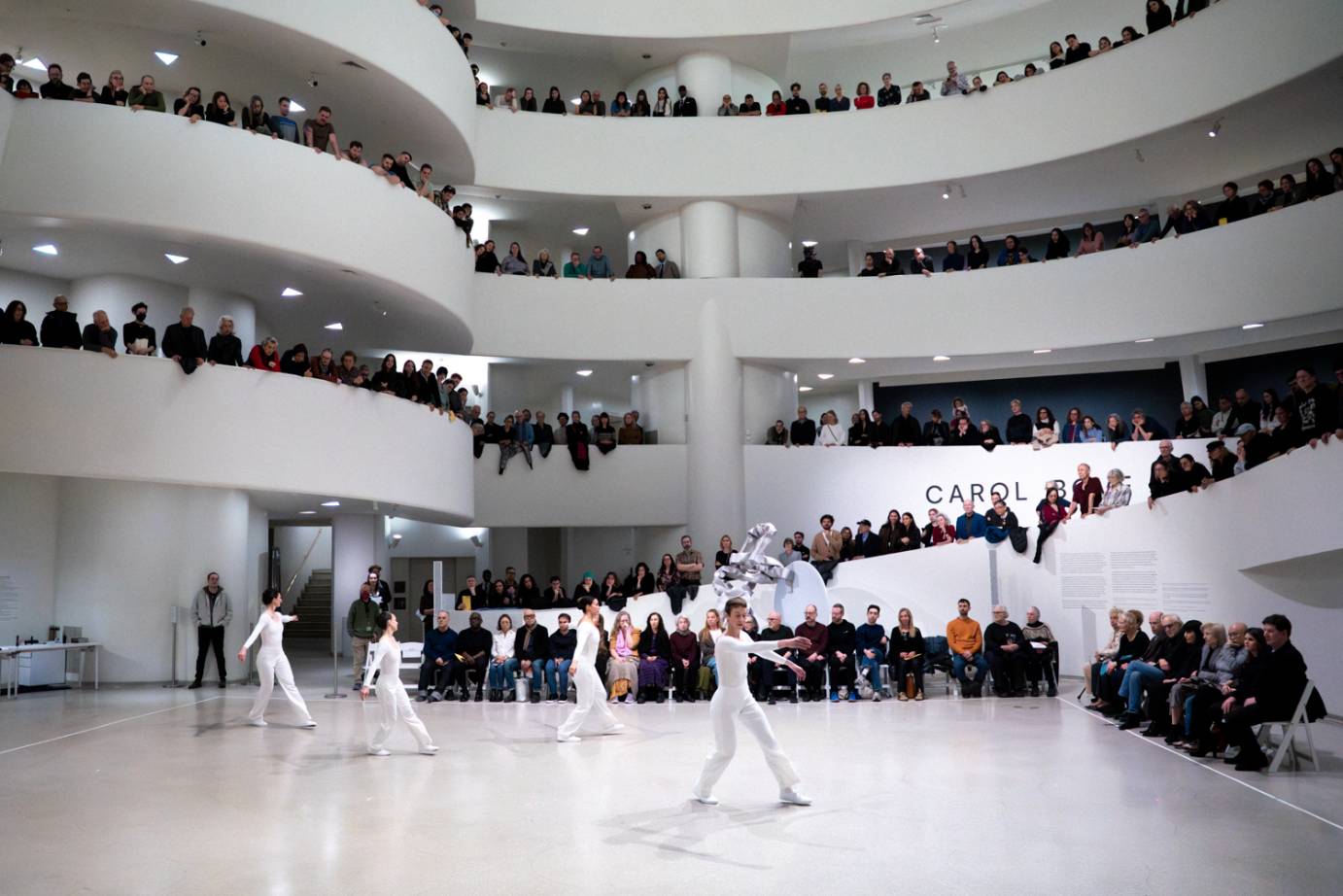
"Early Works" by Lucinda Childs. Photo: Titus Ogilvie-Laing
Presented by Dance Reflections by Van Cleef & Arpels Festival and Works & Process
Dance Reflections Festival by Van Cleef & Arpels
In Collaboration with Works & Process
Early Works from 1963-1973
Choreography: Lucinda Childs with members of the Lucinda Childs Dance Company
Production: The Blanket (Caitlin Scranton and Matt Pardo)
Company Manager: Ammara Shafqat
Program: Pastime, Calico Mingling, Reclining Rondo, Katema, Radial Courses
Rotunda at Guggenheim New York
March 14 - 15, 2026
A conversation with Lucinda Childs, Gina Gibney and Ruth Childs
The Cosmopolitan Club, NYC
March 24, 2026
Viewed from the dizzying height of the fourth spiral of the Solomon R. Guggenheim Museum, Lucinda Childs’ early works from 1963-1973, sponsored by Dance Reflections by Van Cleef & Arpels and Works & Process, looked splendidly fresh. They could have been choreographed at the beginning of a career, or at the end. At times kaleidoscopic, they forecast Childs’ breakaway work, Dance, from 1979. Dance expresses postmodernism — cool, sleek, and with a bit of cheek.
Childs, born in New York City, was educated at The Brearley School, and trained in ballet as a child. Later, she became a student of Merce Cunningham. She studied composition with Bessie Schoenberg at Sarah Lawrence College, and returned to New York to become part of the Judson Dance Theater. With Judson she experimented with choreography, and was influenced by her fellow members, many of whom became notable. Their approach was that anything could be dance. During a recent conversation with Gina Gibney and Ruth Childs at the Cosmopolitan Club, Childs said that composer John Cage’s concept of chance gave her “options I wouldn’t know otherwise,” and changed the way she created dances. Gibney Dance and Childs embark on a five-year partnership this year, at the end of which Childs will be 90 — the same age as Cunningham when he choreographed Nearly Ninety.
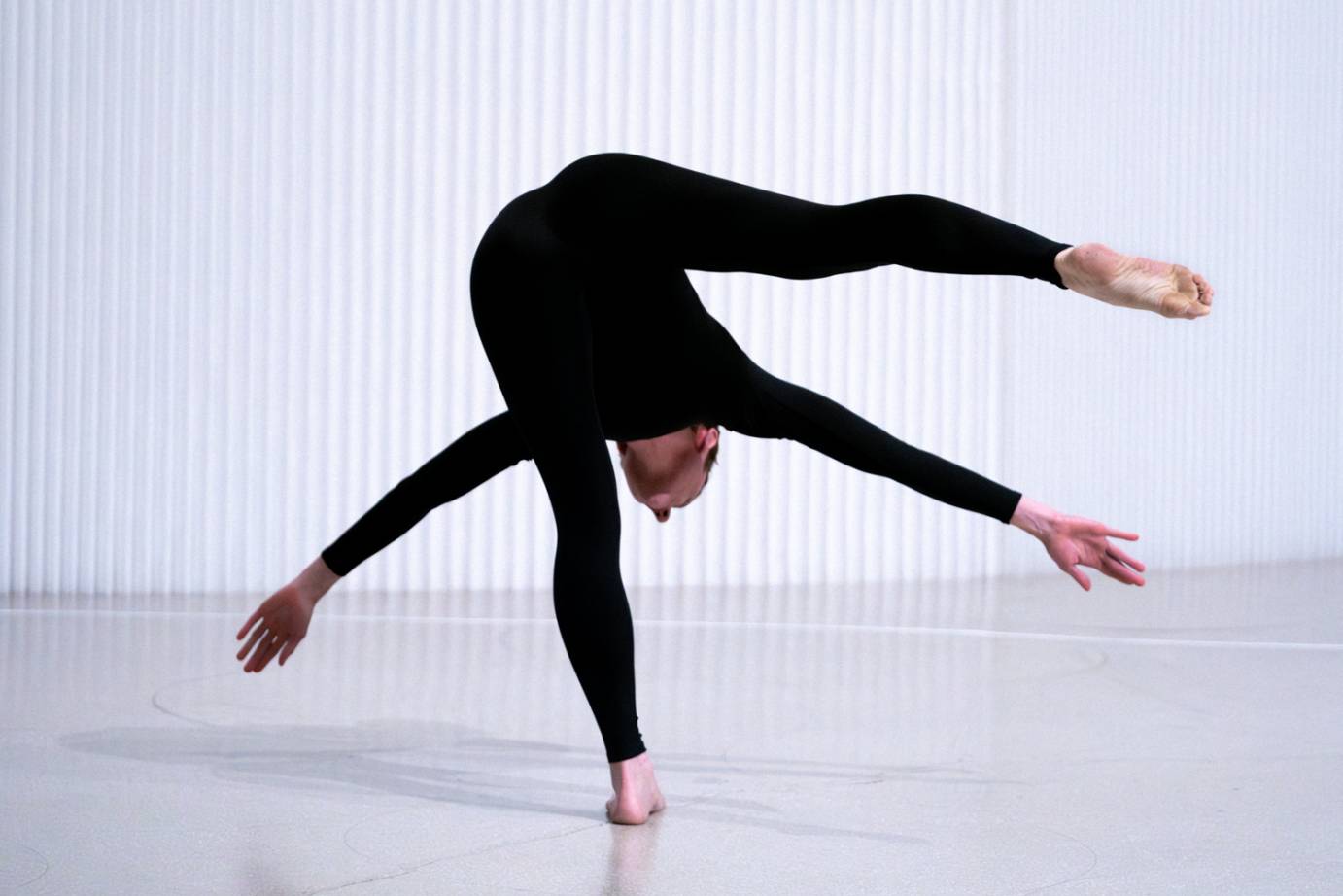
Pastime (1963) was the first dance Childs made for herself to perform at Judson Memorial Church. Now, in the Guggenheim rotunda, it appears as a female trio spread out along a diagonal, and occupying three spatial levels – floor, seated, and standing. The central dancer sits on the floor, inside a gray, stretchy cocoon (à la Martha Graham in Lamentation), her arms and legs bent into a rounded shape or reaching outside this womb. Another dancer, in black, stands on one leg while extending the other. Dressed in navy, the third dancer moves close to the ground, stomach to the floor, or on all fours, pressing a leg behind. The dance is accompanied by what sounds like the muted roar of the ocean, composed by Philip Corner.
In contrast to Pastime, the four proceeding dances are costumed in form-fitting white and in silence. At the Cosmopolitan Club, Childs explains that blue, green, and red lighting could be projected onto the white costumes.
.jpg)
Reclining Rondo (1975), performed by three men, takes place entirely on the floor, with the dancers spaced evenly along a diagonal. Eighteen simple and direct positions repeat 12 times. The men appear seated with legs long and feet flexed, sliding forward, lying on their sides, seated cross-legged, lying on their stomachs with one arm overhead, in a series of sleeping poses, and curled perched atop toes. Each transition takes about the same amount of time. You hear the body slide against the floor, the legs gathering and releasing, and the shift from one side to the other. The dancers begin in unison, facing the same direction. Over time they face different directions, returning at the end to the original facing.
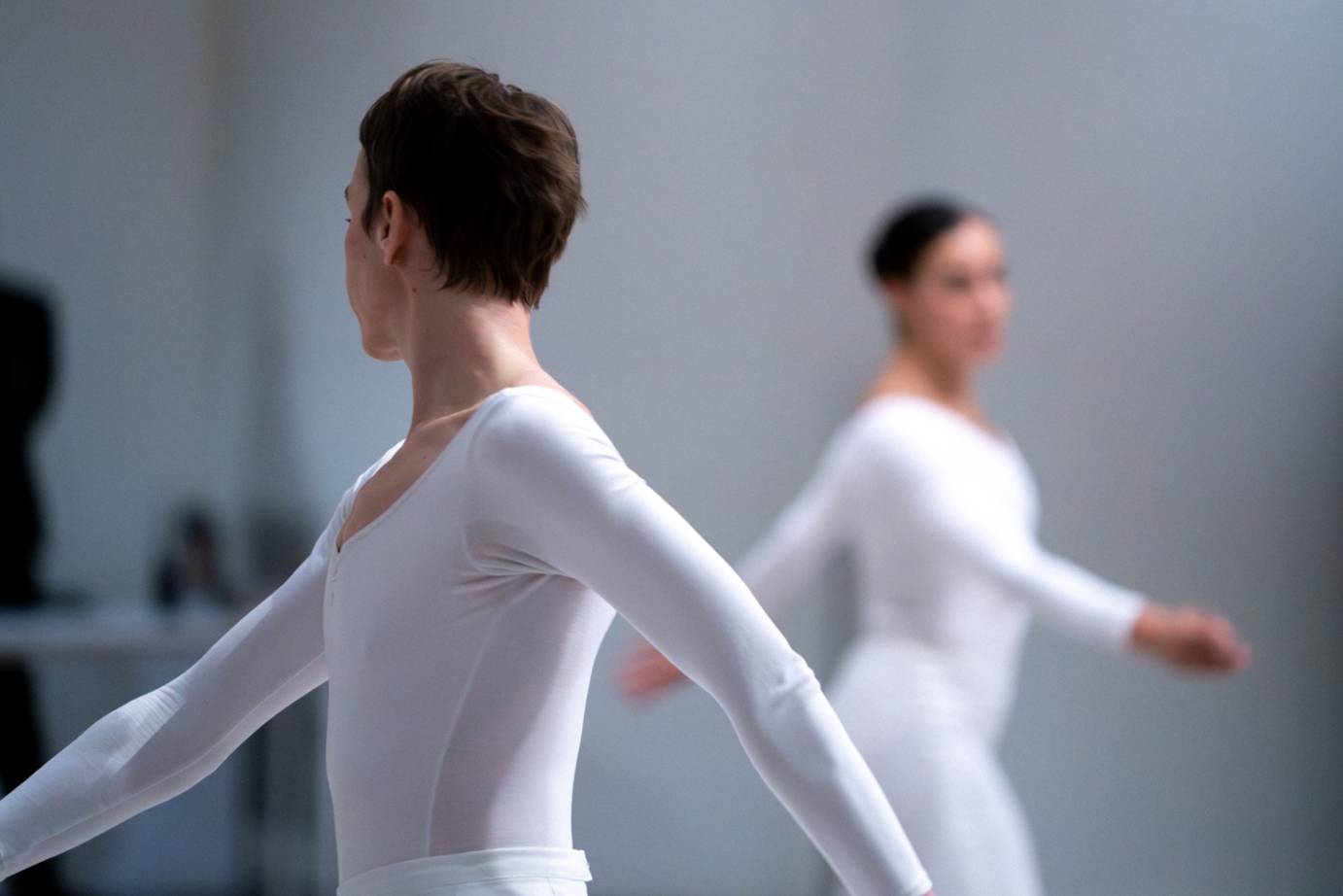
The three remaining dances — Calico Mingling (1973), Katema (1978), and Radial Courses (1976) — express the smooth, spatial, almost patrician ritual of steps, skips, hops, and turns and chart the unadorned body ribboning through space. These pieces remind me of Baroque dancing, which, by repeating interlacing phrases, builds toward an emotional pitch. The same fluid clarity, and physicality continue from beginning to end. Though the dances are heady, mathematical, and contained, wildness and determination underlie the coolness. Their freedom is sensed rather than seen.
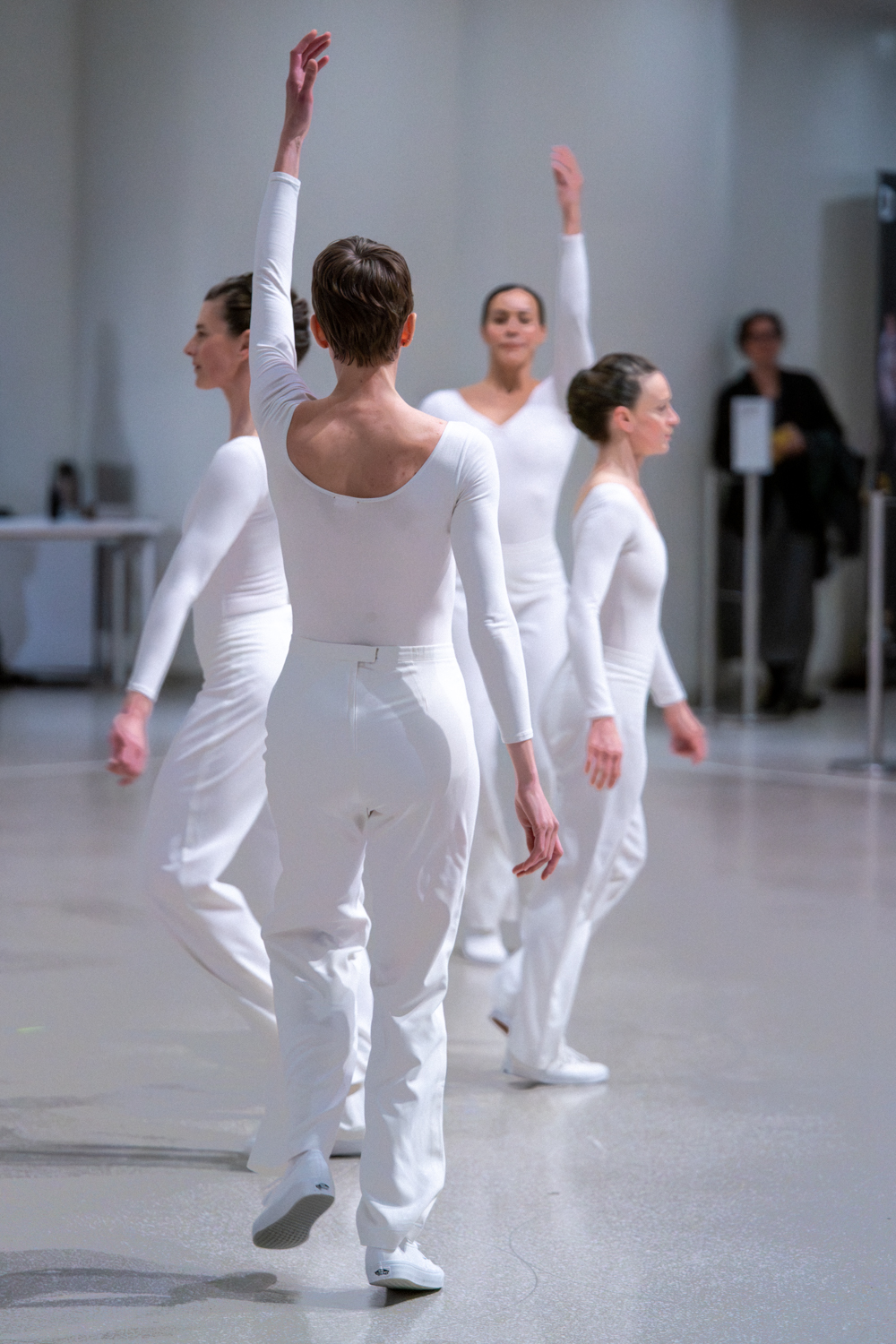
Calico Mingling (1973) and Katema (1978), each performed by four women, contrast with one another. In the Calico Mingling quartet, the dancers appear two by two, then as four, or as one, two, one. The shifting group follows mesmerizing carved pathways. The arms open like a butterfly, and then the wrists cross. The patterns are complex, yet the surface remains even and suggests a living, breathing organism. “Calico,” an unbleached, unfinished cotton, a working fabric, points to a mock-up for future exploration. Katema expands a solo for Childs. Each dancer begins a walking phrase moving forward and back, facing one another on the diagonal. A piqué turn into a whip turn with a passé is enlivened by pivots. In this postmodern square dance, the dancers pass one another blindly, meet in the middle, and then separate again. If they are not exact, they could collide. Each finishes alone, one by one, in separate corners.
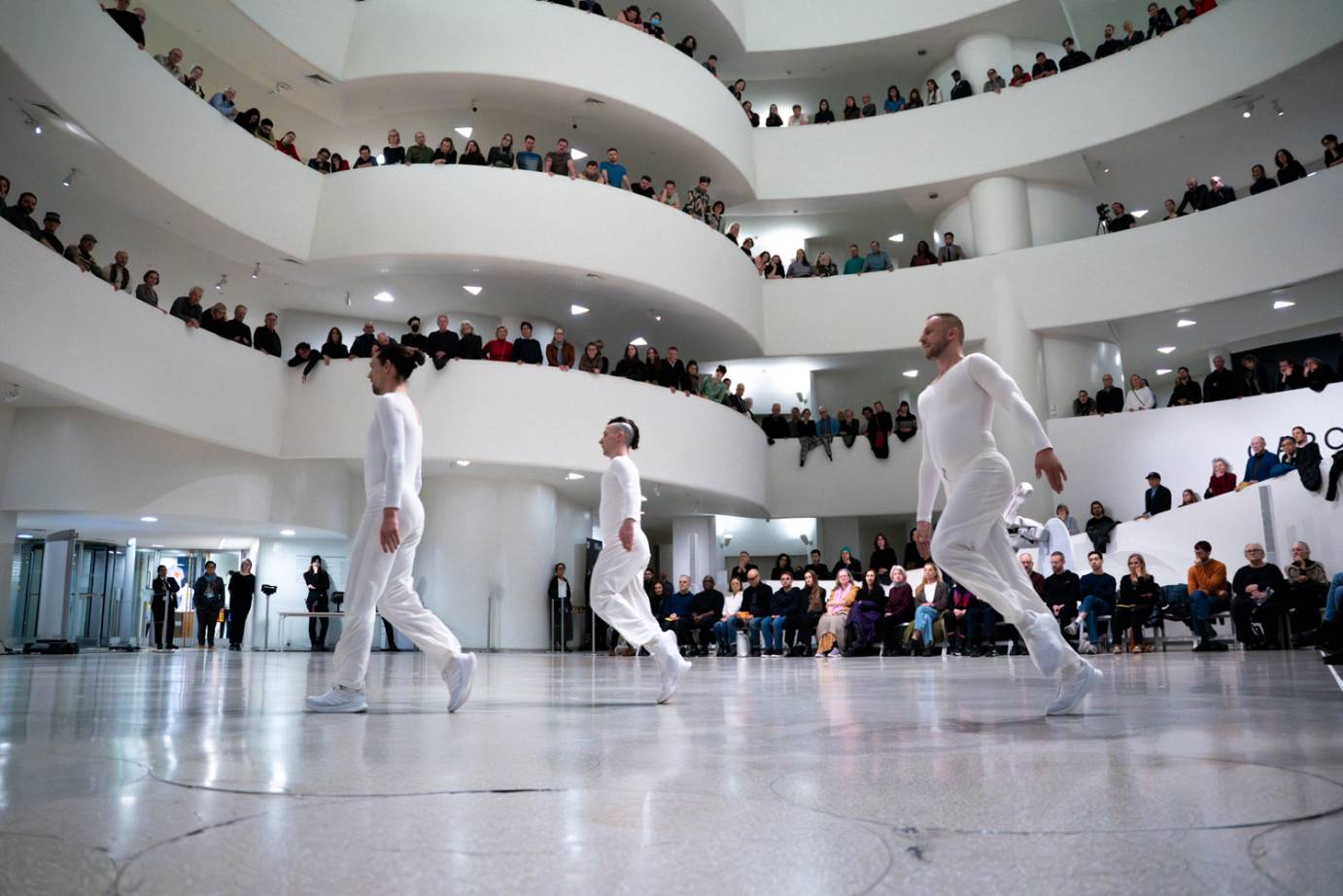
Most impressive, Radial Courses, performed this night by four men, begins in a tight box formation, the men walking the perimeter. At moments, two surge ahead, and when the pattern shifts, they adjust. The movement accumulates — chug, skip, leap, repeat. Now the men move in syncopation, then they walk clockwise or counterclockwise. A turn is added. A dancer stumbles but continues seamlessly. The dancers’ steps, movement, and spacing remind me of the white Lipizzaner horses going through similar paces and gait changes while exhibiting prowess, bearing, athleticism, and ease.
Watching the patterns, it is easy to imagine the challenge of remembering where you are, whom you pass, and how the patterns align. The moments when dancers pass each other serve as markers. As Judy Palow, who originated roles in these works described it, recognizing someone she had passed before helped orient her in the sequence. Palow said that how Childs assembled the phrases remains mysterious.
As a viewer, you follow the pattern. Then you lose your place. After some time, you find it again, but the dance has shifted and you are somewhere else.