


Related Features
IMPRESSIONS: Doug Varone and Dancers at The Joyce Theater
IMPRESSIONS: Flamenco Vivo Carlota Santana at The Joyce Theater
IMPRESSIONS: Malpaso Dance Company at The Joyce Theater

By Catherine Tharin
View Profile |
More From This Author
Published on March 2, 2026
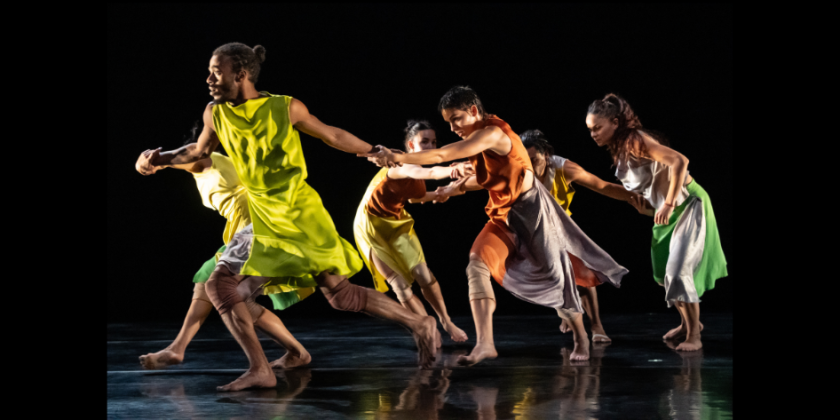
Malpaso Dance Company. Photo: Steven Pisano
The Joyce Theater Foundation presents
Malpaso Dance Company
Founders: Fernando Sáez, Osnel Delgado and Daileidys Carranza
Dark Meadow Suite (1946)
Choreography and Costumes: Martha Graham
Arrangements: Janet Eilber
Regisseur: Elizabeth Auclair
Original Lighting Design Adapted by: Manuel da Silva
Music: La Hija de Cólquide, Suite from The Dark Shadow Ballet by Carlos Chavez
Dancers: Daileidys Carranza, Greta Yero, Jennifer Suarez, Iliana Solis, Laura Rodriguez, Liz Marian Lorenzo, Esven González, Carlos Daniel Valladares, Dayron Dominguez, Darío Ortega
Musicians: Alma String Quartet
Year of the Leopard (2026)
Choreography: Keerati Jinakunwiphat
Lighting Design: Manuel da Silva and Mextly Couzin
Costume Design: Karen Young
Music: Truth Ray II, The Proximity of Clouds, and HUESO by Adam O’Farrill / Stranger Days
Dancers: Daileidys Carranza, Greta Yero, Jennifer Suarez, Laura Rodriguez, Esven González, Esteban Aguilar
Musicians: Adam O'Farrill / Stranger Days
La Estación (2026)
Choreography: Daileidys Carrazana
Lighting Design: Manuel da Silva
Costume Design: Amy Page
Music: Otoño Porteño, Invierno Porteño by Astor Piazolla; Winter 2, Spring 1 by Antonio Vivaldi, adapted by Max Richter from the album Recomposed by Max Richter Vivaldi The Four Seasons; October – Autumn Song by Pyotr Ilyich Tchaikovsky
Dancers: Daileidys Carranza, Greta Yero, Jennifer Suarez, Iliana Solis, Laura Rodriguez, Liz Marian Lorenzo, Esven González, Carlos Daniel Valladares, Dayron Dominguez, Darío Ortega, Esteban Aguilar
Musicians: Alma String Quartet with Gabriel Chakarji
Tino & Rajika Puri Auditorium, The Joyce Theater
February 10–15, 2026
Malpaso Dance Company, based in Havana, Cuba, presented an evening of three group works, each pressing the body toward physical extremes. The program opened with Dark Meadow Suite, a distilled suite assembled from Martha Graham’s 1946 masterwork, Dark Meadow, and staged by Janet Eilber, artistic director of the Martha Graham Dance Company, as part of the Graham100 celebration. It was followed by two world premieres: Year of the Leopard by Keerati Jinakumwiphat and La Estación by Daileidys Carrazana, a Malpaso founder and dancer in the company.
All three works were performed to live music, a joy for the audience and dancers alike. Alma String Quartet, also from Havana, accompanied Dark Meadow Suite, while La Estación was performed by Alma String Quartet with Gabriel Chakarji. A jazz ensemble, Stranger Days, led by trumpeter Adam O’Farrill, performed Year of the Leopard.
Stripped of its original Noguchi sets and archetypal structure, Dark Meadow Suite, set to music by Carlos Chávez, places emphasis on the choreography’s physical architecture. The suite opens against a burnt orange backdrop with six women arranged in a circular formation. Downstage, one woman stands apart, hands to her head. Hopping side to side, she slaps her pelvis, then turns slowly into back attitude, one hand reaching toward her lifted foot. Behind her, the group, with archaic arms held in a diamond shape overhead and hands cupped, marks a small stepping rhythmic pattern.
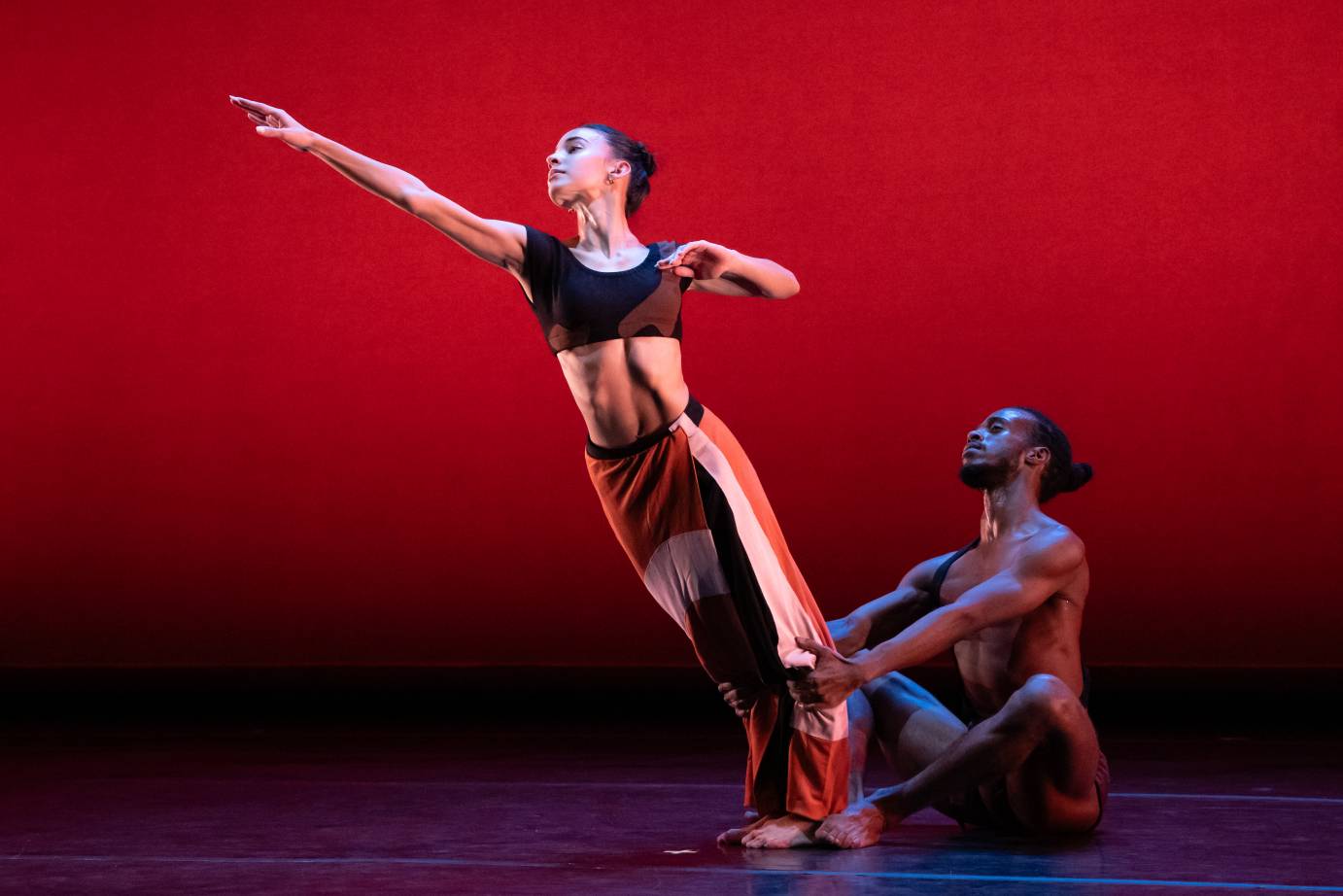
Three unison duets unfold side by side with ceremonial gravity. In each, a man cradles a woman in a bowl-shaped curve before both descend to their knees, her back pressing into his chest. The women are lifted in a horizontal line against the men’s torsos. Later, the seated men hold the women’s calves as the women lean forward, like a prow on a ship cutting through air. When all kneel, the men lunge left as the women counter in opposition. The women then wrap their legs around the men’s waists and fold forward as the men arch, all their hands fluttering in suspended tension. The dynamic suggests shared strength rather than dominance, the women fully active in the duets. Sexuality is evoked yet remains contained within the form.
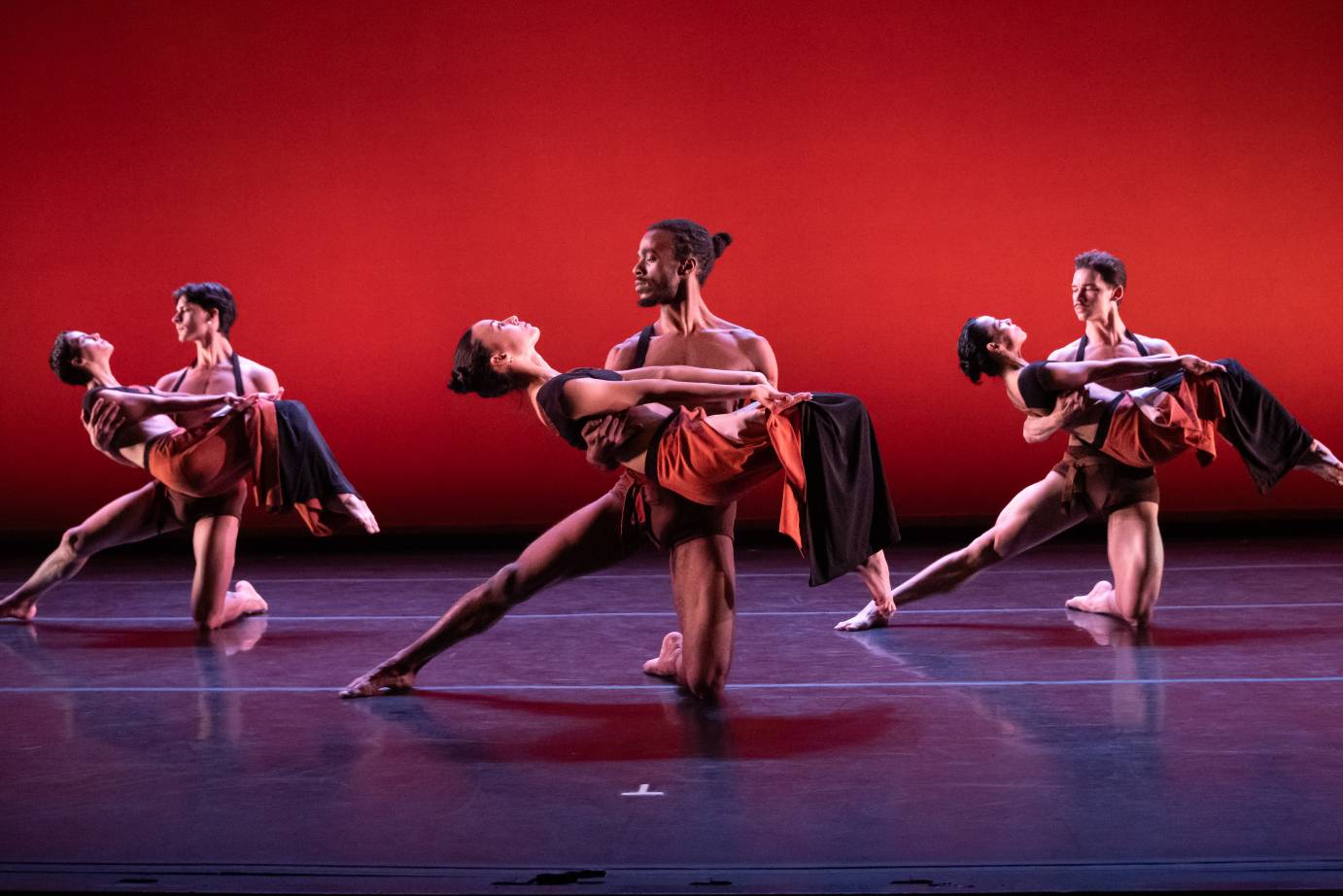
The company’s dancers are formidable and technically assured. They execute Graham’s phrases with clarity and precision. Yet the grounded, carved fullness associated with earlier Martha Graham Dance Company members is less evident. The shapes are beautifully rendered, reading more as finely etched line than fully inhabited mass.
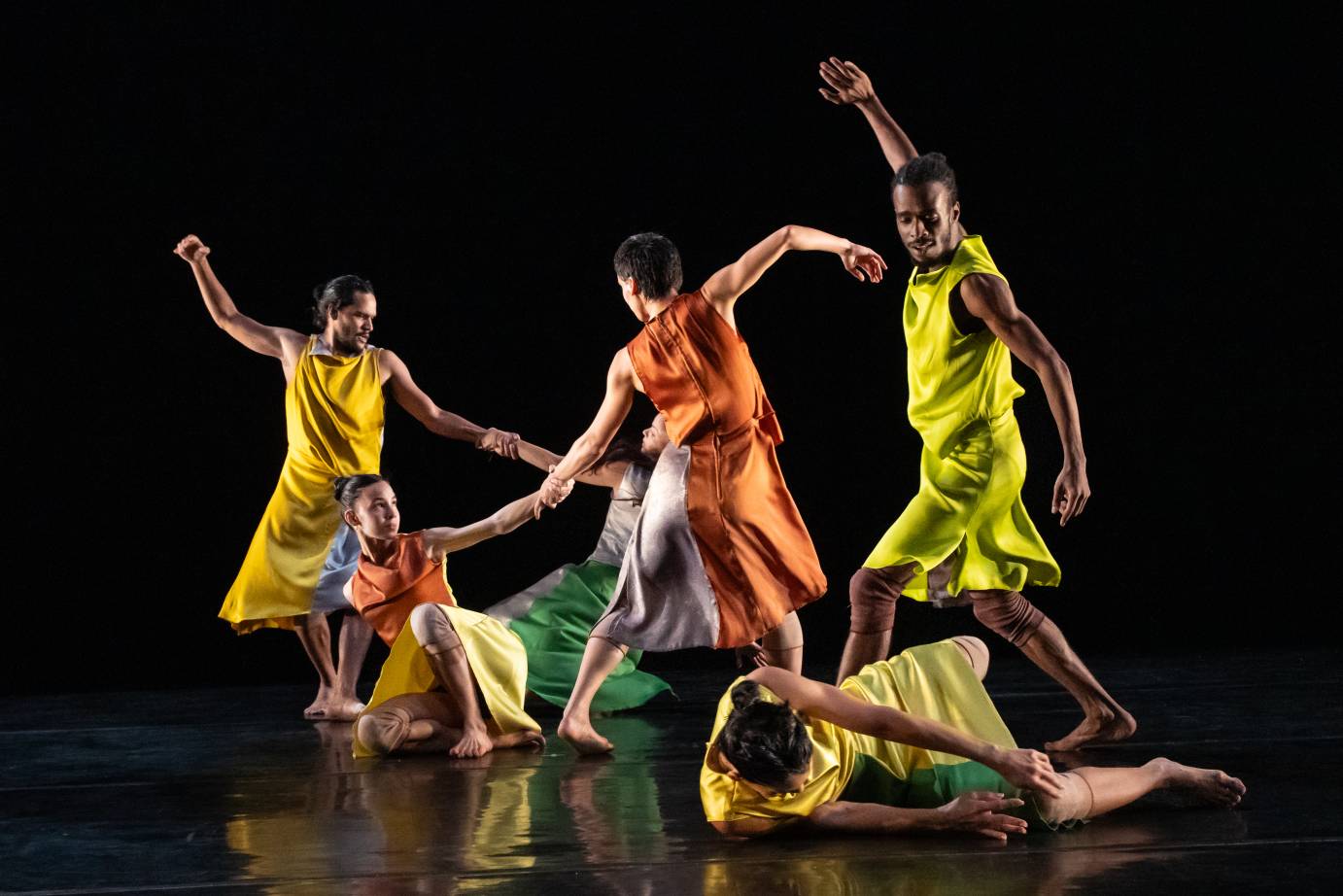
Year of the Leopard operates as a painterly composition, executing jabs, slices, arcs, and incisions in space. The choreography sustains a charged physicality with directional changes and quick lifts. The clear and bright trumpet pulse punctuates the movement while the percussion supports the dance phrasing.
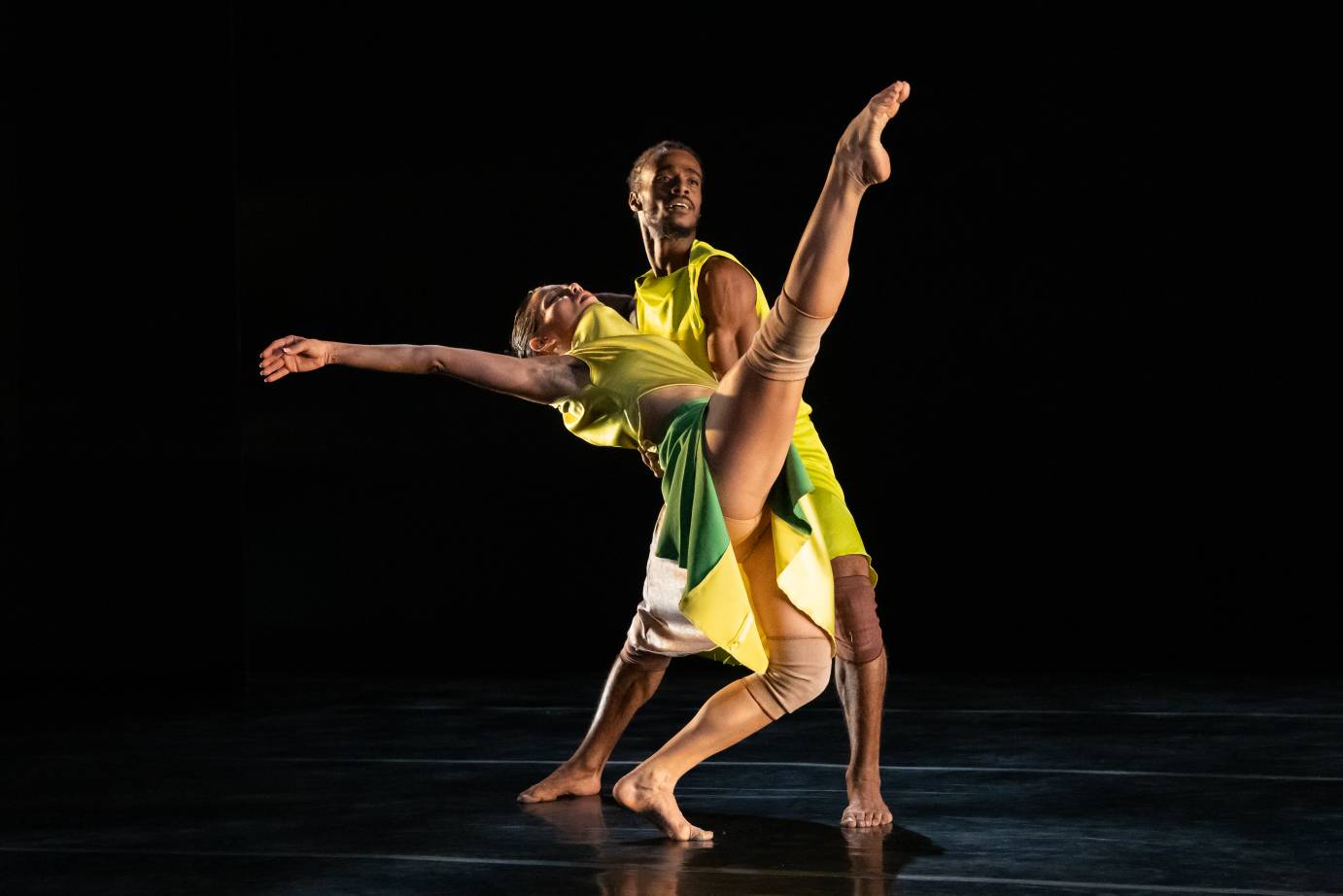
The dancers, costumed in shimmering color-block skirts and tops, shift and reassemble, characterized by deep lunges and arms whipping overhead. One dancer jumps backward into a partner who absorbs the weight as the momentum disperses. All six connect and weave in and out of one another in a continuous braid of bodies. Line formations across the stage and on the diagonal repeatedly dissolve.
La Estación traces the evolution of a relationship, its title suggesting both a season and a point of transition. The dance opens with a man and woman facing one another in a center spotlight. He is immediately taken with her, dropping his head back in an unguarded display of feeling. By the close, the emotional dynamic has shifted. She kisses him and nibbles his neck, before his head falls back again, now expressing a vulnerability more evenly shared between them.
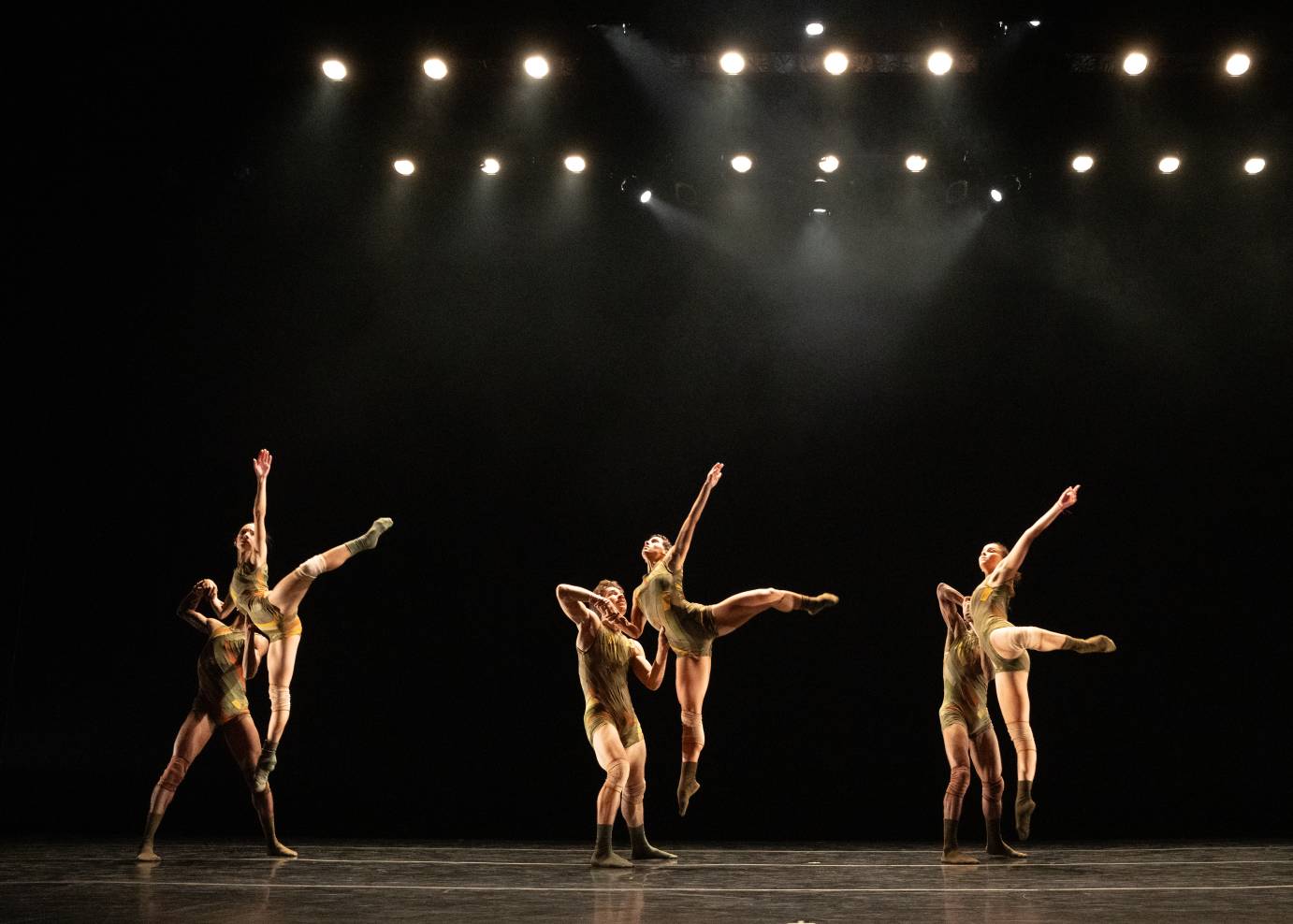
The central relationship shifts and reorients rather than developing in a straight line. The progression feels cyclical rather than linear, returning to its initial image with altered emotional weight. The score, a collage-like, includes compositions by Piazzolla, Vivaldi as adapted by Max Richter, and Tchaikovsky, that moves between selections with occasionally jarring transitions.
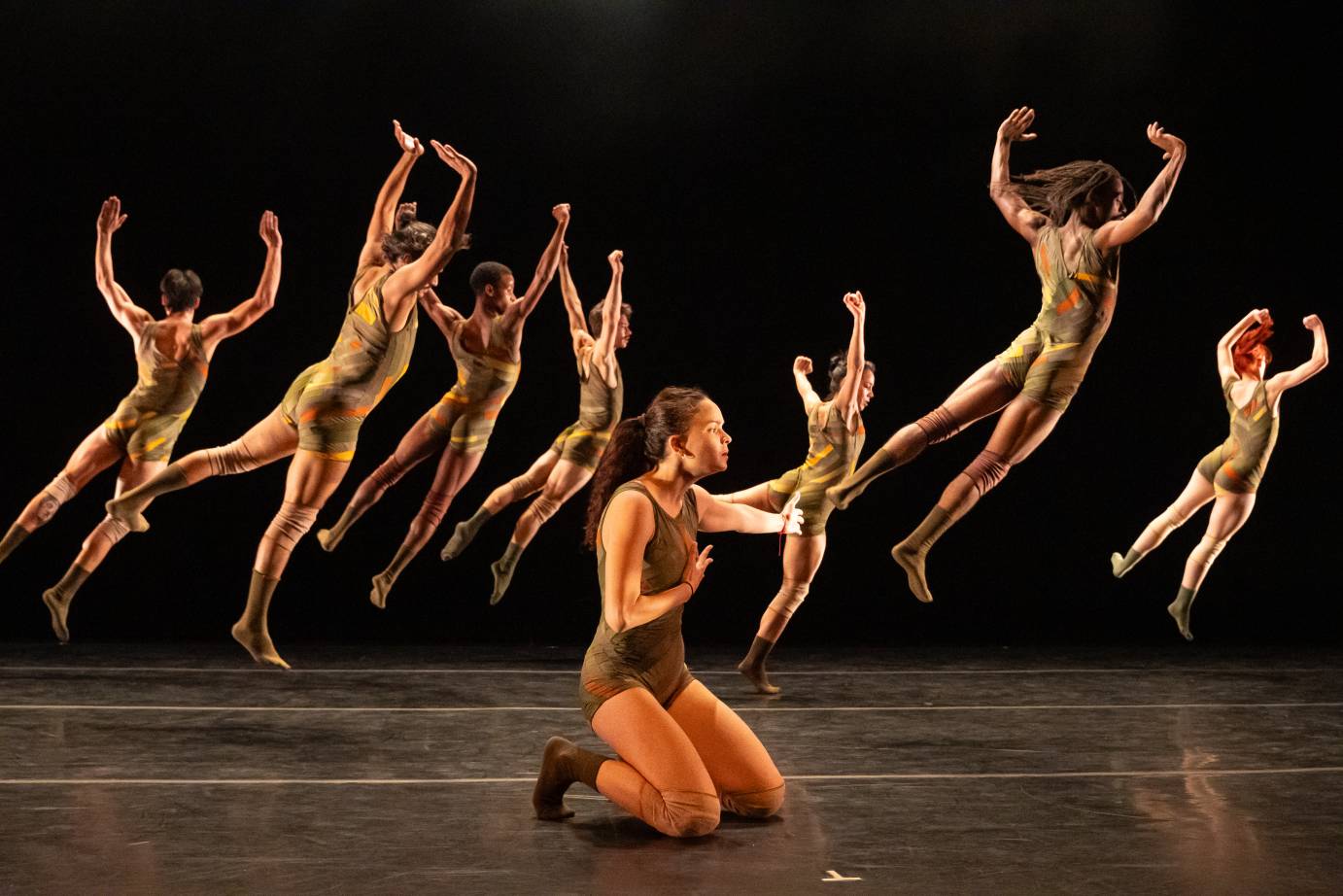
Both Year of the Leopard and La Estación are executed with clarity and technical confidence. In the end, though, Dark Meadow Suite, a contemporary distillation of an early work, remained most compelling, its structure and emotional clarity cutting through an evening otherwise marked by familiar contemporary vocabulary and construction.