



Related Features
DAY IN THE LIFE OF DANCE: In Motion with Jodi Melnick
IMPRESSIONS: Ishmael Houston-Jones’ "OO-GA-La Reimagined" and Heidi Latsky Dance's "Who Am I Now?"

IMPRESSIONS: "What Flows Between Us," Curated by Rachna Nivas, at 92NY

By Robert Johnson
View Profile |
More From This Author
Published on March 2, 2026
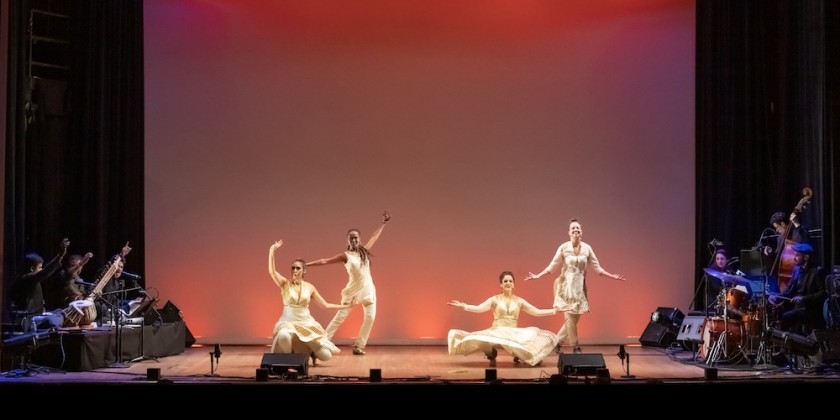
"What Flows Between Us." Photo: Richard Termine
Afternoon Performance
Kuchipudi dancer Yamini Kalluri with the Kritya Music Ensemble, Rohith Jayaraman, Nattuvarangam, Vivek Ramanan and Harsha Mandayam Bharathi
Mridangam Laya Raghav, Violin
Jiahao Han, Piano
Nandana Dev Sen reading from her mother Nabaneeta Dev Sen’s, poetry collection Acrobat
Kathak dancer Neeharika Tummala
Rohan Misra, Sarangi
SPEAK: Tap & Kathak Unite
Jayanta Banerjee, Music director and Sitar
Rachna Nivas and Rukhmani Mehta, Kathak dance
Dormeshia and Michelle Dorrance, Tap dance
Satyaprakash Mishra, Tabla
Ambarish Das, Vocals // Caili O’Doherty, Piano // Dennis Bulhoes, Kit Drums // Noah Garabedian, Bass
*Cover image: (Left to right) Rukhmani Mehta, Dormeshia, Rachna Nivas and Michelle Dorrance
Cross-cultural dialog was the theme of What Flows Between Us, an adventurous program curated by dancer Rachna Nivas and hosted by the 92nd Street Y, on February 21st 2026 as part of its performance series “Women Move the World.”
A daylong schedule of activities brought together dancers and musicians from India and the United States, creating opportunities for exchange and exploring the boundaries between different genres and cultural traditions. SPEAK: Tap & Kathak Unite, the headline event at the “Y’s” Kaufmann Concert Hall that evening, featured an explosive encounter; as Kathak exponents Nivas and Rukhmani Mehta shared the stage with hoofer royalty Michelle Dorrance and Dormeshia. According to Nivas, this stimulating festival was “a day dedicated to many fierce women.”
Earlier in the afternoon, an intriguing program at Buttenwieser Hall gave a platform to Kuchipudi soloist Yamini Kalluri, a gifted young artist performing a mix of classical and contemporary work; plus a dance-and-poetry jam in which Kathak soloist Neeharika Tummala interpreted texts by the late Bengali poet Nabaneeta Dev Sen.
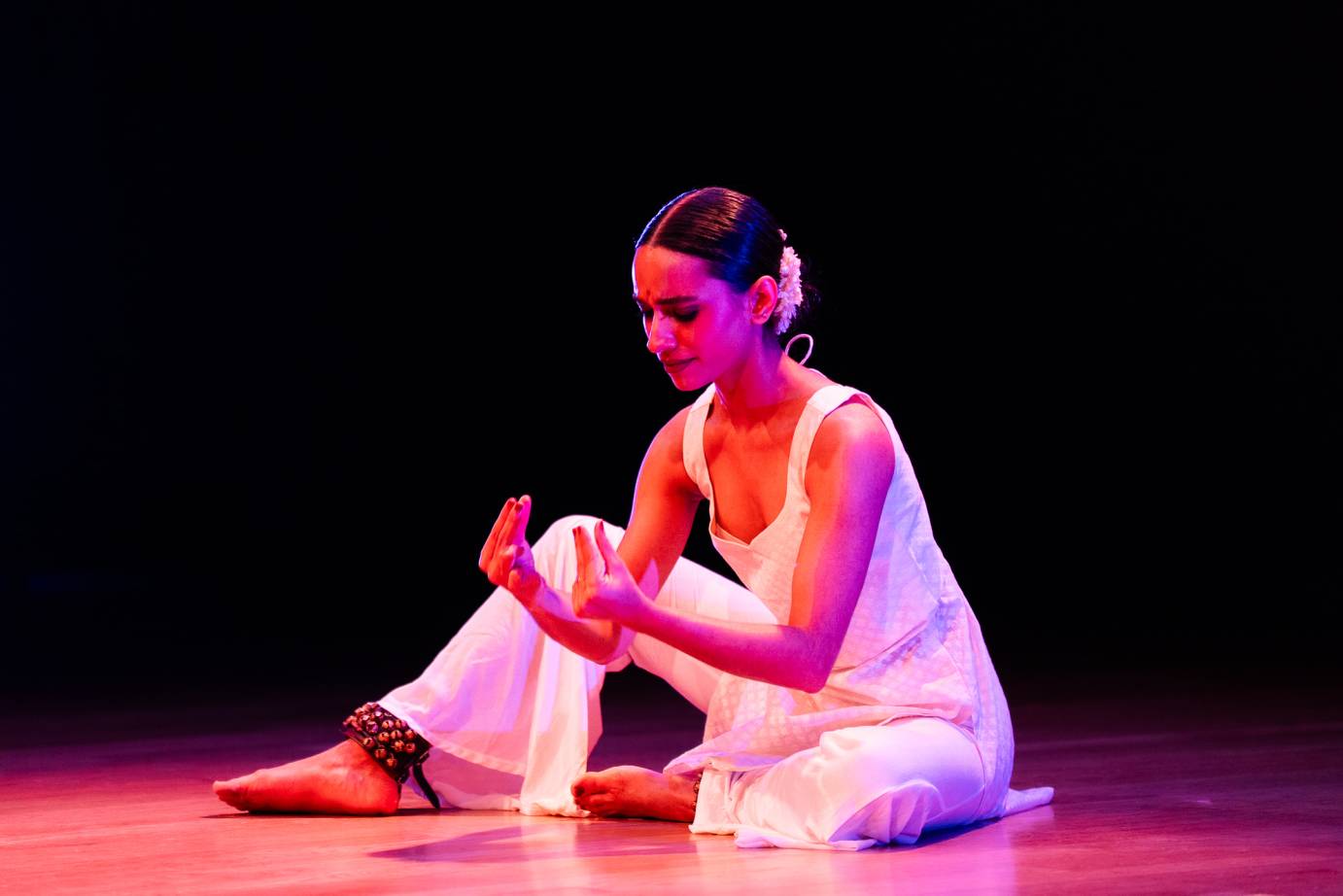
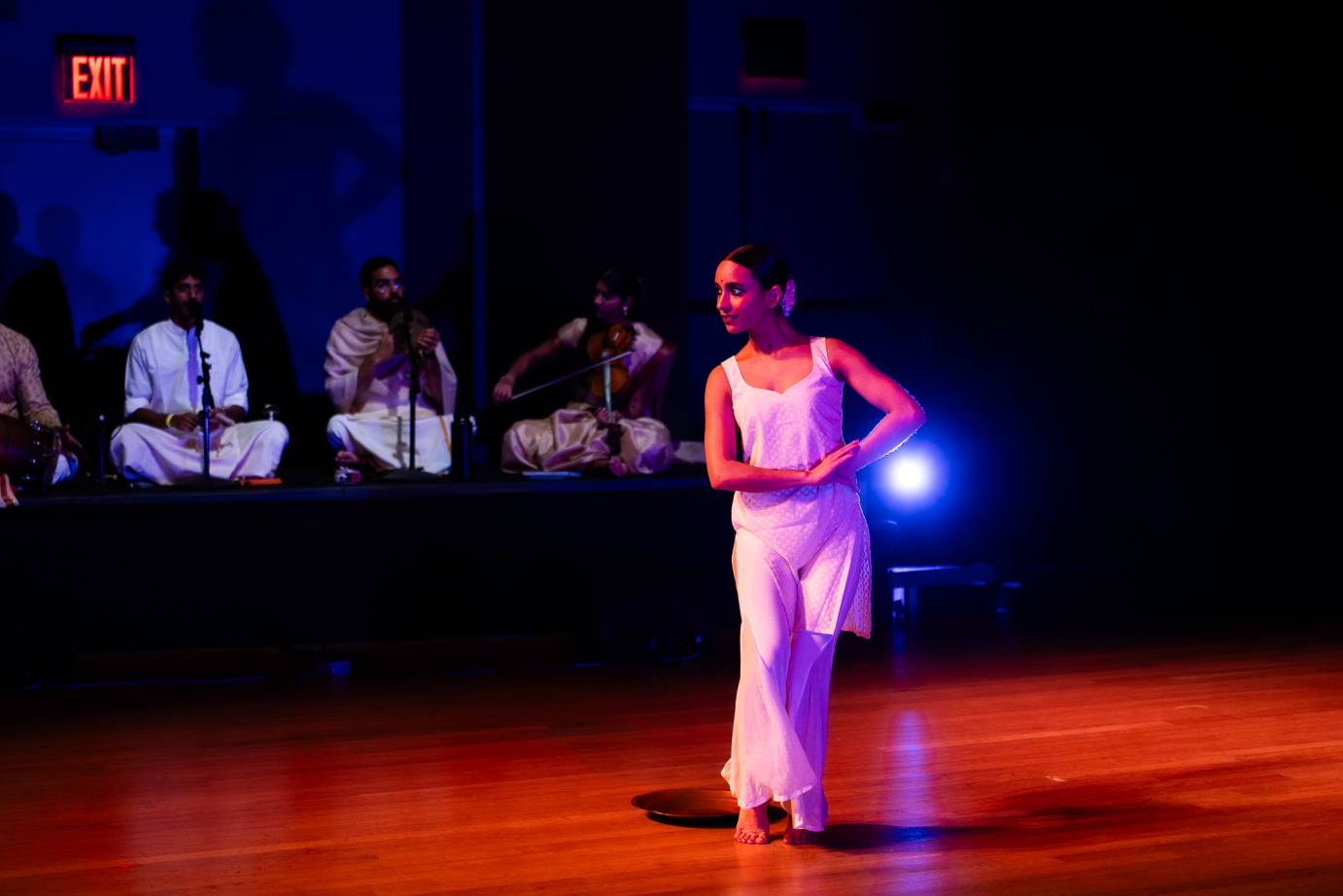
In a departure from tradition, Kalluri wore a simple, white shift rather than the Kuchipudi dancer’s customary ornaments. Yet after a brief introduction notable for sharp changes in direction and graceful poses, Kalluri quickly stepped onto a brass plate to display her virtuosity in a typical “Tarangam” number. Inching forward with a shivering rhythm, and using the impetus of a gesture to turn, she traded beats with the accompanying Kritya Music Ensemble, who performed live on a nearby platform. Initially Kalluri sought to beguile, seizing our attention with flirtatious over-the-shoulder glances. What followed, however, was a soulful affair: excerpts from Sundara Natarajam, an expressive piece describing a philosophical principal in plain, human terms. In Hinduism, the union of Shakhti (female) and Shiva (male) represents the union of active energy and consciousness at the root of creativity. Kalluri’s delicate performance, however, was filled with descriptive mime. As Shakhti, she divested herself of invisible jewelry, and adopted a meditative pose. Then she seemed to awaken, her stillness giving way to rapture as she embraced a divine lover. More energetic sections suggested Shiva’s power, and recalled his attributes culminating in a Nataraja pose. Kalluri left the stage hesitantly, with a backward glance, as if wondering at this experience of unfathomable mystery.
In the experimental finale, Kalluri danced to Western piano music of various eras played by Jiahao Han. The dancer found movements within her own tradition to match filigreed Baroque ornamentation, and the Romantic search for a transcendent ideal. The concluding piece offered variations on the song America, and, raising her index finger while adopting a troubled expression, Kalluri seemed to question our commitment to the national motto, “Out of the many, one.”
A dancer can tell stories, and share profound ideas with her body alone. Poets tell more detailed stories with words, without ever fully grasping the depth and intricacy of the physical world. Curiously, dance and speech inhabit separate spheres that remain only partially accessible to each other. This division between forms of human communication was on display in the following performance, where Kathak dancer Neeharika Tummala responded to Nandana Dev Sen, who sat reading excerpts from her late mother’s poetry collection Acrobat. Certain verbal images found a ready equivalent. Tummala’s hand opened like a flowering blossom; and the dancer’s feet, with bells tied to her ankles, rattled to imitate the sound of an alarm clock. Even a more abstract concept, like the breakup of a household, could be conveyed as Tummala stood sternly blocking an invisible doorway. But, ah! How to evoke a passport photo, or a reference to Dr. Freud? Further complicating this situation for English speakers, Dev Sen read certain passages in the original Bengali.
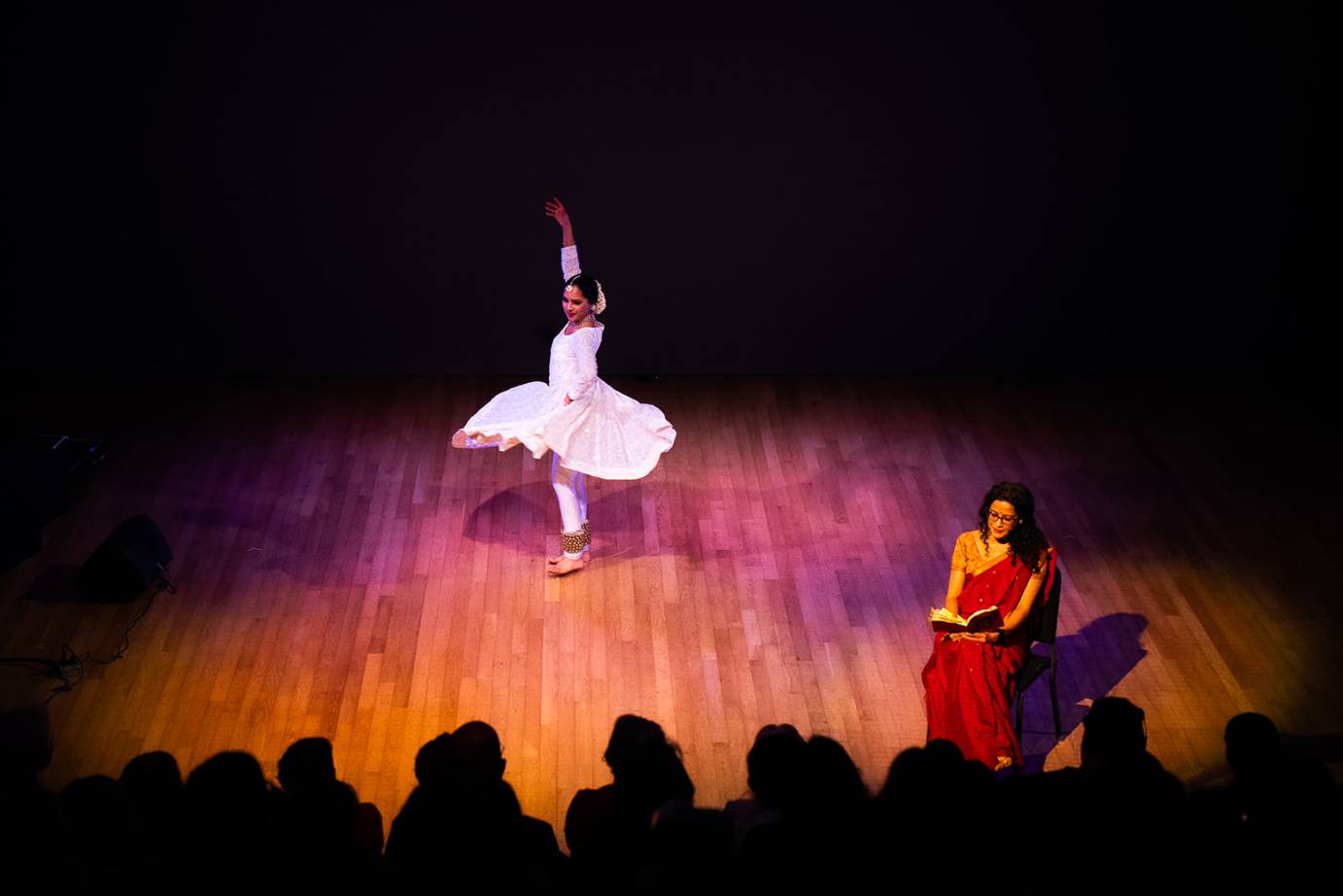
Sometimes, a string of verbal images was required to convey an emotion that the dancer communicated instantly, and with incomparable subtlety, with a flash of her eyes or by striking a suggestive attitude. And sometimes translation was hopeless, and the dancer retired in silence. That said, Tummala is a sensitive artist; and during this fascinating experiment viewers felt their senses fully engaged.
The mainstage event that evening opened with a conversation between two musical groups, a jazz combo stage left and a Hindustani ensemble under the direction of sitarist Jayanta Banerjee stage right. The Americans began with a shimmer of cymbals and snatches of melody from the piano, to which the Indians then added the twang of the sitar and melismatic vocals, the two groups joining to create a spine-tingling atmosphere. Though they appeared in a supporting role, these musicians would give their all to the event, and tabla player Satyaprakash Mithra deserves a special shout-out for his dazzling speed.
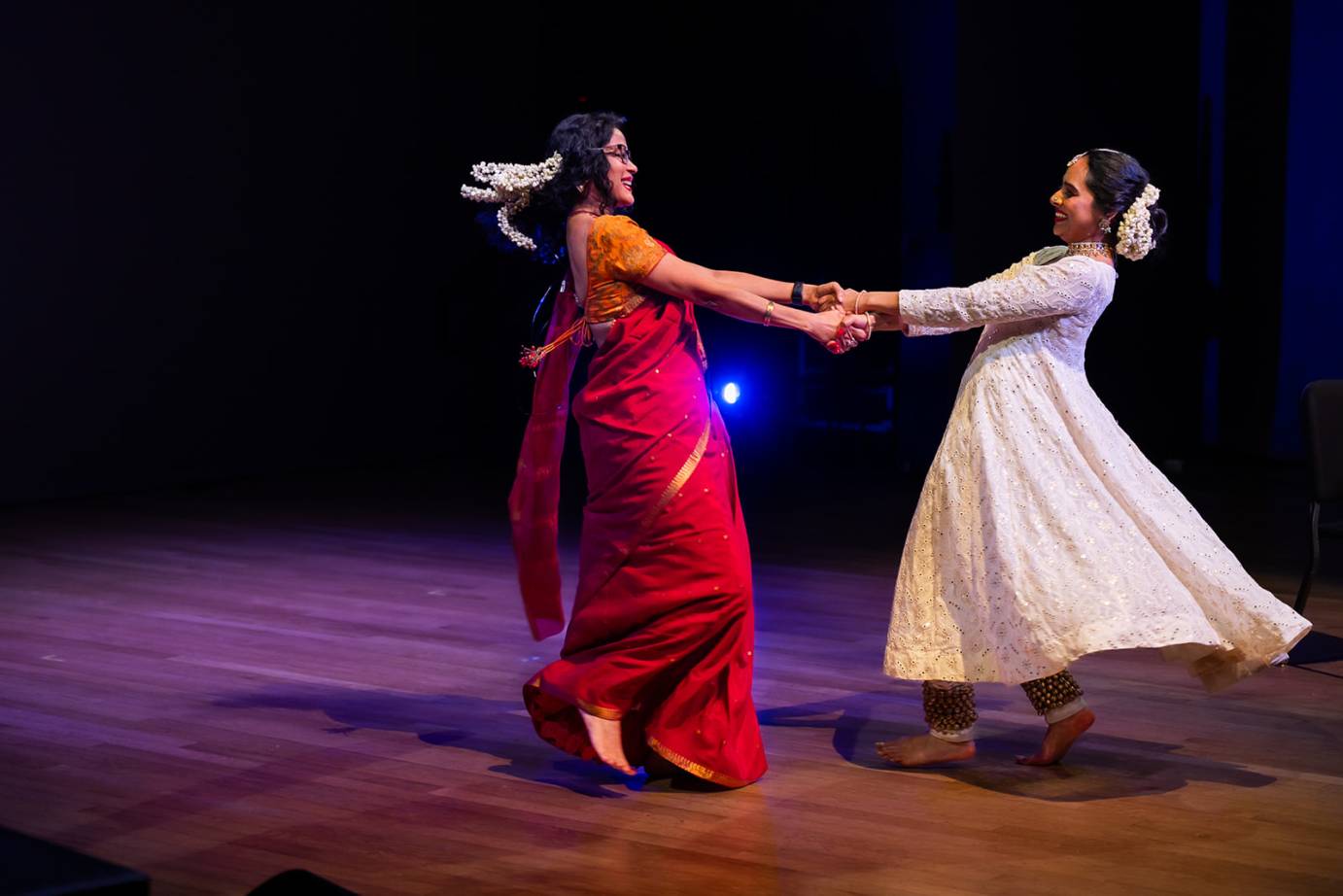
While Kathak dancers and tap dancers seem naturally attracted to one another because of their shared intimacy with rhythm and percussion, they also appear quite different. A face-off between Michelle Dorrance and Rukhmani Mehta emphasized the contrast, with Dorrance loose and rangy, pumping her limbs, while Mehta remained erect, stamping her feet close to the ground, flicking her hands, and arranging her arms like elegant drapery.
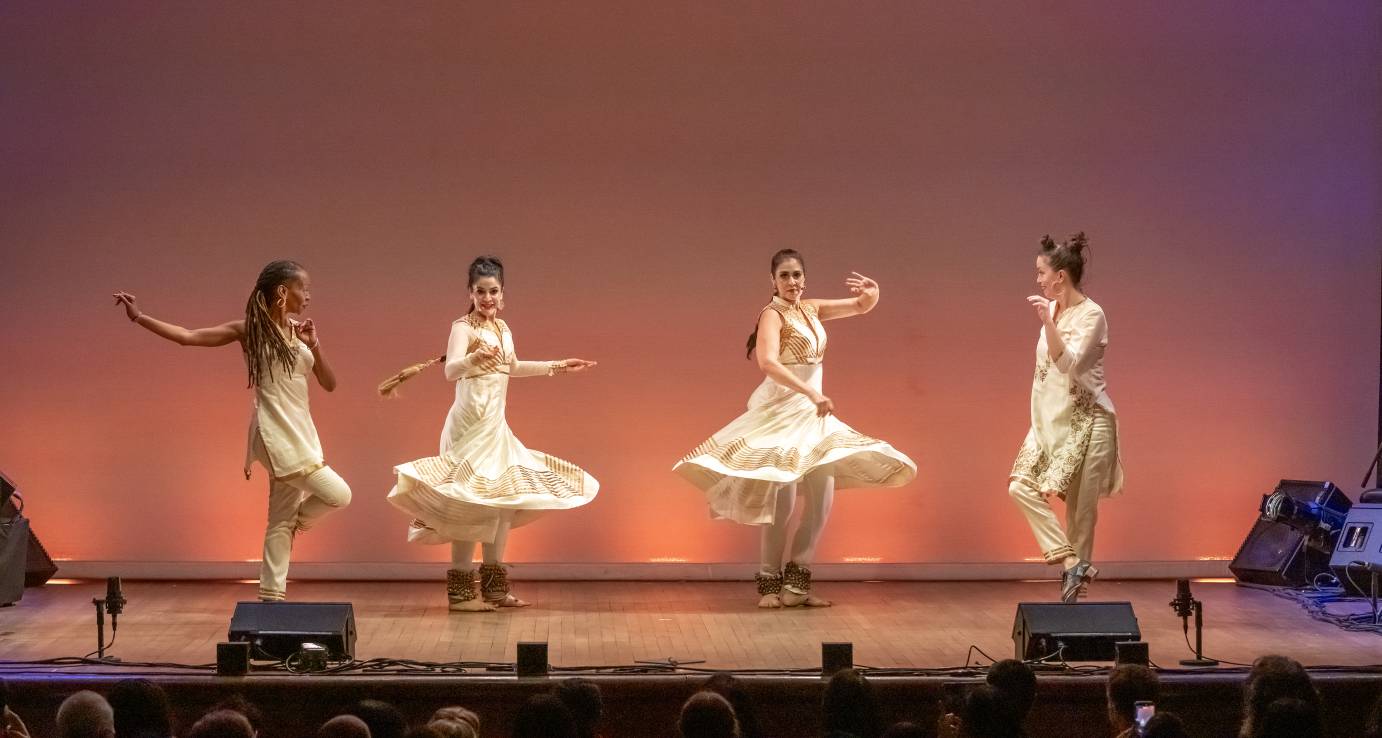
Mehta’s stateliness, however, also contrasted with the fiery temperament Rachna Nivas displayed in her ensuing Kathak solo. Nivas invested her dancing with terrific energy without sacrificing form. Bursts of speed and darting hands suddenly resolved in frozen attitudes of grace. Mad twirling alternated with moments when Nivas danced in place, her feet drilling the floor in intense “tatkars” that made her whole body vibrate. For all her passion, she could also be playful. Nivas blew kisses and smiled as she traded rhythms with Mithra, the attentive tabla player, and she performed a comic skit impersonating a king with enormous moustaches, also mimicking the strut of the peacock who awakened his majesty’s envy. In the finale, Nivas’ stamping turns became hypnotic, their energy suddenly dissipating as she retired with a bow.
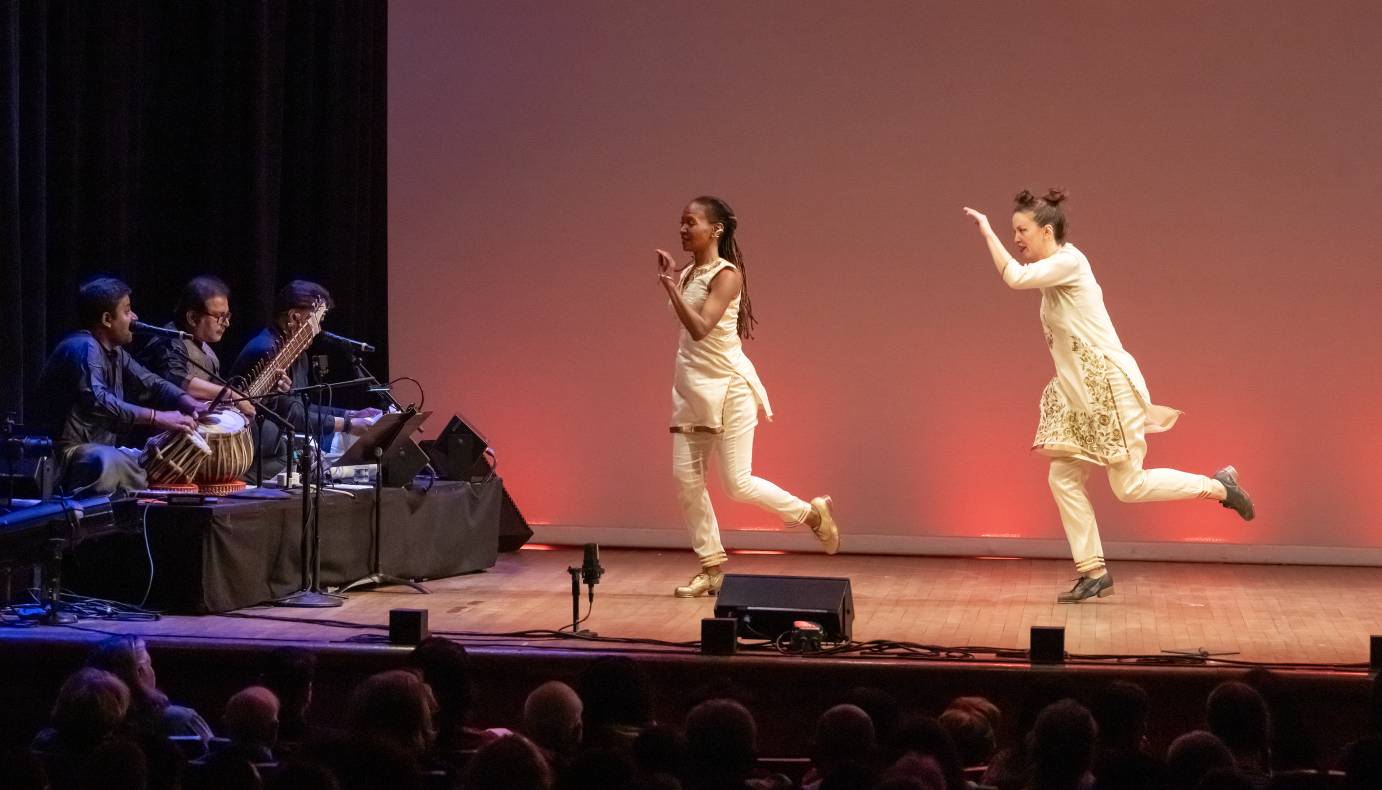
In a piece titled Kirwani, the Indian musicians jammed with the tap dancers, who galloped and slid around the stage in go-for-broke adventures. The dancing was wonderfully inventive. Here the rhythms could be aggressive or delicate, pounding the floor savagely or flowing in a smooth and irresistible cantilena. yet for all the dancers’ virtuosity, Dorrance and Dormeshia maintained a spirit of casual fun. The audience cheered when Dormeshia tossed a beat to the musicians with her hip, and the number concluded with a mock collision, the two friends pretending to bump into each other centerstage. Tap dancers always welcome a challenge, and the flexibility of their art made Kirwani notably successful; yet naturally these dancers seemed most themselves later in the program, when performing their own repertoire. Effortlessly buoyant, but stinging and precise, Dormeshia fluttered suave and ladylike through a solo to the jazz standard Tenderly. Dorrance appeared more passionate, catching the sultry rhythm of Delilah, and building to a climax in which her feet seemed to be everywhere at once.
What an evening! Packed with excitement, this delightful showcase seemed to end too soon.