

Related Features
IMPRESSIONS: Fall for Dance (Programs Two and Three) at New York City Center
IMPRESSIONS: New York City Center's Fall for Dance 2024 (Programs 2 and 3)
IMPRESSIONS: kNoname Artist I Roderick George's "The Grave's Tears" at New York Live Arts

By Sarah Cecilia Bukowski
View Profile |
More From This Author
Published on February 19, 2026
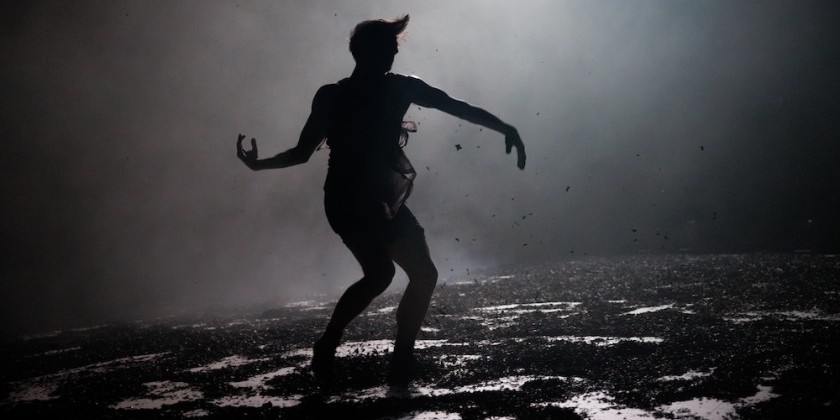
kNoname Artist I Roderick George. Photo: Maria Baranova
Artistic Director & Choreographer: Roderick George
Music: Jace Clayton
Lighting Designer: Tanja Rühl
Associate Lighting Designer: Connor Sale
Costume Design: Lauren Carmen
Rehearsal Director: Daniel Harder
Performers: MJ Edwards, Roderick George, Peter Mazurowski, Demetris Michaelides, Zack Sommer, Alex Soulliere, Jonathan Wade
February 12 - 14, 2026
New York Live Arts
Choreographer and performer Roderick George is unafraid to tackle weighty and challenging subject matter in his work; his fearlessness is equally present in the force of his choreography and the dancers he gathers to perform it (whom he often dances among).
In The Grave’s Tears, George takes on the personal and political dimensions of the HIV/AIDS crisis, linking the decimation wrought on a generation of queer people and their communities to the tangible and persistent void in his own lineage as a Black queer artist.
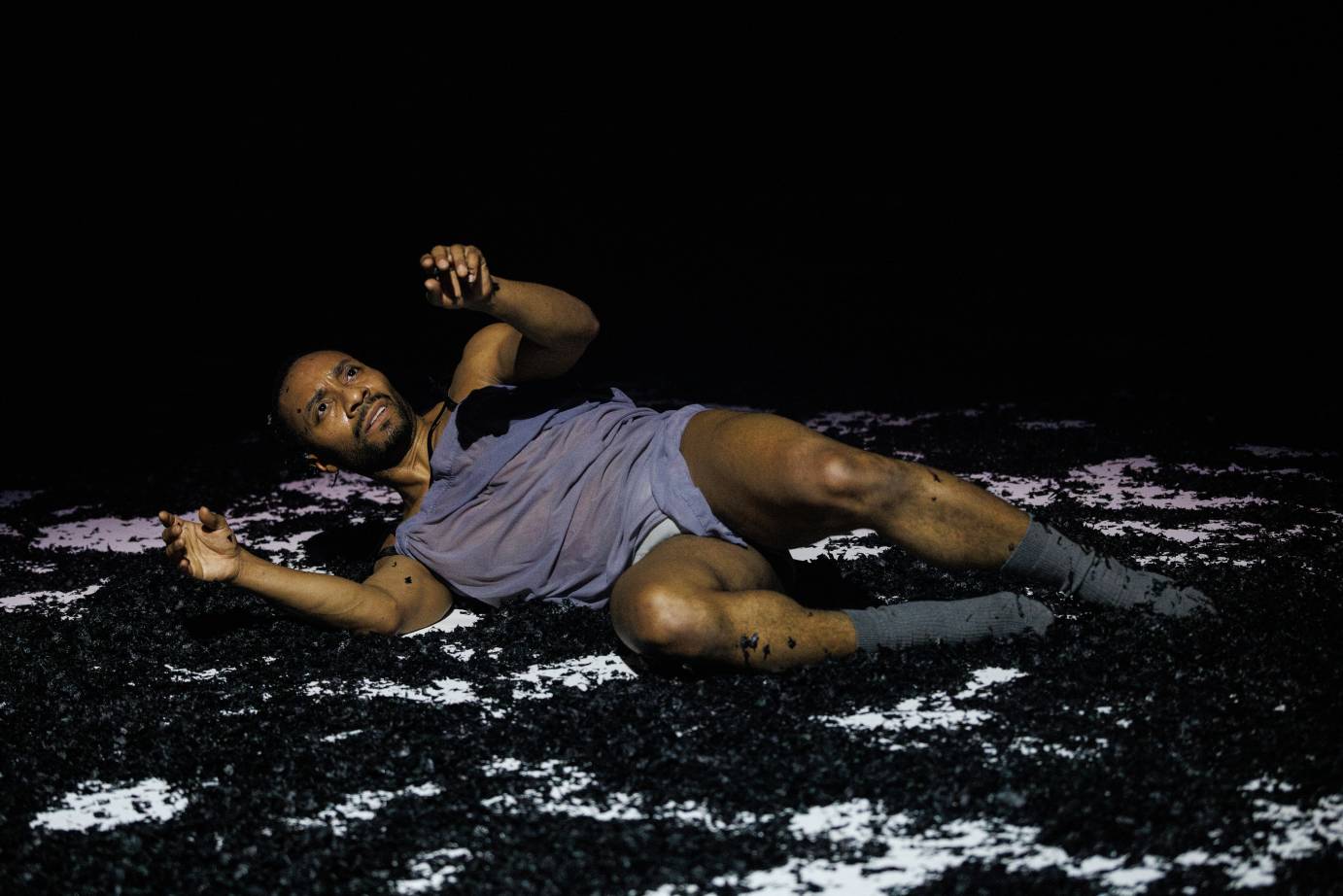
kNoname Artist I Roderick George, Soloist-Roderick George in The Grave's Tears, 2026.
Photo by Maria Baranova, courtesy New York Live Arts
The work traces the pulsing joy of the 1970s and plunging darkness of the 1980s as the crisis flooded through queer spaces to come up against stigma, dehumanization, and wrenching loss. The cast of seven performers slide between living and spectral forms amid drifts and swirls of black confetti fallen silently at their feet, a dark snow on white floor. While at times they become characters, symbols, or stand-ins for their queer ancestors, they each bare themselves as individuals with equal gravity and power.
It's not hard to be drawn in by George’s dynamic choreography and the dancers’ virtuosic execution — razor-sharp pirouettes, high-flying legs, breathtaking plunges from vertiginous heights to prowling depths — yet the choreographer’s project speaks of a more nuanced purpose.
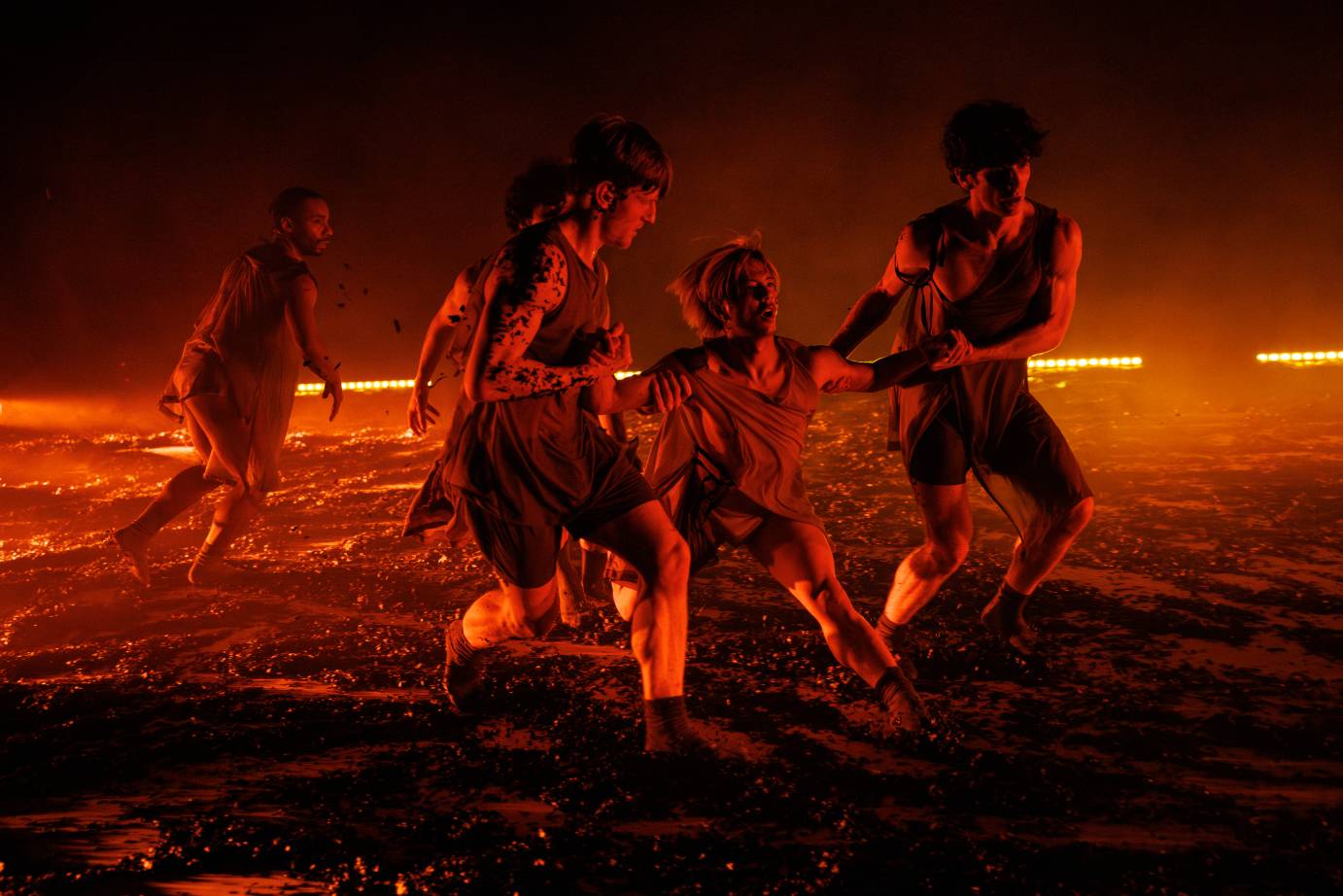
MJ Edwards (back left), unidentified dancer, Alex Soulliere (front left), Jonathan Wade (front center), Peter Mazurowski (front right) in The Grave's Tears. Photo by Maria Baranova, courtesy New York Live Arts
At first glance, George’s work falls squarely in the (admittedly rather nebulous) realm of contemporary dance — elastically acrobatic bodies undulating and gliding on socked feet through dramatic emotional states — though his thematic frame also allows him to express the wealth of influences he carries in his body and creative mind.
The work’s arc harnesses iterative vocabularies passed down through successive generations of queer bodies: soul merges into disco on late night dance floors flecked by the glint and spin of shards thrown by an ever-present disco ball; neoclassical ballet veers into contemporary forms, with jutting pelvises and proud shoulders sprouting assuredly honed and slicing limbs; the advent of the sock in all its slippery potential writhes through serpentine spines and deep lunges with textured precision.
This accumulation of languages makes tangible the bridges that dancing bodies build across gulfs of generational loss, stitching together possibilities for a future that carries ancestry in the pulse and stretch and sweat of movement.
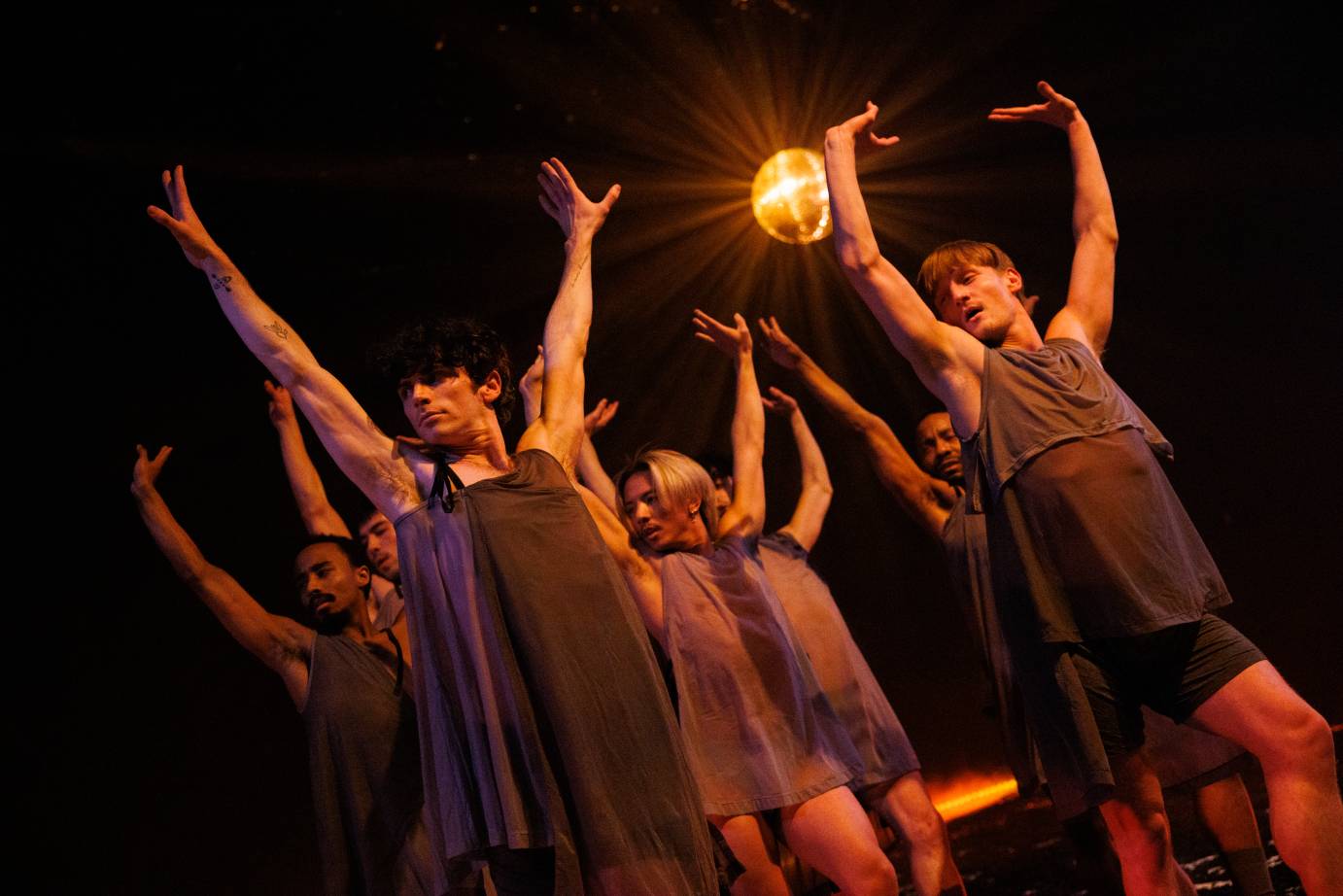
(Left to right) MJ Edwards, Zack Sommer, Peter Mazurowski, Jonathan Wade, Roderick George and Alex Soulliere in The Grave's Tears. Photo by Maria Baranova, courtesy New York Live Arts
The work opens under the warm, hazy cast of the disco ball, a well-worn melody rising to meet it. A single dancer — the eminently sensitive MJ Edwards — floats into view as their community grows around them, materializing from the fog of memory. The group’s arms rise in tandem like angels’ wings, mingling lightness and weight as they move together through gestural explorations that coalesce into extended sequences of intricate unison phrasework. They migrate as a cluster to the strains of disco dance floor classics, feet stitching out rhythmic syncopations while arms and hands vamp in turn, carried on proud, open torsos. Elbows akimbo at ever-shifting angles, they move fluidly from invisible high heels to invisible ballet slippers, their pumping ponies and shimmering shimmies loosened into boogies that depart briefly from the crowd. Short, diaphanous tunics (by Lauren Carmen) graze and breeze coyly around their bodies, moving and trailing and revealing them in the pleasure and rigor of their shared ritual.
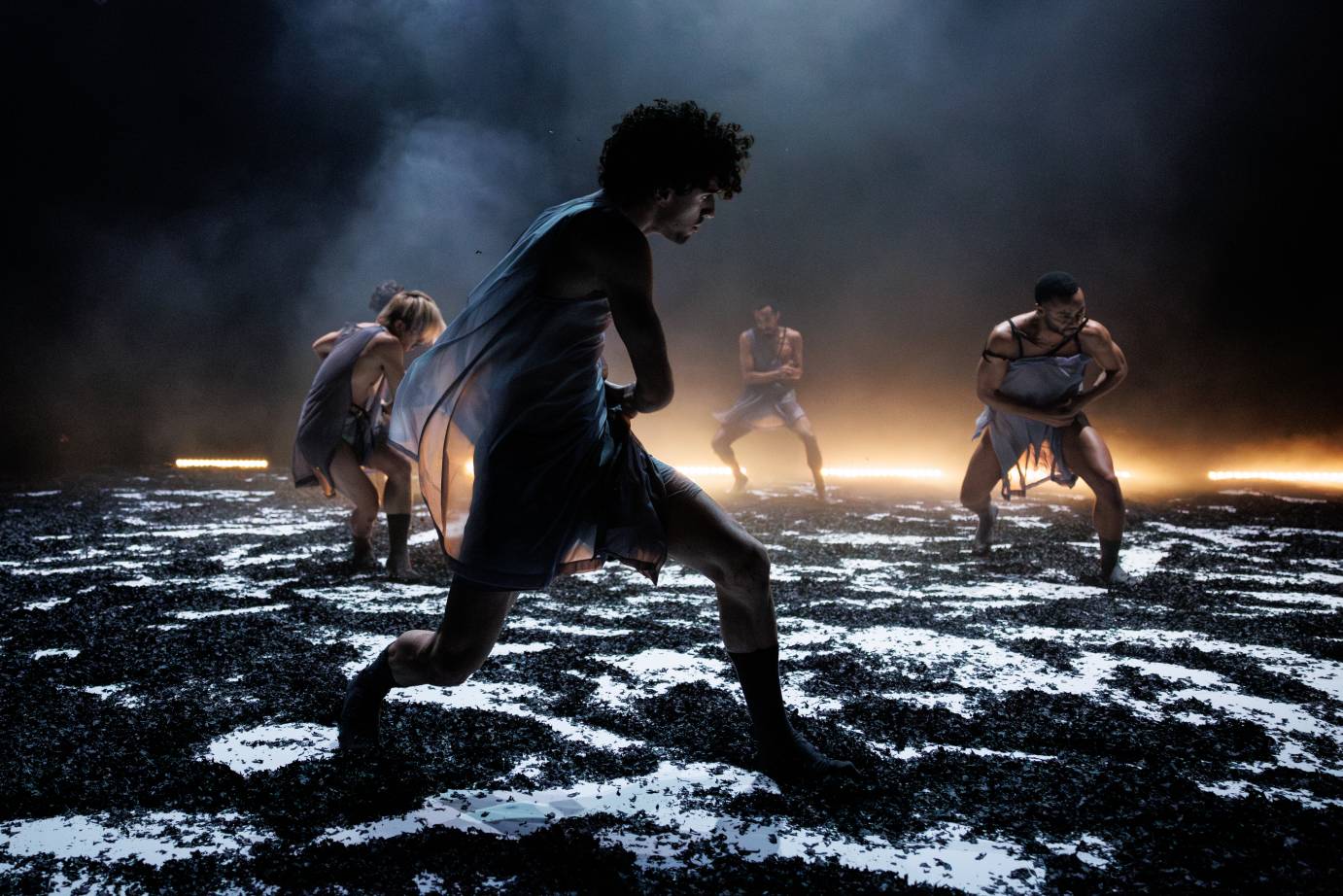
(Center and front) Demetris Michaelides (back from left to right), Jonathan Wade, Zack Sommer and Roderick George in The Grave's Tears. Photo by Maria Baranova, courtesy New York Live Arts
Just as the pulse reaches its zenith, they fall. The drop is palpable: sound fades to silence heavy with breath, the glow subsides as the disco ball turns in darkness. A minimalist, fractured piano score and snippets of testimonial voiceovers supplant the celebratory lyrics and driving beat as the dance floor becomes a place of reckoning. The dancers’ unisons and departures assume a somber tone as they tumble and rise, carried toward and away from one another by forces beyond their control. In defense, they turn inward — to themselves and to one another — with undulating group lifts that carry bodies through space like sacrifices and mournful extensions that bare the splayed pelvic floor as the site of void, vulnerability, desire, peril, and responsive support.
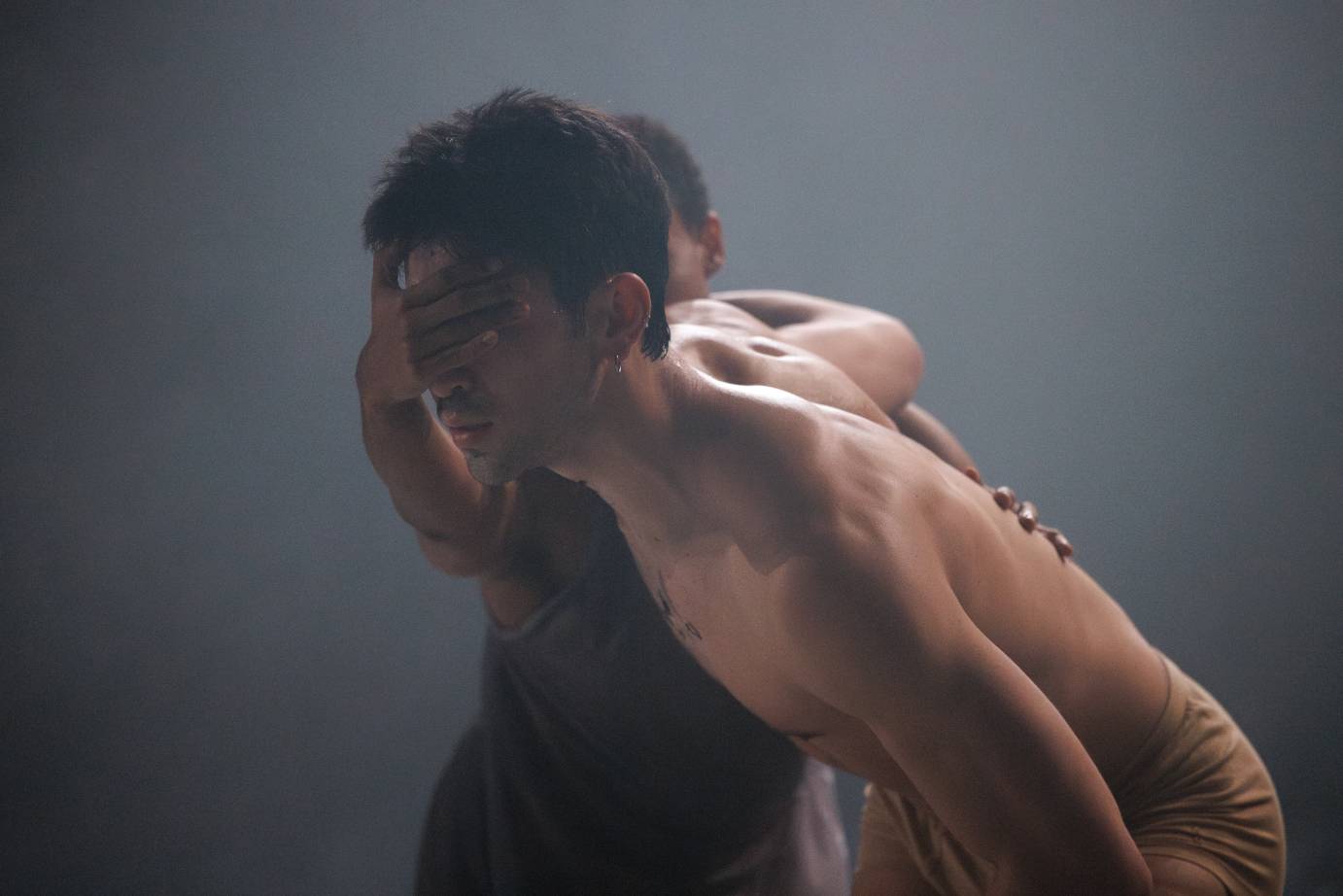
Zack Sommer and MJ Edwards in The Grave's Tears. Photo by Maria Baranova, courtesy New York Live Arts
Duets of love and desperation crumble into solos wracked by grief and guilt, driven by the piano’s persistent underlayer of dissonant and percussive chords. A tangled group or twinned pair of shades haunt Tanja Rühl and Connor Sale’s shifting palette of shadows, their bodies tracing gashes and spirals in the black snowdrifts. George dances a manifesto in movement, falling and reaching and soaring as his voice urges him onward: the fight is not over, it is ever more urgent, and we are still here. A closing solo for Edwards returns them to smoky silhouette. Alone, they pace tenderly through a reprise of the group’s ecstatic opening sequences, every footfall, every tilt and turn of their head or hand or shoulder a gesture of infinite care and resilience. Hovering above this elegy, through the veil of memory, the disco ball spins on — a dark and impassive witness to a world of turmoil.
The Grave’s Tears locates George’s contemporary dance aesthetic within a larger purpose-driven practice. While leaning into physical virtuosity and structural unison throughout the work, the choreographer gradually transforms what might otherwise become choreographic tropes into narrative tools that accrue meaning as the work unspools. What does it mean to push bodies to their limits? What does it mean to move together? These questions — wrapped in hope and fear, in courage and compassion, in loss and remembrance — transcend generations, folding the performers, and us in turn, into an embrace across time.
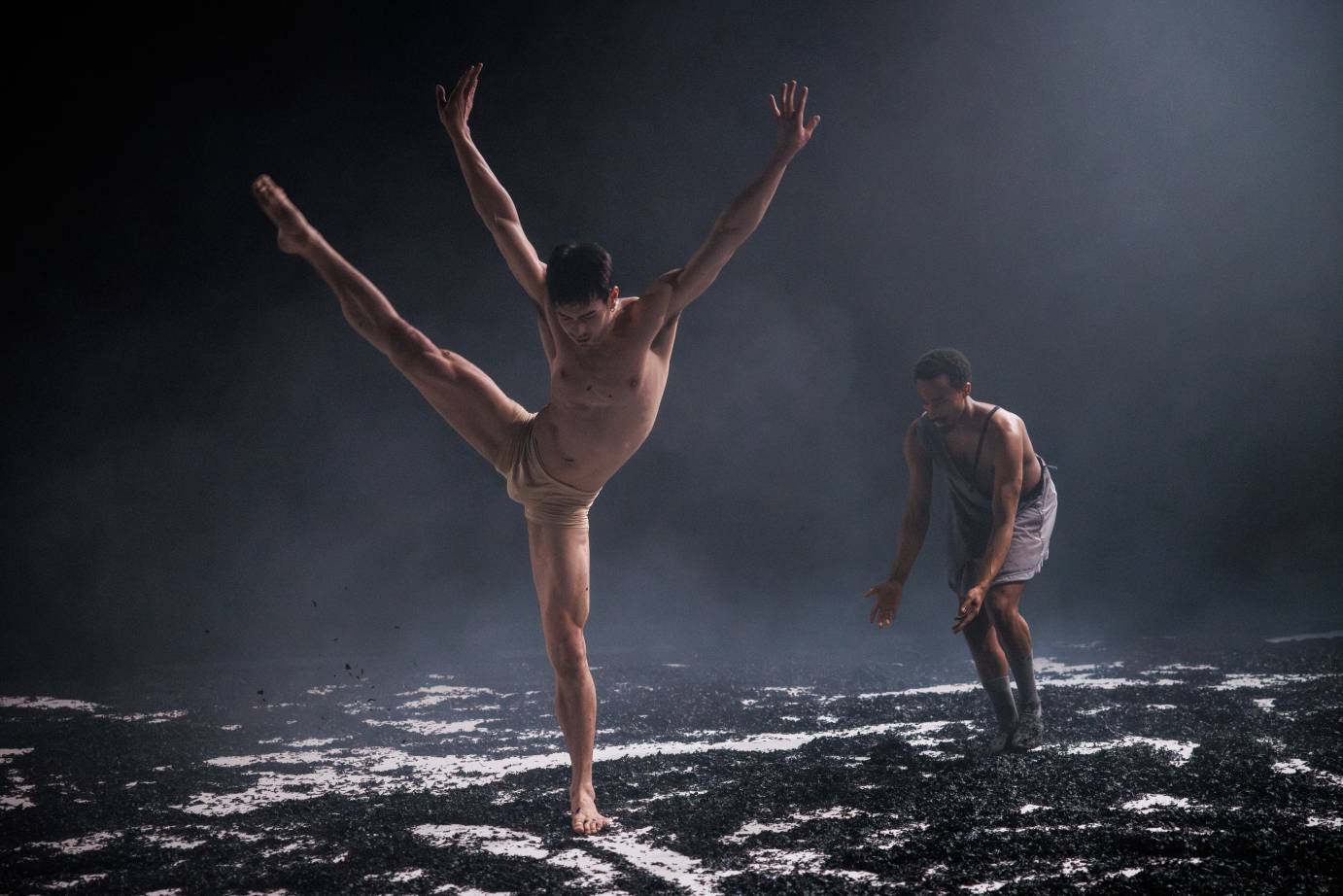
Zack Sommer and MJ Edwards in kNoname Artist I Roderick George: The Grave's Tears. Photo by Maria Baranova, courtesy New York Live Arts