

Related Features
THE DANCE ENTHUSIAST ASKS: Joshua Beamish and Daniel Gwirtzman Embrace the Delicate Dance with Technology
DANCE NEWS: New York City Center Celebrates NYC PRIDE with Encore Presentation of Lar Lubovitch’s "Concerto Six Twenty-Two"
THE DANCE ENTHUSIAST ASKS: Daniel Gwirtzman Celebrates Pride & Creativity at New York City Center Studios

By Theo Boguszewski
View Profile |
More From This Author
Published on June 23, 2026
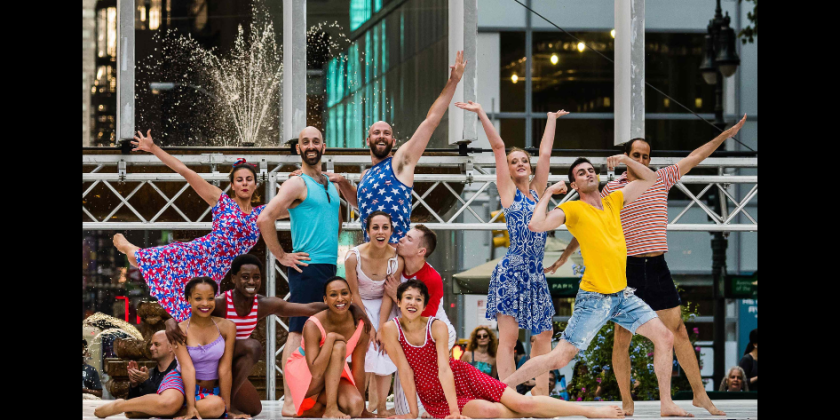
Photo courtesy of Daniel Gwirtzman
Don't Miss DGDC's Free Interactive "In The Studio" on June 25 - 26, 2026
As part of New York City's upcoming PRIDE celebrations this June 25 - 26, 2026, Daniel Gwirtzman Dance Company returns to New York City Center Studios for In The Studio, a free, interactive opportunity to engage with the creative process. Featuring excerpts from Gwirtzman’s Dreamland and Flashpoint, the event invites audiences into the rehearsal room for an intimate look at how dance is made.
Who: Daniel Gwirtzman Dance Company
Where: New York City Center Studios, West 56th Street, Between 6th and 7th Avenues (The STAGE DOOR Entrance), New York, NY
When: Thursday, June 25 @ 1 PM | Friday, June 26, 2026 @ 3 PM
Tickets + Info: https://www.eventbrite.com/e/in-the-studio-daniel-gwirtzman-dance-company-at-new-york-city-center-tickets-1987738070076
The Dance Enthusiast’s Theo Boguszewski spoke with DGDC Founder and Artistic Director Daniel Gwirtzman about risk-taking, LGBTQ+ representation in dance, and the power of movement to foster empathy and connection.
Theo Boguszewski for The Dance Enthusiast: In The Studio invites audiences into the creative process rather than presenting a finished performance. What inspired you to create this open, participatory experience?
Daniel Gwirtzman: There is a history with this type of interactive programming which connects to a larger thread of explaining and demystifying dance. And we have a history of producing these events. It’s our long-established commitment to educating the public about the art of dance through meaningful interactive programming. We chip away at the typical division between performers and viewers, and allow engagement with the art to be more multidimensional.
What is the typical composition of the audience?
It's a real range, especially because these are free events. We have found that over the years, by removing barriers [such as cost] we bring in new audiences. We want to reach people that have yet to be initiated into dance, AND those that are already part of the ecosystem. We don't dumb anything down; the work is designed to be relevant to everybody that's there.
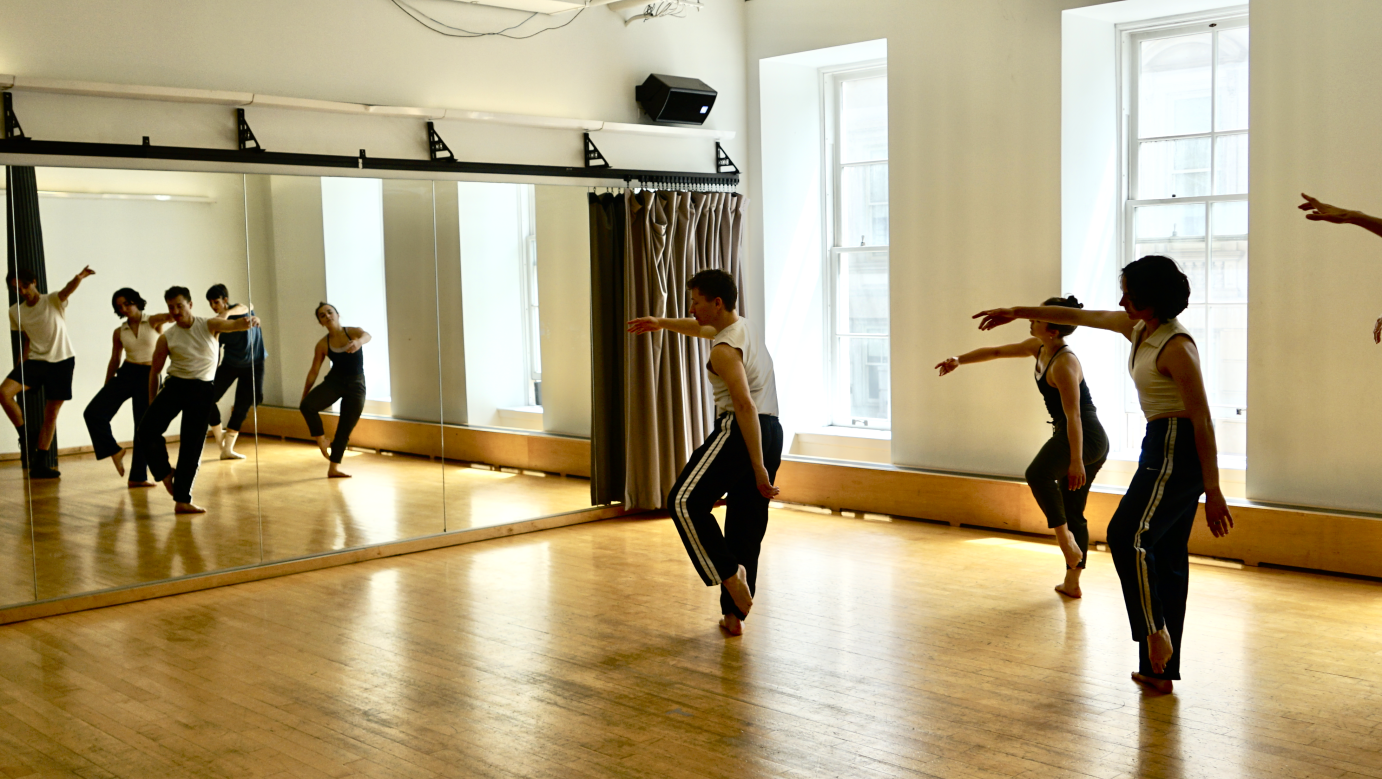
DGDC Company in class. Photo courtesy of Daniel Gwirtzman
How does the feedback and energy from an audience in a studio setting influence the performance and the work itself?
Well, I think there's two things. There's the performance in that moment, and then there's what information could be of value in going forward, especially with new work and development. The energetic transaction between audiences and performers has an immediacy that we feel too - a mutual exchange of energy.
It's important, I think, to have a chance to understand something from a multiplicity of viewpoints before the work premieres. I'll be sharing work that will premiere later in the fall season, and having a chance to hear how someone is reading the work, questions that they have, their unfiltered thoughts, is really valuable. We often work in a vacuum as choreographers. And, this also gives the dancers a chance to hear thoughts from outside, not just the choreographer's ideas about work.
Have you ever had a situation where feedback from one of these intimate studio performances has largely impacted the direction of the piece?
There have been instances where audience feedback strengthened or solidified the direction. I'm always aware of honoring the creative interests, but balancing that with making work that is digestible, palatable, and hopefully meaningful. I would really welcome somebody saying “I don't understand at all what's happening.”
What's clarifying for me is bringing something from the medium of dance into another language system, that of words, getting adjectives, hearing peoples’ descriptions. Those are gifts from viewers.
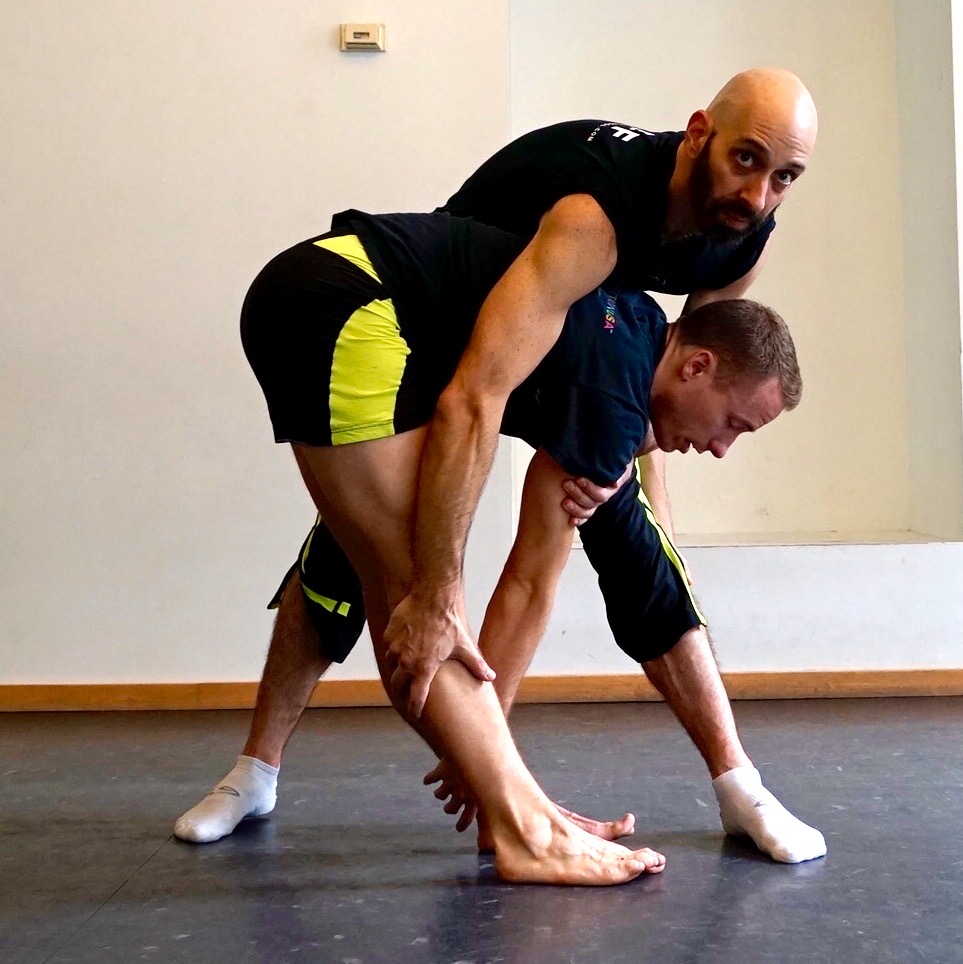
You've said that non-heteronormative partnering has been a trademark of the company's repertory since its inception. What motivated that artistic choice from the beginning?
It was an awareness that the company could be a vehicle to express life in all of its forms. I don't want to add anything more cerebral or complex to that.
How has the landscape for LGBTQ representation in dance evolved since you began presenting work professionally in the 90s?
Oh my God, so much. I think the landscape has changed tremendously. Just remembering back to the 25th anniversary of Stonewall in 1994, when I danced in the Gay Games, which was a huge happening in New York. And during that time, it was noteworthy that there was an illustration of two grooms on a cake in the New Yorker. Like, why do I remember these things from so long ago? Because as a young gay artist, I remember the glee of seeing this representation.
Why was it important for you to align In The Studio with the New York City Pride celebrations?
Well, it's always a wonderful opportunity to embrace Pride – we're known for our colorful ethos, not just costuming, but also optimism. We have so much new work, as well classics from the repertoire. It just felt like it could be a great party to bring more audiences into the fold with minimum investment on their part - a free event, and not a nighttime event.
If someone is working, they might take a later lunch to see our work. You can come and go if you need to. We have an hour-and-a-half program with all kinds of fun things planned and interactive elements. It's also a chance to share work that will not otherwise be seen in New York right now.
We'll be taking a program called Summer Mix on the road to Ithaca, New York, with six performances at Kitchen Theatre Company. And this is a mix of some of our favorites from the repertoire, from our acclaimed Encore, as well as the premiere of Flashpoint, which we developed at American Dance Festival two summers ago, but has yet to be premiered for the company.
And so, as part of this party of Pride,I wanted to bring works that are among our most accessible and relevant, to celebrate real joy and escape into the realm of dance. And then also to confront head-on the darker, more serious themes of our time.
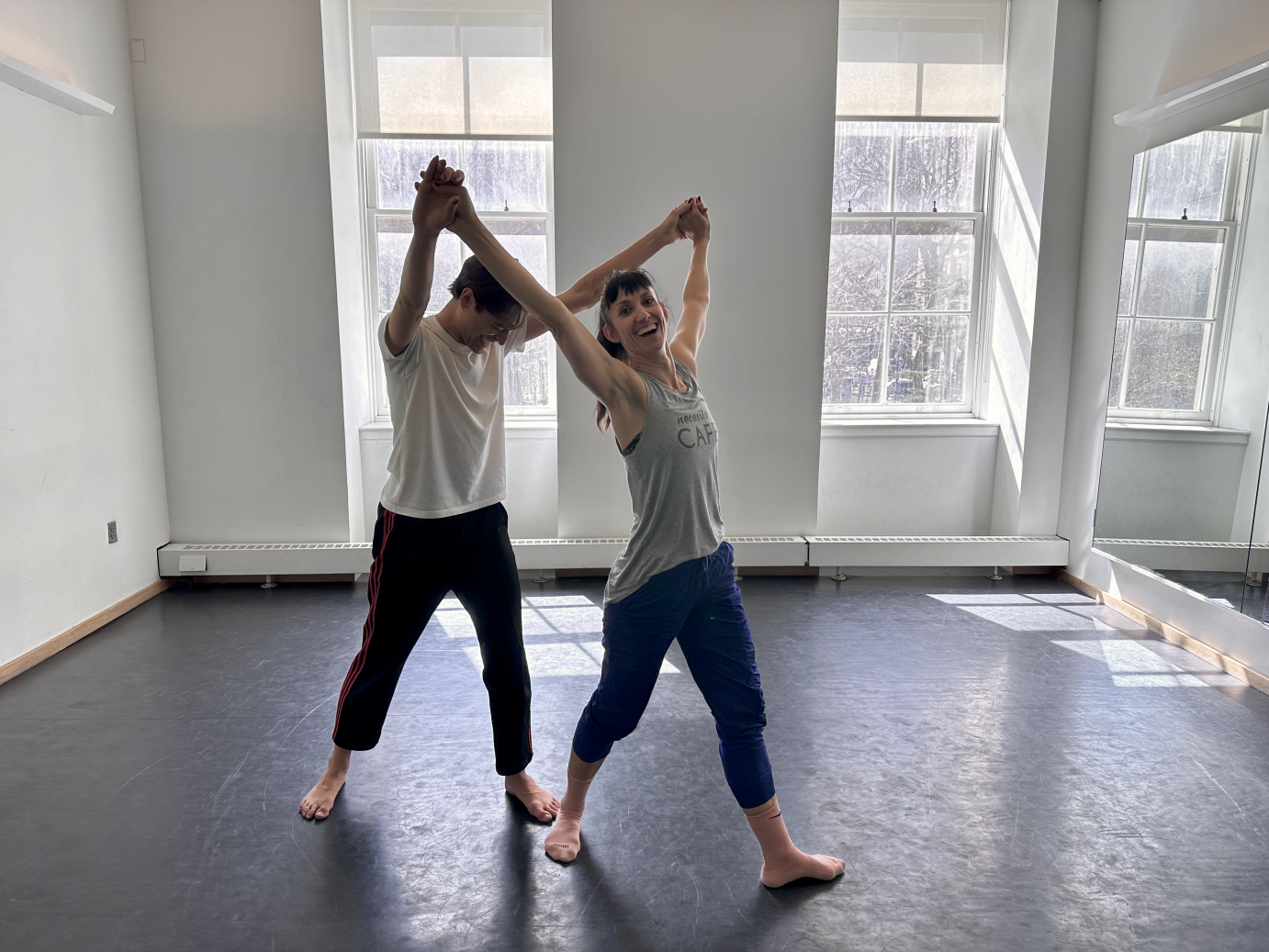
Why did you choose excerpts from Dreamland and Flashpoint as focal points for these events?
Focusing on Dreamland, which shows the love between people, and Flashpoint, which shows love but also conflict and strife, is just responding to the incivility of our times and bringing a magnifying glass to that and understanding where empathy has frayed so much. And of course, we're all aware of this fraught moment that really feels like an inflection point. And Flashpoint, just as a title – “flashpoint” is things changing on a dime in a really escalating and inflammatory way. And certainly that in and of itself is not new, but the ramifications coupled with political violence is of a new tenor. I'm happy to bring in and affirm the love, in this context of Pride, of non-heteronormative, not stereotypical, flourishing, healthy, holistic relationships. And to use the medium of dance and the framework of a dance company to have commentary and magnify themes that are coursing through my mind.
You're entering your fourth decade as a New York based choreographer. What keeps you curious as an artist after so many years of making work?
And if I might add, I'm entering a fourth decade performing as well, but that's a separate thought.
It’s about continuing to honor the quirky, the new, the unconsidered, and the risky. And I think that this just animates an inner fire to follow that inner life, the idiosyncrasies and my perspectives on the world. So it doesn't become rote.
What excites you most about the future of your company? Are there themes, collaborations, or ideas that you haven't explored yet that you're thinking about pursuing?
For sure. That really lies within the realm of film. The company most recently had the chance to premiere Framing Menerbes, which screened June 17 as part of the Finger Lakes New Works Festival. That's the company's first feature-length film that was shot in France and involves 12 participants from this region of Provence. Ages ranging from late 30s to 90, all various backgrounds, with or without dance. So bringing more of that digital platform and bringing dance to more people through the scaling of that medium is where the company is increasingly going to be focused.
What role do you think dance can play in fostering empathy and connection in today's world?
Every role. It is singularly equipped for that. And when we talk about dance, let's make sure that this is in its broadest form, not just the performing art branch of that tree, but seeing dance as understanding what it is to take somebody's hand and look them in the eye. One of my most gratifying experiences recently was teaching partnering at a collegiate level where my students reflected on this contact.
As much as we're going to continue to bring technology into our work through film, the company also wants to stay rooted in the analog world. When you look at somebody in front of you, not through a screen, that's the beginning of partnership. Dance in every way allows us the humility, the understanding, the beauty, the joy of what it is to consider somebody else. Partnering is negotiating in real time. You have to be present, you have to be listening, you have to be attuned. And that combustion that comes from being present with another, and considering another point of view, it’s really sharpened through dance.
As movement educators, we understand how dance is singularly equipped to fashion and impart change. The time is ripe for this. We didn't talk specifically about AI, which is really the elephant in the room; it’s not hiding and it’s affecting all the work. Dance is a way to combat the speed in which that's encroaching. I absolutely believe that this practice is not going anywhere and will just come into greater currency.