

Related Features

DANCE NEWS: A New Season and an Expansion of The Dance Enthusiast's Audience Reviews

DANCE NEWS: These Are Works & Process’ 2026-2027 Curated and Open Call Residency Artists
IMPRESSIONS: New York City's Ballet’s "New Combinations" Program, Premiering Justin Peck’s "The Wind-Up"

By Lisa Jo Sagolla
View Profile |
More From This Author
Published on February 10, 2026
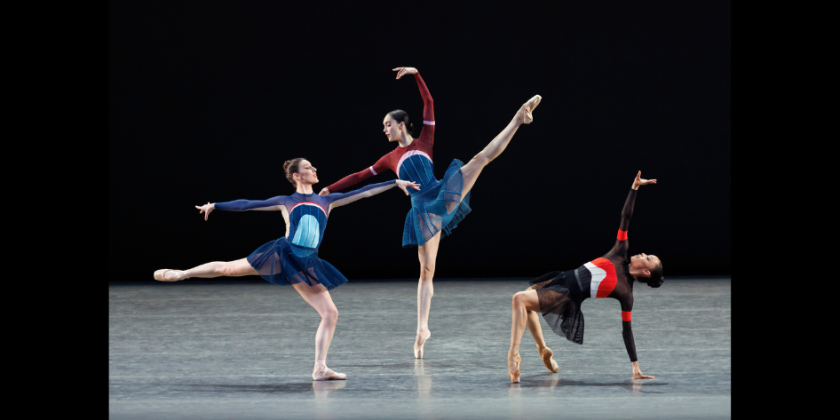
Tiler Peck, Mira Nadon and Mia Williams. Photo: Erin Baiano
Choreography: George Balanchine, August Bournonville, Justin Peck, Jerome Robbins
Music: Francois Gounod, Edvard Helsted, Ludwig van Beethoven, Sergei Prokofiev
Costumes: Karinska, Ben Benson, Reid Bartelme & Harriet Jung
Lighting: Mark Stanley, Brandon Stirling Baker, Ronald Bates
Featured Dancers: Tyler Angle, Chun Wai Chan, Anthony Huxley, Isabella LaFreniere, Olivia MacKinnon, Alexa Maxwell, Roman Mejia, Miriam Miller, Mira Nadon, Tiler Peck, Ryan Tomash, Daniel Ulbricht, Mia Williams
David H. Koch Theater at Lincoln Center
January 29 - February 7, 2026
The main event of New Combinations — one of six programs comprising New York City Ballet’s 2026 winter season at Lincoln Center — is the world premiere of NYCB's resident choreographer and artistic advisor Justin Peck’s electrifying new ballet, The Wind-Up. Set to the first movement of Beethoven’s game-changing third symphony, tagged the Eroica (Italian for “heroic”), the ballet, for six top-drawer dancers, teems with suggestive references and instigations to interpret images spanning personal, artistic, and historical domains.
Because the symphony was initially dedicated to the powerful, famously-though-erroneously-deemed-short military general Napoleon Bonaparte (then changed when a disgusted Beethoven heard that the anti-monarchist hero crowned himself emperor), one can’t help but see the ballet’s book-ends — breath-taking solos by the compact technical virtuoso Danny Ulbricht — as enjoyably ironic Napoleonic references. Yet the heroic spirit imbuing Beethoven’s symphony, and celebrated in Peck’s choreography, extends beyond the politically and musically revolutionary to also reflect Beethoven’s personal valor battling the growing deafness he experienced while composing the Eroica.
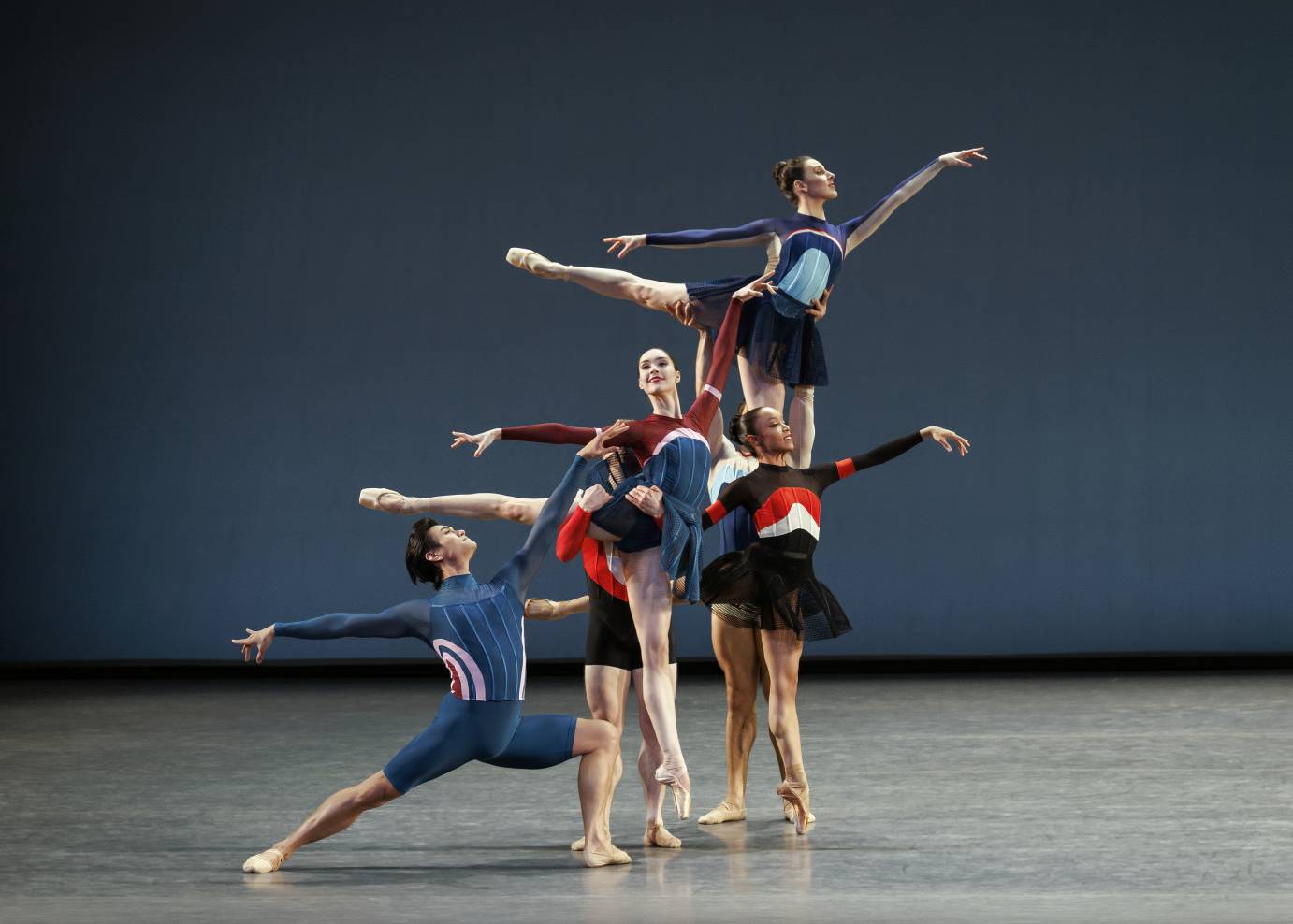
Chun Wai Chan, Mira Nadon, Daniel Ulbricht, Mia Williams, Roman Mejia, and Tiler Peck in Justin Peck’s The Wind-Up: Photo: Erin Baiano
The ballet’s overarching choreographic concept situates the dancers in close conversation with the music and challenges them to “keep up” with Beethoven, thus proving that they, too, are heroes. It’s no surprise that the extraordinarily musical Tiler Peck (no relation to the choreographer) succeeds thrillingly. In a speedy solo, she both captures and replies to every iota of the sonic landscape Beethoven puts forth, mimicking the mercurial musical activity with remarkable kinetic clarity. Because her performance so compellingly illustrates how dancers harbor music within their bodies, we are reminded of Beethoven’s plight, when his hearing loss forced him to generate his music from within.
Later, in a duet with her, Roman Mejia travels triumphantly across the stage lifting his partner up and down with dauntless repetition. She flourishes each ascent with stiff placements of both arms overhead, reminiscent of military salutes, until the final lift lands her offstage. Mejia is left empty-handed, and we laugh, realizing how easily heroics can turn into absurdity.
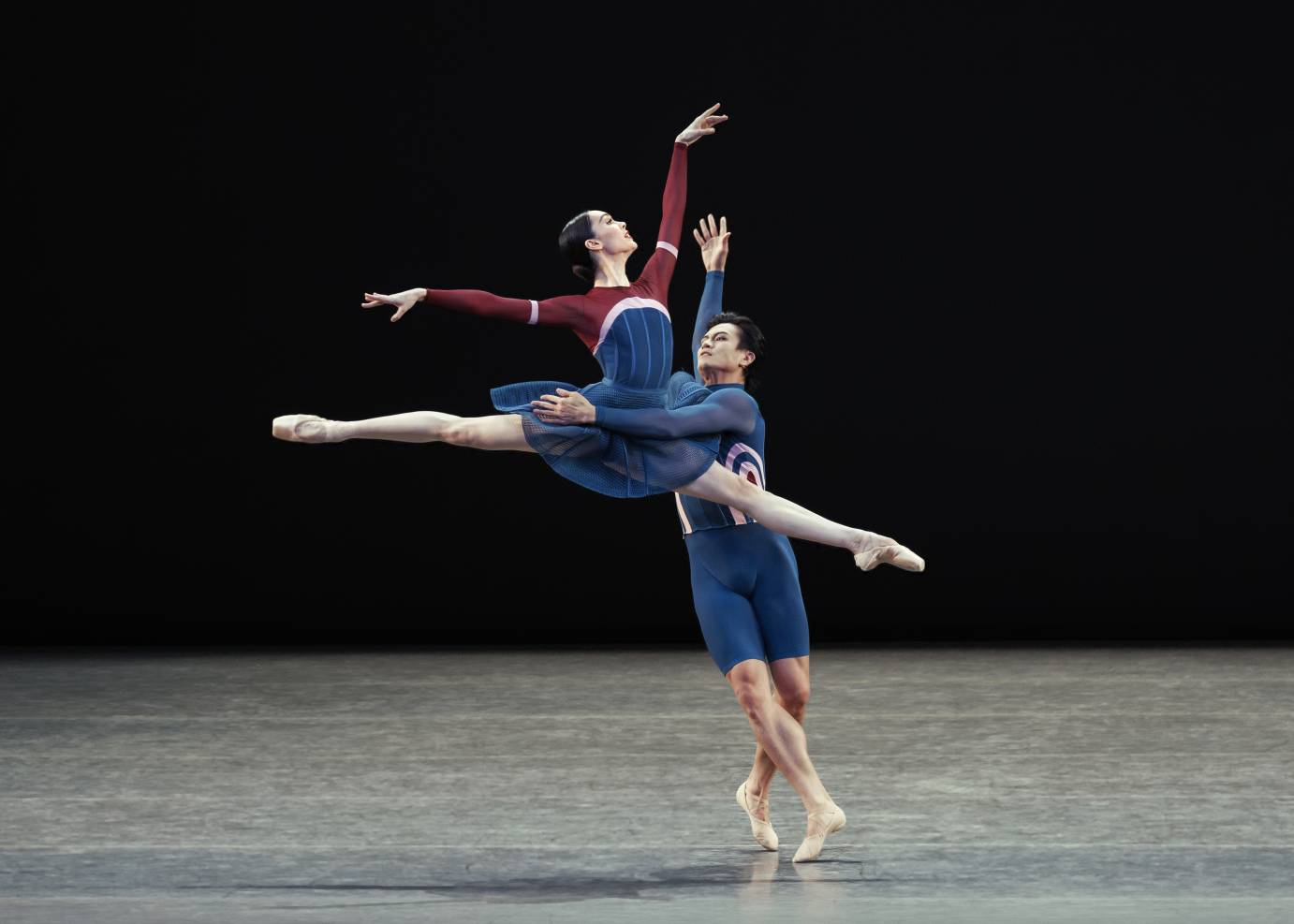
Mira Nadon and Chun Wai Chan in Justin Peck’s The Wind-Up. Photo: Erin Baiano
In another revelatory duet, Mira Nadon and Chun Wai Chan emerge victorious from their performance of large regal extensions and perilous partner-work that they are required to execute at tremendous speed and with sharp-hitting precision. Tasked with dancing at such a tempo while exuding the aristocratic imperturbability characteristic of classical ballet, they proved themselves heroic, indeed, and provoked thoughts of what noble behavior can or should really look like.
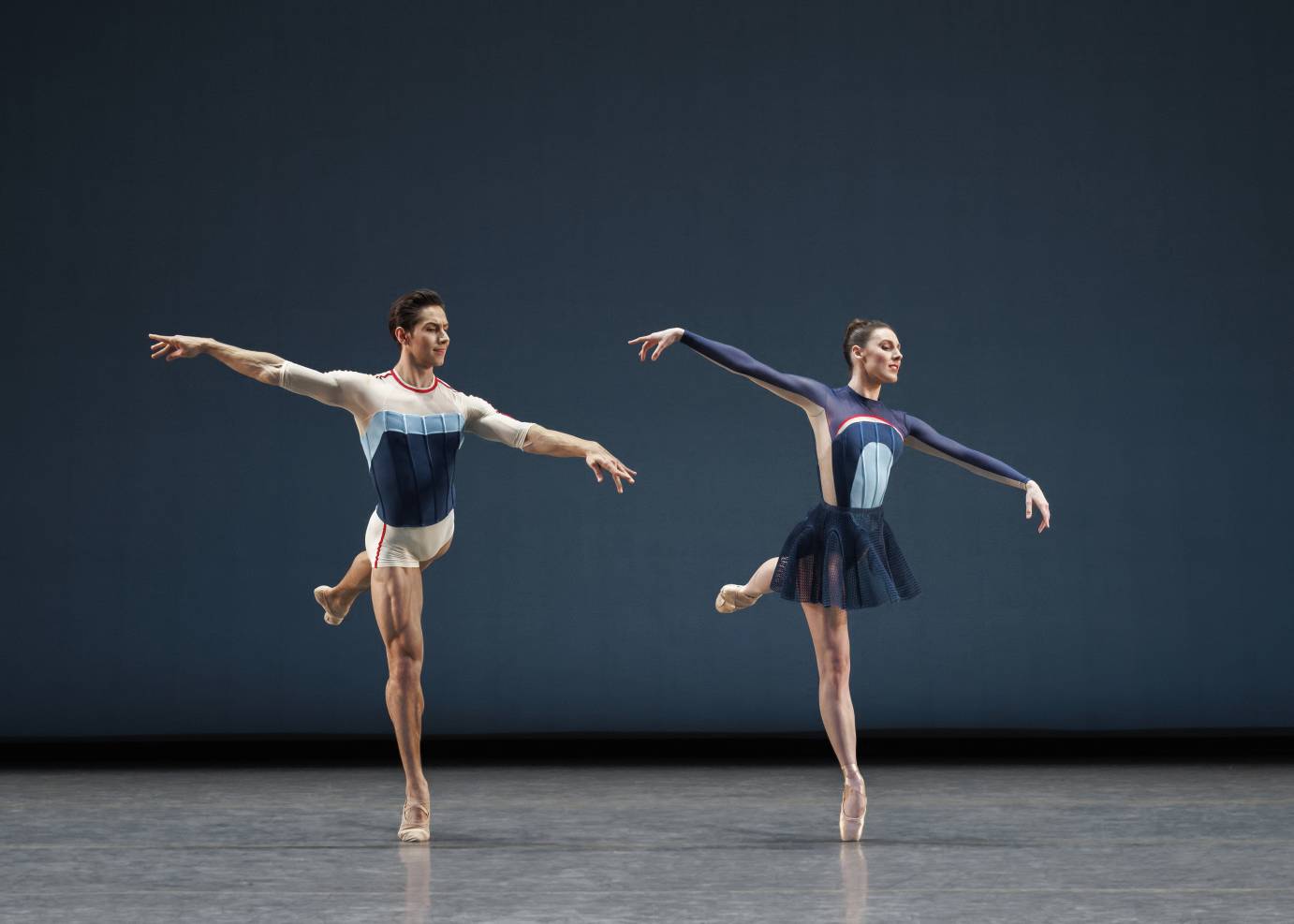
Roman Mejia and Tiler Peck in Justin Peck’s The Wind-Up. Photo: Erin Baiano
Structurally, Peck’s feisty, sometimes funny, ballet proceeds as a series of solos and duets, with a few, very brief full-ensemble sections inserted like “palate cleansers” in between. The action moves so rapidly that watching it leaves one breathless, and it’s hard to detect any thematic vocabulary or memorable movement images — with the exception of a twice-formed tableau, built of arabesque-shaped bodies ascending from a low lunge level up to a ballerina suspended in an overhead lift.
Mostly, what I remember are umpteen lines and angles, overlapping bodies with arms and legs slicing out in all directions. Like the astonishing music, the overall choreographic landscape is ever-changing, and one never knows who’s coming onstage next or what they are going to do. Yet the quicksilver nature of it all, and the sympathy we develop for the dancers’ intrepid efforts to keep pace with the demanding score, prove utterly engaging.
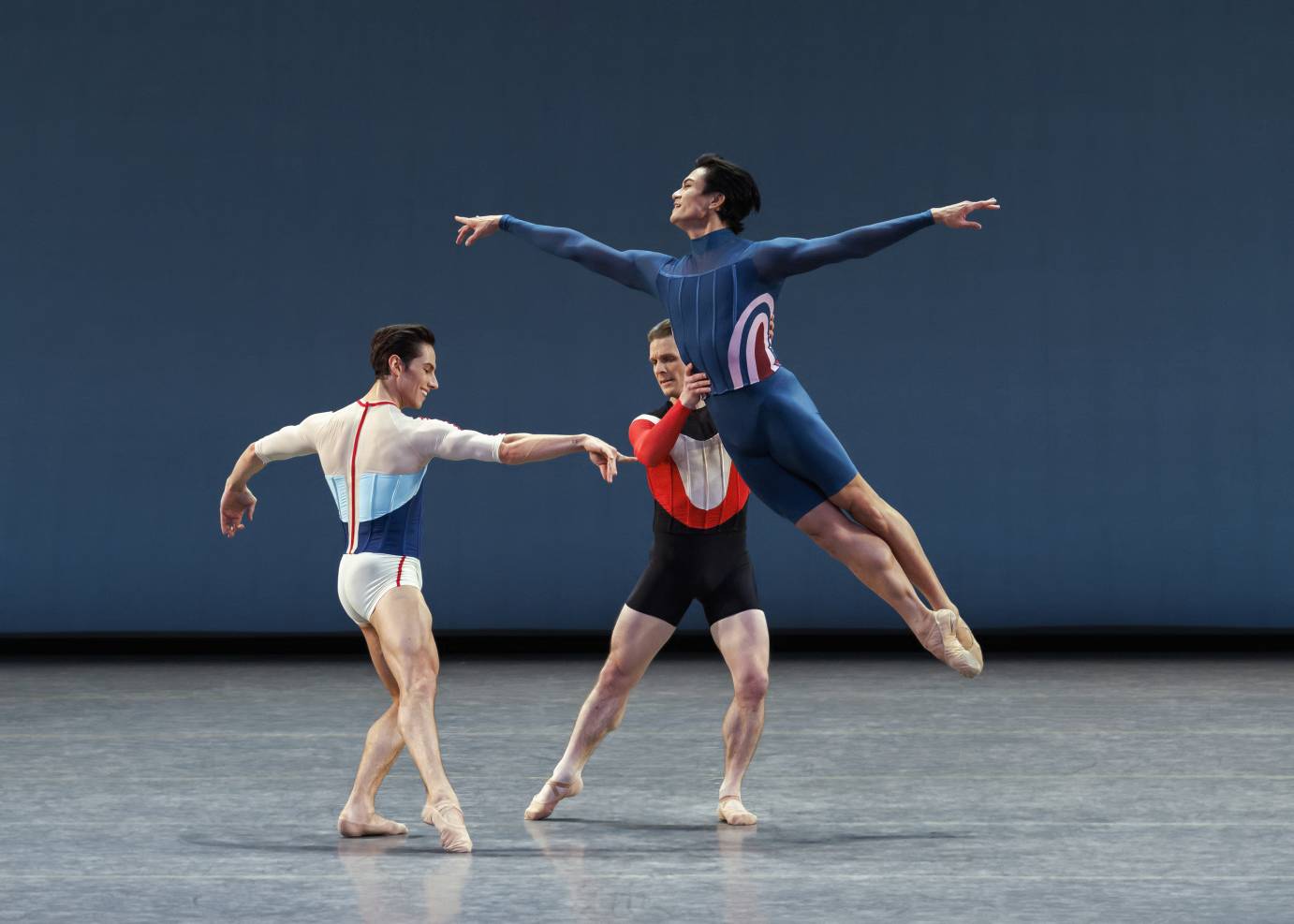
Roman Mejia, Daniel Ulbricht, and Chun Wai Chan in Justin Peck’s The Wind-Up. Photo Erin Baiano
Framing Peck’s premiere, the program opened with fine performances of George Balanchine’s Walpurgisnacht Ballet and August Bournonville’s Flower Festival in Genzano Pas de Deux, before closing with Jerome Robbins’s Opus 19/The Dreamer. An ill-advised choice for a program closer, particularly following Peck’s exhilarating new work, Robbins's lulling piece, created in 1979 for Mikhail Baryshnikov, is one of the choreographer’s lesser ballets.
Yet I really appreciated the chance it provided to spend lots of time watching Anthony Huxley as, in the central role, he’s onstage virtually the entire time. Huxley moves with such rich lyricism that one deeply feels both the physical sensations and the affiliated emotions of his every move, even in such slight choreography.
In Flower Festival, again, what I most prized was the chance to spend time awed by the dancing of the featured male performer, in this case the buoyant jumps, neatly finished turns, and vibrant style of the new-to-me NYCB soloist Ryan Tomash. Formerly a principal dancer with the Royal Danish Ballet, Tomash and Isabella LaFreniere gave appealingly youthful interpretation to the flirty pas de deux. He charmed us with his dashing approach, while she impressed with the eloquence of her fleet, soft-spoken footwork.
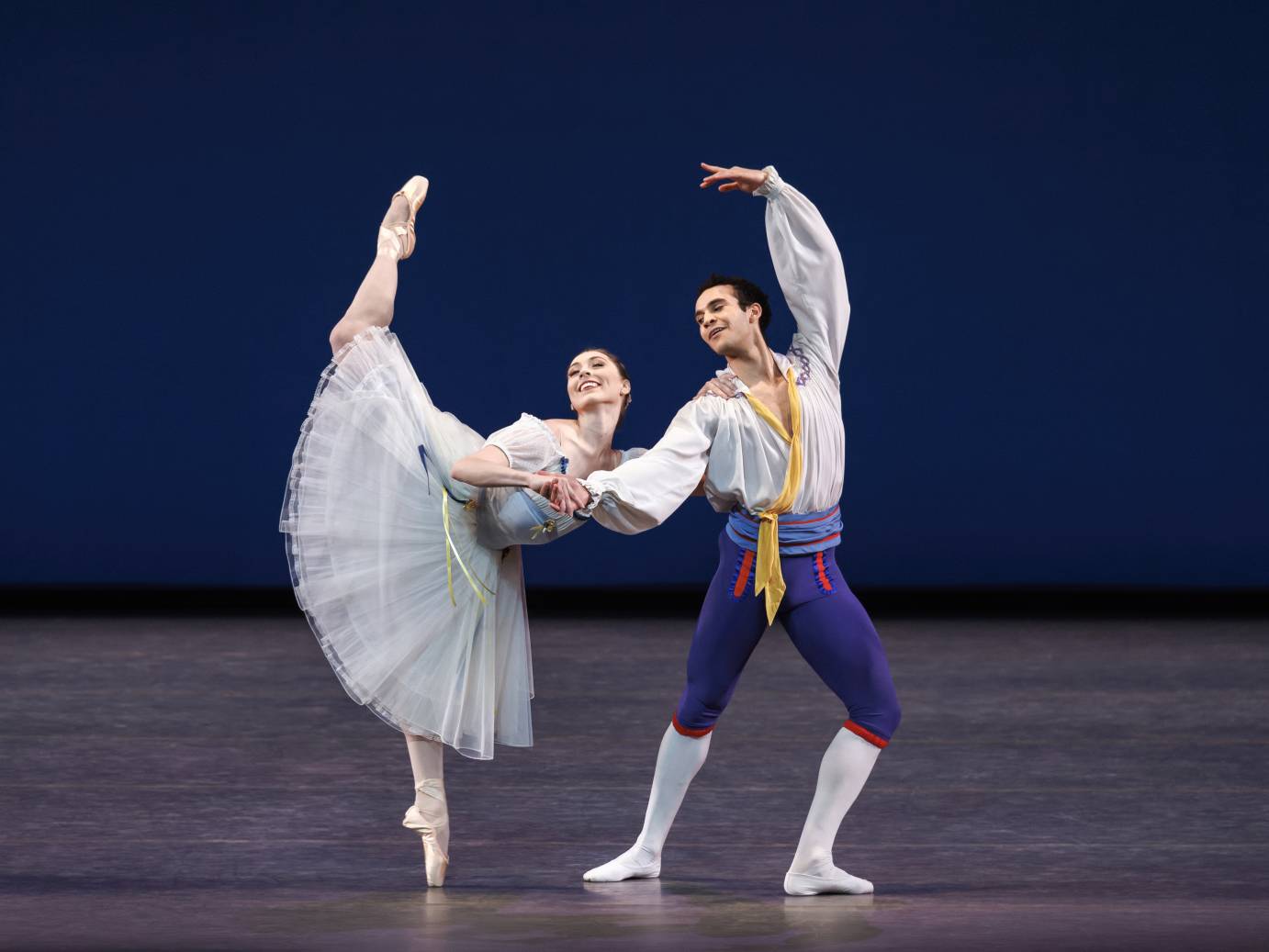
Isabella LaFreniere and Ryan Tomash in August Bournonville’s Flower Festival in Genzano Pas de Deux. Photo: Erin Baiano
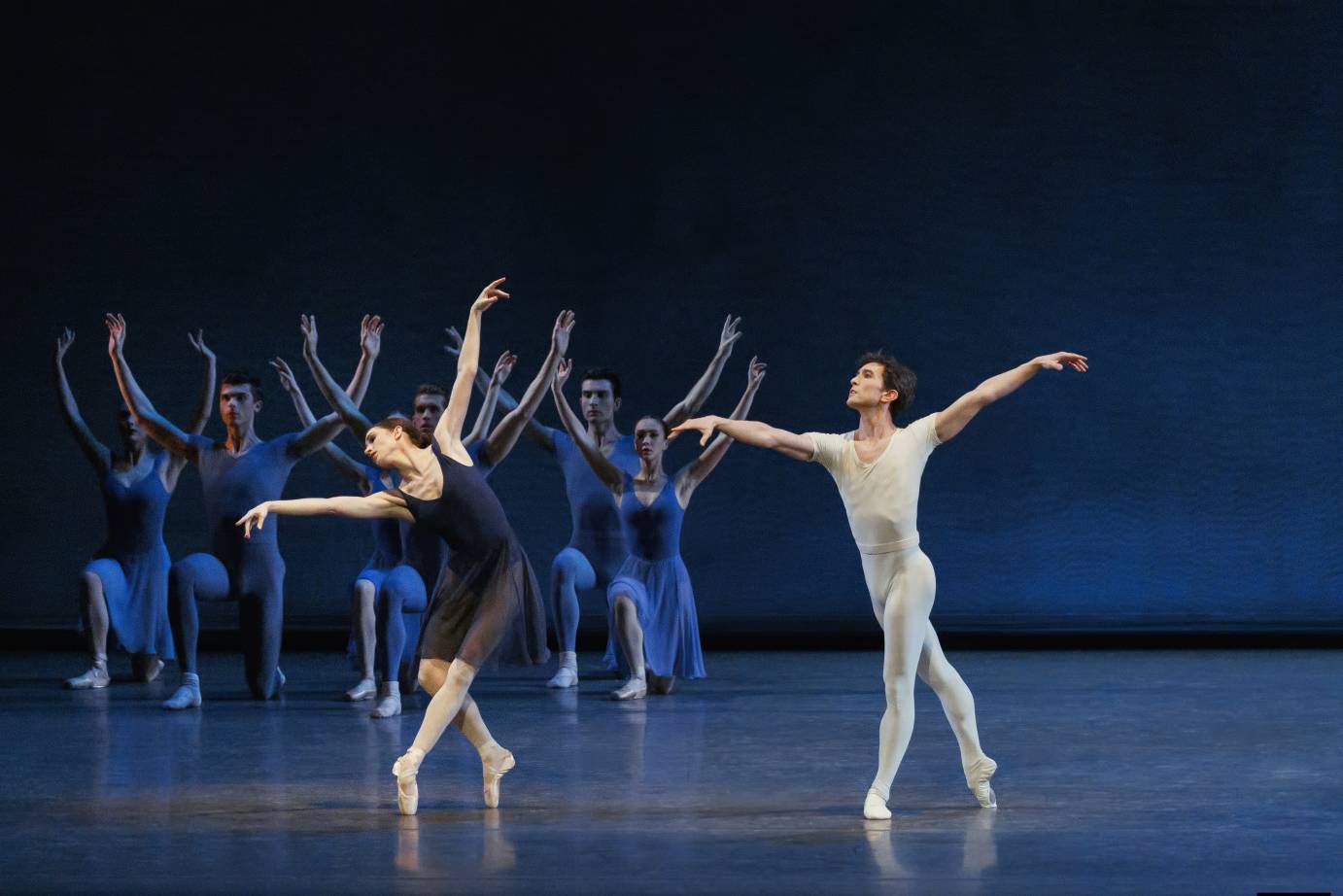
Though renowned for its fast, furious finale that sends an ensemble of free-haired females charging through the space, Walpurgisnacht Ballet kicked-off the program with yet another opportunity to recognize the work of a valued male dancer, principal Tyler Angle. Though his solo bits were not among the ballet’s highlights, Miriam Miller’s performance in an adagio passage with Angle revealed his remarkable partnering ability. While Miller gave skillful renditions of flashy solo phrases, when dancing with Angle she moved with ravishing balance-threatening freedom, tilting off-center, gesturing expressively with wrists, neck, and torso, her confidence to do so clearly derived from Angle’s solid, yet never restraining, oh-so-sensitive support.
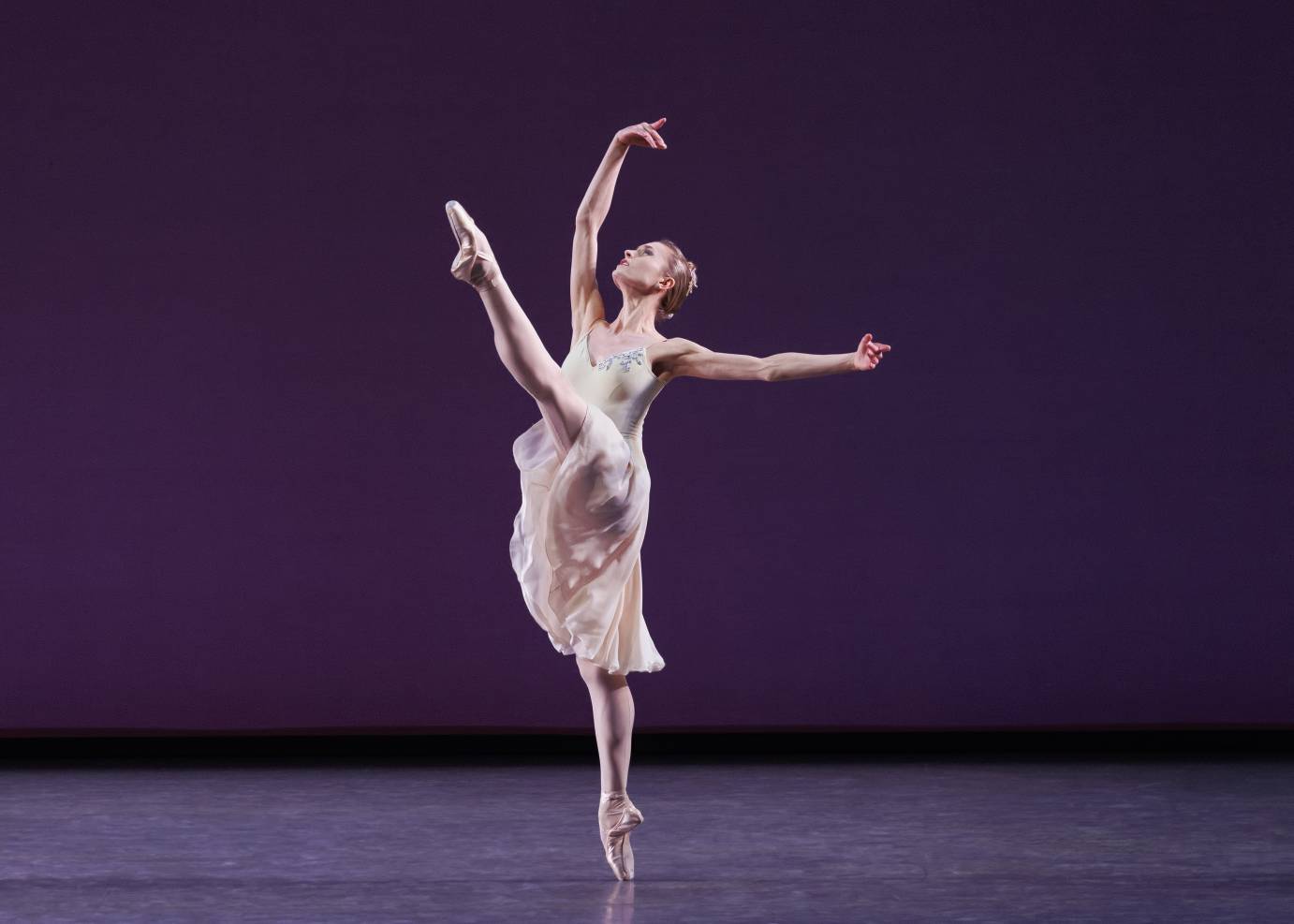
Miriam Miller in George Balanchine’s Walpurgisnacht Ballet. Photo: Erin Baiano