

Related Features
IMPRESSIONS: The Choreographic Ensemble of the Paris Conservatoire at the L’Alliance New York

IMPRESSIONS: Lucinda Childs’ Early Works from 1963-1973 at the Guggenheim’s Rotunda
THE DANCE ENTHUSIAST ASKS: Serge Laurent on Van Cleef & Arpels' "Dance Reflections"

By Theo Boguszewski
View Profile |
More From This Author
Published on February 16, 2026
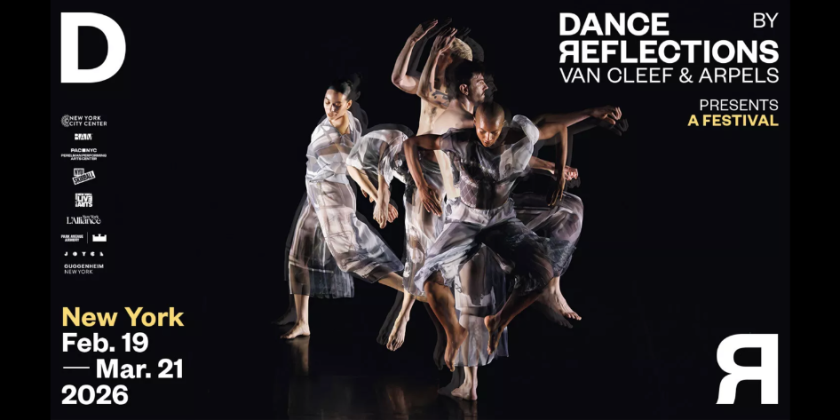
Van Cleef & Arpels' Dance Reflections Festival 2026 Poster
The Choreographer Discusses Curation and the Art of Transmission
What does it mean to preserve an art form that exists only in the moment it is performed? For Serge Laurent, Director of Dance and Culture Programs for French luxury jewelry Maison Van Cleef & Arpels, this question sits at the heart of his curatorial practice.
Returning to New York from February 19 through March 21, 2026, Dance Reflections by Van Cleef & Arpels unfolds across the city as a wide-ranging celebration of contemporary dance. The festival brings together iconic works, new creations, and an extraordinary roster of artists and institutions, creating a living dialogue between choreographic heritage and contemporary invention.
In conversation with The Dance Enthusiast’s Theo Boguszewski, Laurent reflects on the guiding principles behind Dance Reflections, his perception of his own curatorial responsibility, and the evolving language of dance.
Can you share a bit about your history with Van Cleef & Arpels?
Serge Laurent, Director of Dance and Culture Programs: While I was working as the live art curator at Centre Pompidou, Van Cleef & Arpels supported me in programming dance. At that time, the Maison already wanted to focus on dance. And after two years of supporting dance at the Centre, (former President) Nicolas Bos told me about his wish to develop the commitment of the Maison towards the dance field, with the idea to give back to a discipline that has given a lot to the Maison from the beginning.
You know, the story of Claude Arpels and George Balanchine — the encounter between the two of them gave birth to the creation of Jewels. And from that starting point, Dance Reflections is the new chapter in this story.
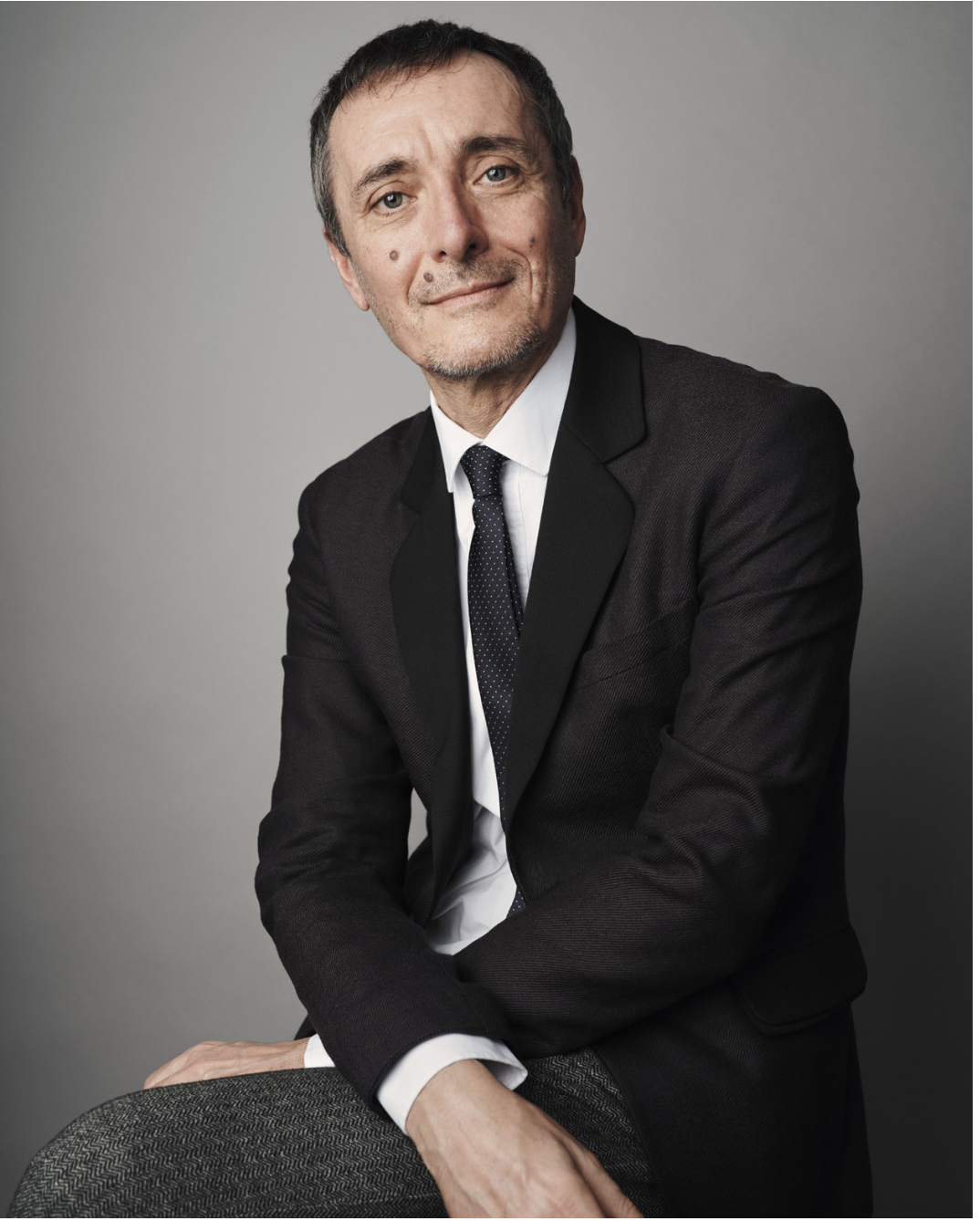
Serge Laurent, Director of Dance & Cultural Programs at Van Cleef & Arpels
The program spans choreographic heritage and contemporary creation. How do you curate that dialogue between the past and present?
The important thing for me from a curatorial perspective is that we have a clear direction in terms of artistic approach. We have three values: creation, transmission, and education. And whatever we do — supporting a dance company, supporting an institution to present a dance work, or organizing a festival — it's always answering to these three values. So I always want to support creation, of course, but also transmission.
And what do we mean by transmission? It's essential for us to support and then preserve existing works. We believe that some existing works are strong references we need to preserve, to approach even better contemporary dance. Contemporary art in general, it's the result of a full history. It's not coming from nowhere. And I think that sometimes contemporary dance, like contemporary art, can look a bit strange for people. And that’s normal because it's new language — it's an artist researching new ways to develop their vocabulary. And if we look at art history, every era of history, we’ve had some artists inventing something, pushing the limits of the arts. Like when Nijinsky in 1913 presented The Rite of Spring in Paris, it was a scandal.
And it's the same if you look at abstraction: before the end of the 19th century in art history, all the art was narrative. So when we started with abstraction, for some people it was very complicated. And I think the work of a curator is really to identify new ways, new vocabularies, new voices, but at the same time, to explain to people. And I think the best way to explain, as a curator, is to refer to history. So it's the reason why that value of transmission is, for me, essential. Because the only way to preserve a dance piece is to transmit it. Otherwise it disappears. It's not like a painting that you can hang on a wall forever.
Can you speak more about the value of education? The workshops at the New York Center for Creativity & Dance put artists in the role of educators. What is the goal of including this educational component as part of the festival?
Why education? I think as a curator, you have, of course, the responsibility to identify artists that make sense for you in terms of artistic approach. But you also have the responsibility to give some knowledge to people to approach better. For me, a curator is a mediator between the artistic landscape and audiences.
When you do my job, it's very essential to also have the idea in mind that a festival is not only a selection of artists, it's really a space, a platform to talk about dance. Why dance is such a universal language. Why dance is very connected to all of us because it’s the body, this medium which is shared by everybody. So all of these things are very important for me.
This is the second New York edition of Dance Reflections. How will this festival differ from the inaugural Dance Reflections festival in 2023? Were there certain concepts that you wanted to explore more deeply?
The first festival took place in London in March of 2022. So it's quite new. It's already the seventh edition of the festival, because we do an edition twice a year. Whether the first edition, or the second edition, whether we are in New York, Hong Kong, Shanghai, or Rome, the curatorial approach is the same. The idea is to combine existing works and new works, to witness the diversity of contemporary dance.
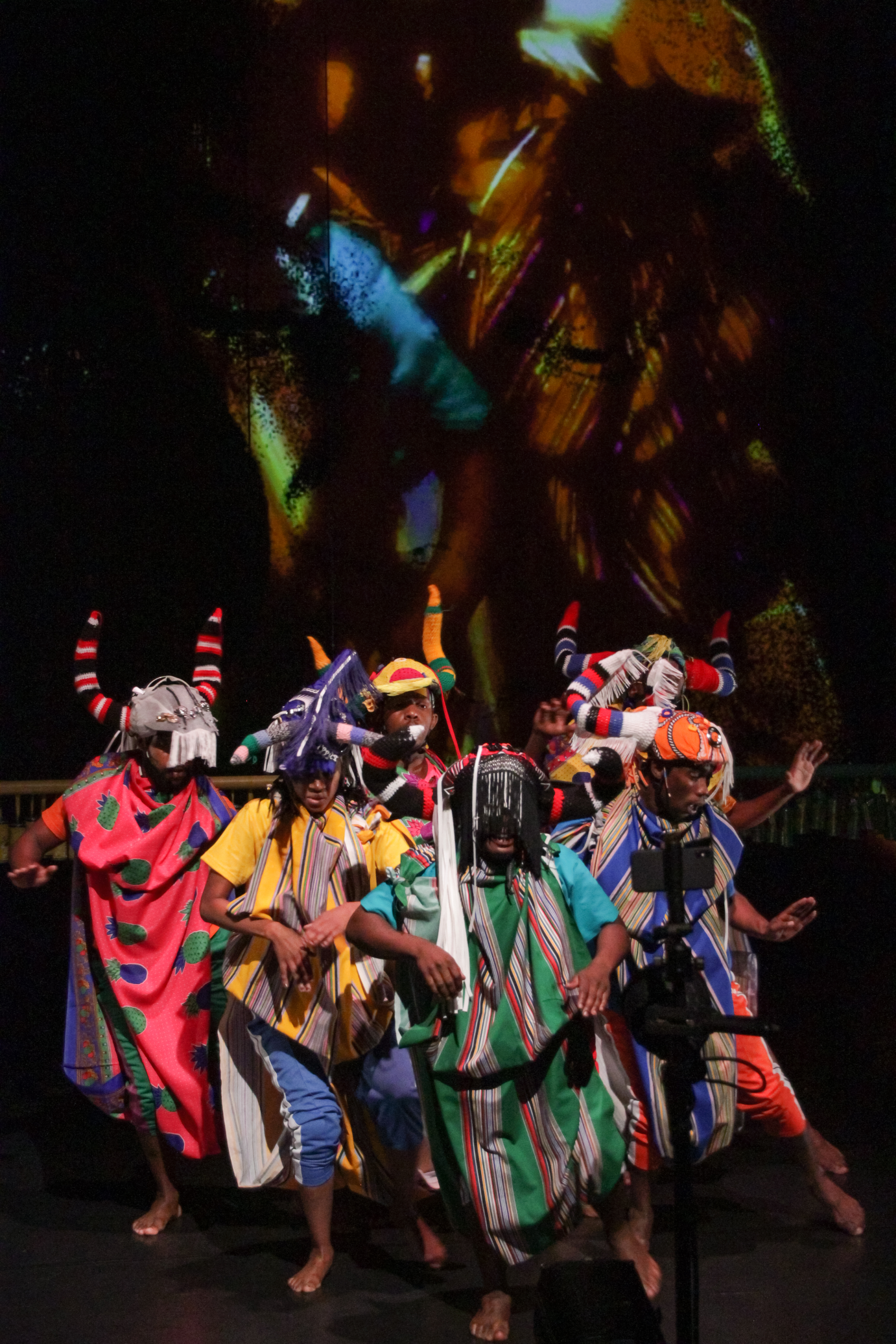
Contemporary dance is not an artistic current, it’s just a concept. The concept allows every artist belonging to any culture to invent new ways of creating, to develop his own voice. All these artists even if they are very different — Robyn Orlin from South Africa to Christos Papadopoulos from Greece — they all have something in common, which is that they are all trying to invent something. They are choreographers, they are painters, architects, but they are also researchers, people questioning their art discipline.
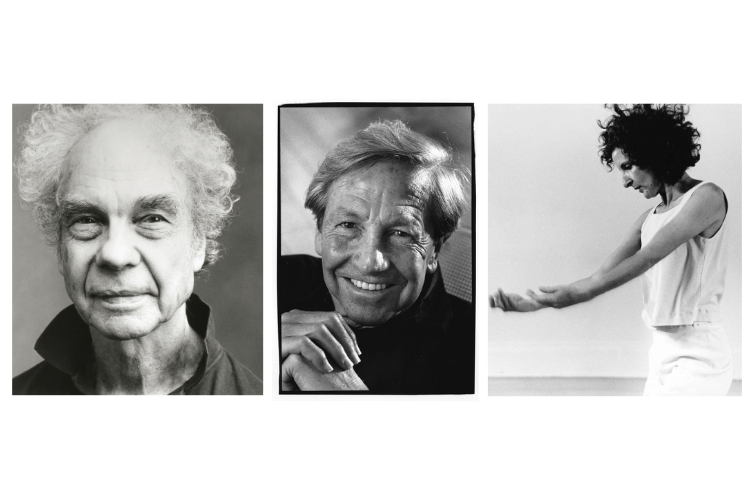
Between New York one and New York two, this time I really wanted to insist on the link between a certain range of existing works to contemporary dance. New York is a city where a lot of things were invented in terms of dance. Post-modernism basically developed in New York, and postmodern choreographers collaborated a lot with other artistic disciplines. So that’s the reason why I’m putting together Merce Cunningham with Trisha Brown with works of Bob Rauschenberg. I like the piece, but also for me, it's a way to talk about that. You see what I mean? All the works I select have a quality in themselves, but at the same time, they are a way to talk about dance.
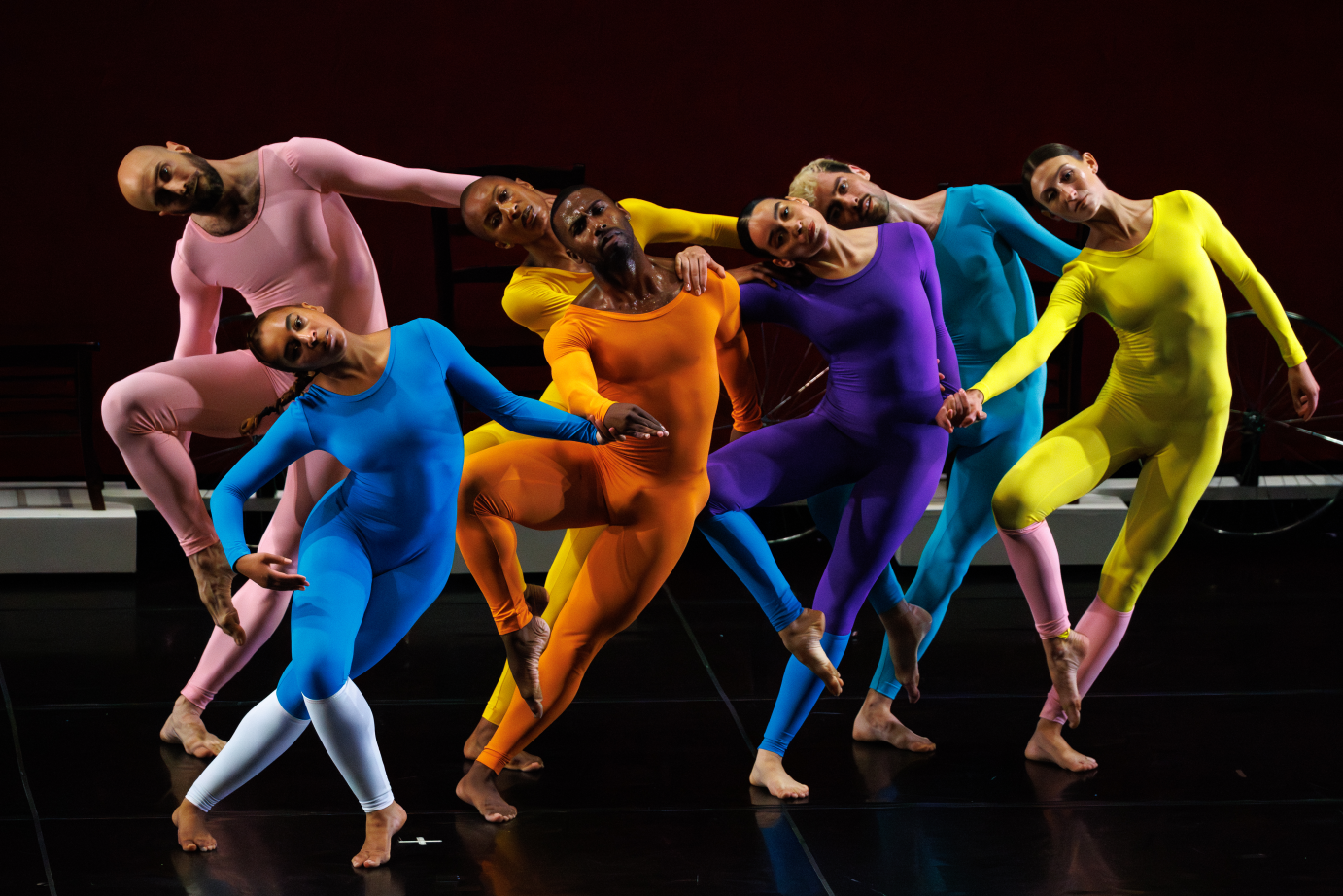
Trisha Brown Dance Company in Merce Cunningham's Travelogue. Photo: Ben McKeown, courtesy of the American Dance Festival
Were there any pieces in this edition that challenged your expectations of what Dance Reflections could be, or felt like taking a risk?
It’s an interesting question. In my position as a curator, what does it mean to take a risk? Life is risky in general, you know, when you cross the street it's risky. So in fact this notion of risk is really something very subjective to everyone. It's not exactly the notion of risk for me, it’s more a notion of responsibility. If you want to connect people with an art form, you develop a language, and you have to be careful. It's not meaningful for me to shock people, for example. I prefer to initiate a certain range of reflection. Sure, it's the way I am. Some other curators, maybe they prefer to do differently.
What I want through a festival is to invite audiences to a journey. And when you travel, you experience new things — new cuisine, a different language, a different climate. With the festival, I invite people to experience things. I hope they will get something from it. But they are responsible for that. For example, you will probably attend the festival. I'm telling you how I am inspired by the programming I'm proposing, but I don't know what you will get from it. Maybe you will come to me and say “I saw this. It doesn't mean something for me.” And it's okay with me because it's a way to engage in dialogue. And that is the most important thing.
The festival takes place across iconic spaces: The Guggenheim, BAM, NYU Skirball, the Park Avenue Armory. Can you speak about the nature of these spaces and what they mean to the festival?
Organizing a festival in New York City, it's impossible to ignore the importance of all these institutions. I have a very strong respect for institutions because they are the place where you organize the encounter between creation and audiences.
We always announced that we don’t want to compete with institutions or replace institutions — we want to support them. And in New York, all these venues are doing the job all year long, and fighting sometimes to succeed, to raise the money. I want the festival to give a tribute to these institutions. We are coming from overseas with a strong idea of supporting dance in the historical context. New York is very much a dance city, and we need to bring together the energies that made this landscape possible, and those are the institutions.
And as a festival, it must initiate something throughout the entire city. It’s very important for me to think that the festival irrigates the entire city. And for an artist, it's very important to perform in New York City, to be at BAM, New York City Center, the Guggenheim, The Joyce…
Dance Reflections is deeply international, but it's rooted in local partnerships. You mentioned an intention to highlight some of these people who are really influential in the New York City dance scene specifically. Can you speak to how you balance incorporating the international perspective and the local New York City dance artists?
My job as a curator is to be attentive to choreographic approaches. I observe the landscape — in fact, there are a lot of works I could present in New York or somewhere else. But the first thing I do, usually I'm very clear about the venues. And I have a full bench of artists, but there's also dealing with the possibility of whether the artists can tour. It's a mix between artistic approach and pragmatic issues.
So you identify possible venues, possible partners, and from that you start to build something.
Each show, each performance, is just an addition to the edifice you are building. And this is the storytelling we try to express through a festival. And for the audience, it can be just one show, maybe they just read one chapter of the story. But for me, the festival is a story. It's a story of how dance evolved through the ages and why. The mystery of contemporary art. I talk about the mystery, because we talk about creation. Creation, by definition, it's something very mysterious. It’s the reason why I think it's a different approach to be a programmer, you know, selecting artworks, and to be a curator — trying to link things together, to tell a greater story.
Are there any works that you're extra excited about?
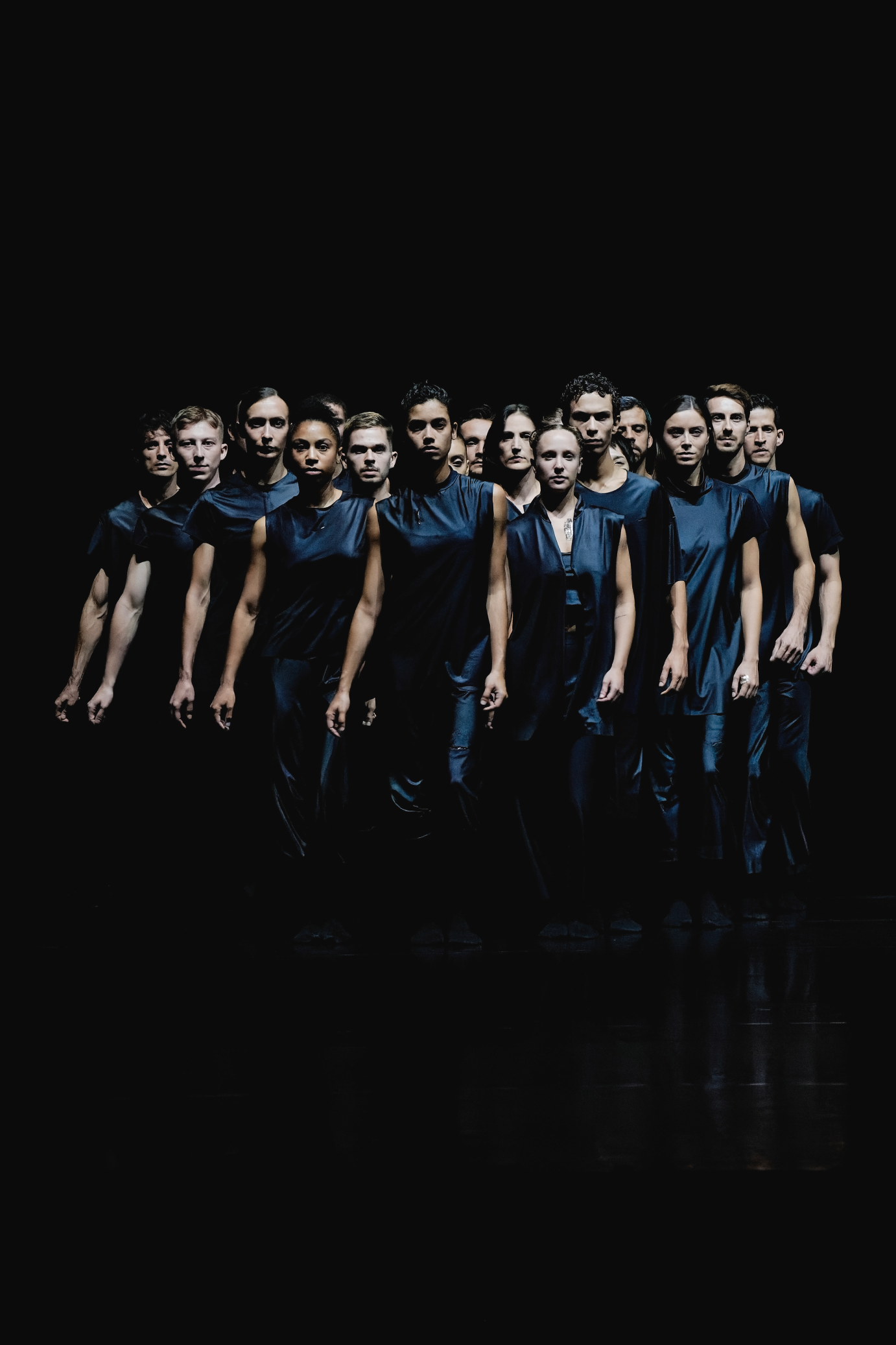
The opening night for me is quite interesting. It's two generations of artists, Merce Cunningham and Christos Papadopoulos. The two of them are very different in terms of how they approach the dance writing (in French we say that we “write dance”). So I'm curious about the reaction of the audience in discovering this. It's very interesting for me to present two different works created by artists having such a specific way of making dance. Two different generations of artists, but something in common.
What is the future look like for Dance Reflections, after this New York City festival?
To be honest, I don't know. It’s something we started only four or five years ago. The Maison is very supportive of the program. I already have a three year plan, after that, it's difficult to tell. Except the fact that creation, transmission, education — these are notions that are large enough to keep on developing. You see what I mean?
Serge Laurent graduated from the École du Louvre in Museology, with a specialization in Art History and Archeology. He joined Van Cleef & Arpels in April 2019. As Director of Dance & Cultural Programs, he is in charge of the implementation of Dance Reflections by Van Cleef & Arpels, an international program supporting the art of choreography. From 2000 to 2019, he was Head of Live Performance Programming at the Centre Pompidou in Paris, along with its sites in Malaga and Brussels. From 1990 to 1999, he was Associate Curator at the Fondation Cartier pour l’art contemporain. After several years of involvement in numerouscontemporary art exhibitions, he was given the responsibility of programming performing arts. For five years, he initiated the Nomadic Nights (Soirées Nomades). Alongside the Fondation Cartier, the Dijon Consortium entrusted him with the artistic direction of the New Scenes (Nouvelles Scènes) Festival (1996 to 2000). In 1997, he also introduced living arts to the Cahors Spring( Printemps de Cahors) festival for photography and video arts. Since 2019, as Director of Dance & Cultural Programs, Serge Laurent has been in charge of strengthening the Maison’s commitments in the field of dance: via institutional partnerships, initiatives to support creation, choreographic events and a policy of promoting and raising awareness of dance among diverse audiences.