

Related Features
IMPRESSIONS: Hiroaki Umeda

IMPRESSIONS: A Sunday in Spring 2026: Cathy Weis Projects’ Sundays on Broadway
IMPRESSIONS: Hiroaki Umeda's Somatic Field Project in "Moving State 1" and "assimilating" at Japan Society

By Tom Phillips
View Profile |
More From This Author
Published on March 31, 2026
Yuki Nakamura in "Moving State 1." Photo: Maria Baranova
Moving State 1 and assimilating
Choreography, Sound Design, Visual Design and Digital Programming: Hiroaki Umeda
Moving State 1 performed by Somatic Field Project
Dancers: Takara Nakamura, Yuki Nakamura, Ikumi Otsuka, Yu Suzuki
assimilating performed by Hiroaki Umeda
Japan Society, New York
March 20 - 21, 2026
In Japan’s indigenous Shinto religion, everything in nature has a spirit — not just people, animals, and plants, but mountains, rivers, stars, trees, lightning, fire and ice. The universe is ruled by elemental forces, and they are conscious of their power. Humans had best obey and honor these forces and try to live in harmony with them.
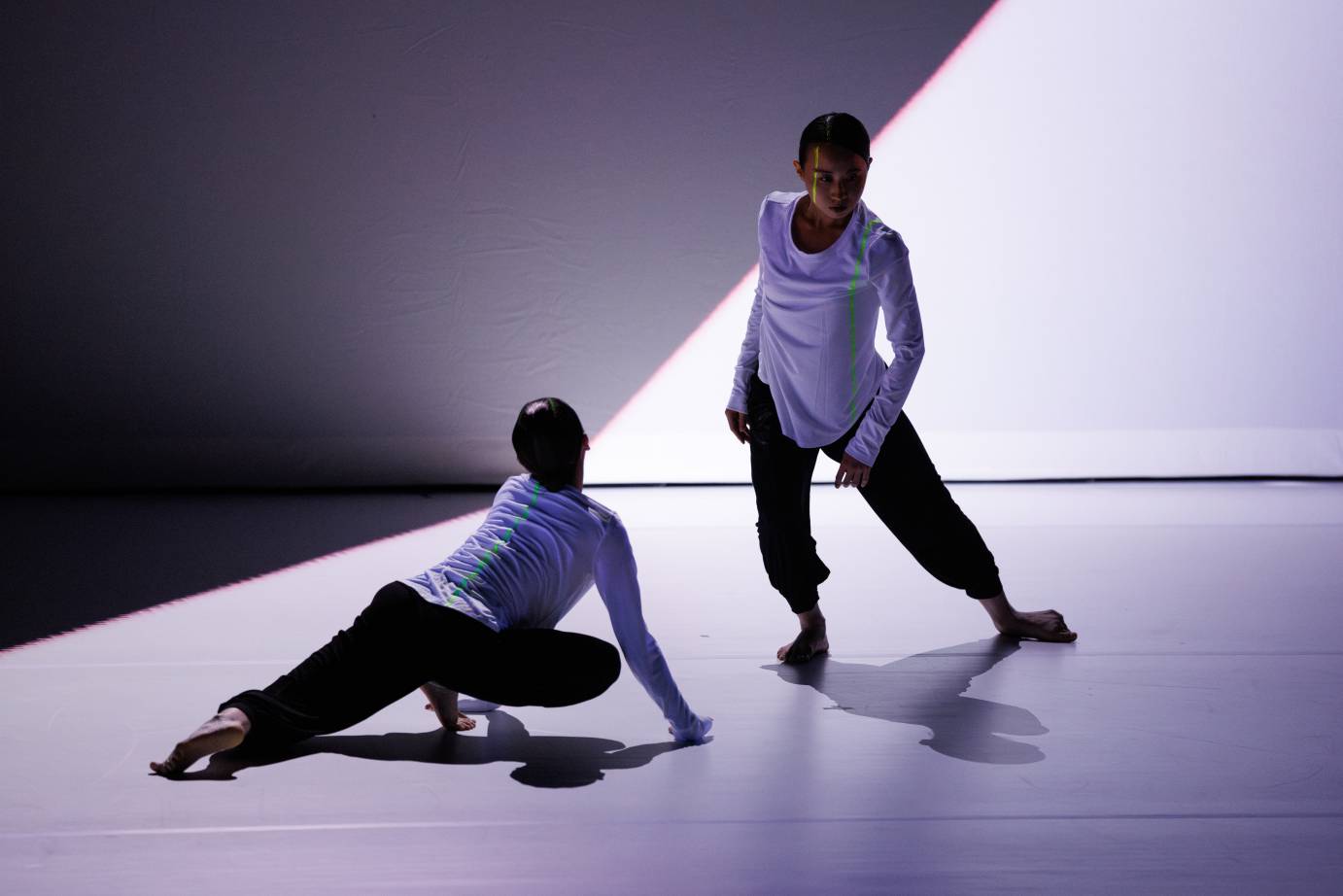
That’s how the world and the universe looked in Hiroaki Umeda’s stunning two-part program at Japan Society. In the first part, Moving State 1, four lithe women of Somatic Field Project scuttled and squirmed, froze and darted, curled up and wriggled around the floor, and threw in a few pirouettes and grand jetes, maybe just to show they were dancers. Otherwise, their movements were governed by beams of light and shade, moving in lines and curves much as the sun crosses the sky on earth. This piece ends in a striking lightscape that looks like an arctic sunset — a line of pure light on the horizon, then a blackout.
_Pictured%20(L%20to%20R)_%20Ikumi%20Otsuka%2C%20Yu%20Suzuki%2C%20Takara%20Nakamura%2C%20Yuki%20Nakamura%20%C2%A9%20Maria%20Baran.jpg)
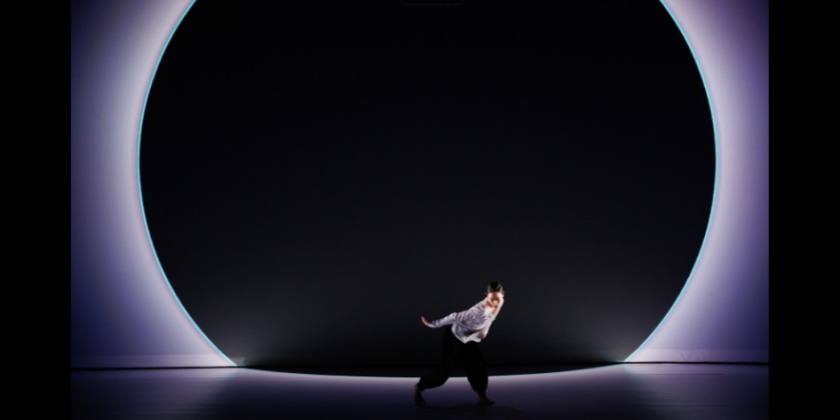
If part one was life on earth, part two, titled assimilating, is life on the sun, or maybe in the middle of the Big Bang that ushered in the present age. Umeda himself pops, wiggles, wacks and undulates then plants himself in an inverted Y, while the cosmos goes bonkers on a full screen behind him. The backdrop is splashed with cascading explosions of sunspots, nebulae, or whole galaxies going in and out of existence, plunging into black holes and out again, imploding and exploding in deep space. Umeda is the nucleus: human consciousness, with its godlike ability to imagine and mimic the whole shebang.
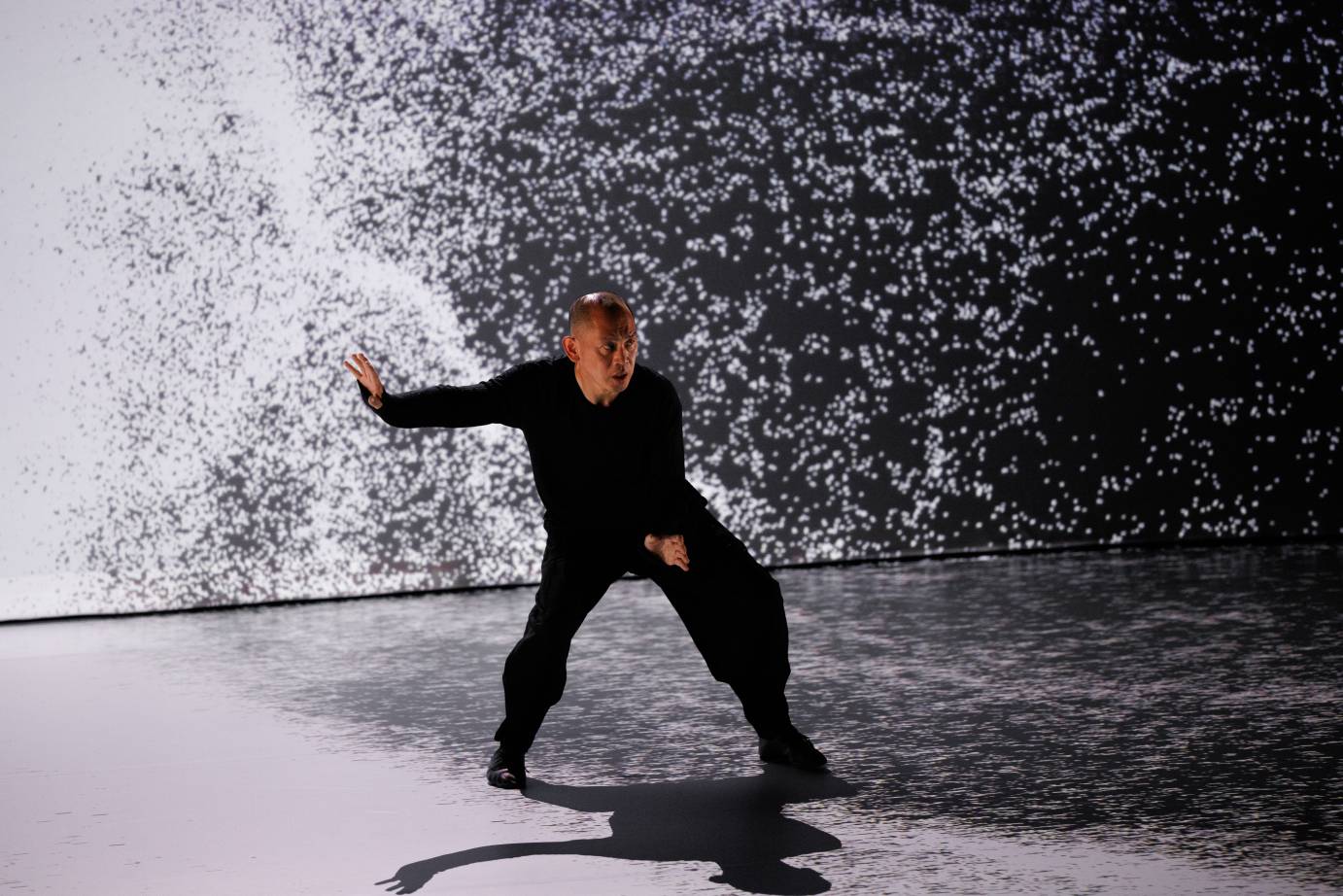
Unlike the women who scuttle across the floor, herded by moving beams of light, Umeda occupies center stage for his entire piece. It is most powerful when he stands still, like a tree that’s standing by the water, contemplating the chaos without entering it. That’s our task these days, overwhelmed as we are by natural and unnatural forces that obey their own laws, not ours.
Shinto is a form of animism, a world view that assigns consciousness to things as well as people. It is thoroughly rejected by our Judeo-Christian tradition, which sees humanity as created in the image of God, with dominion over all things in nature.
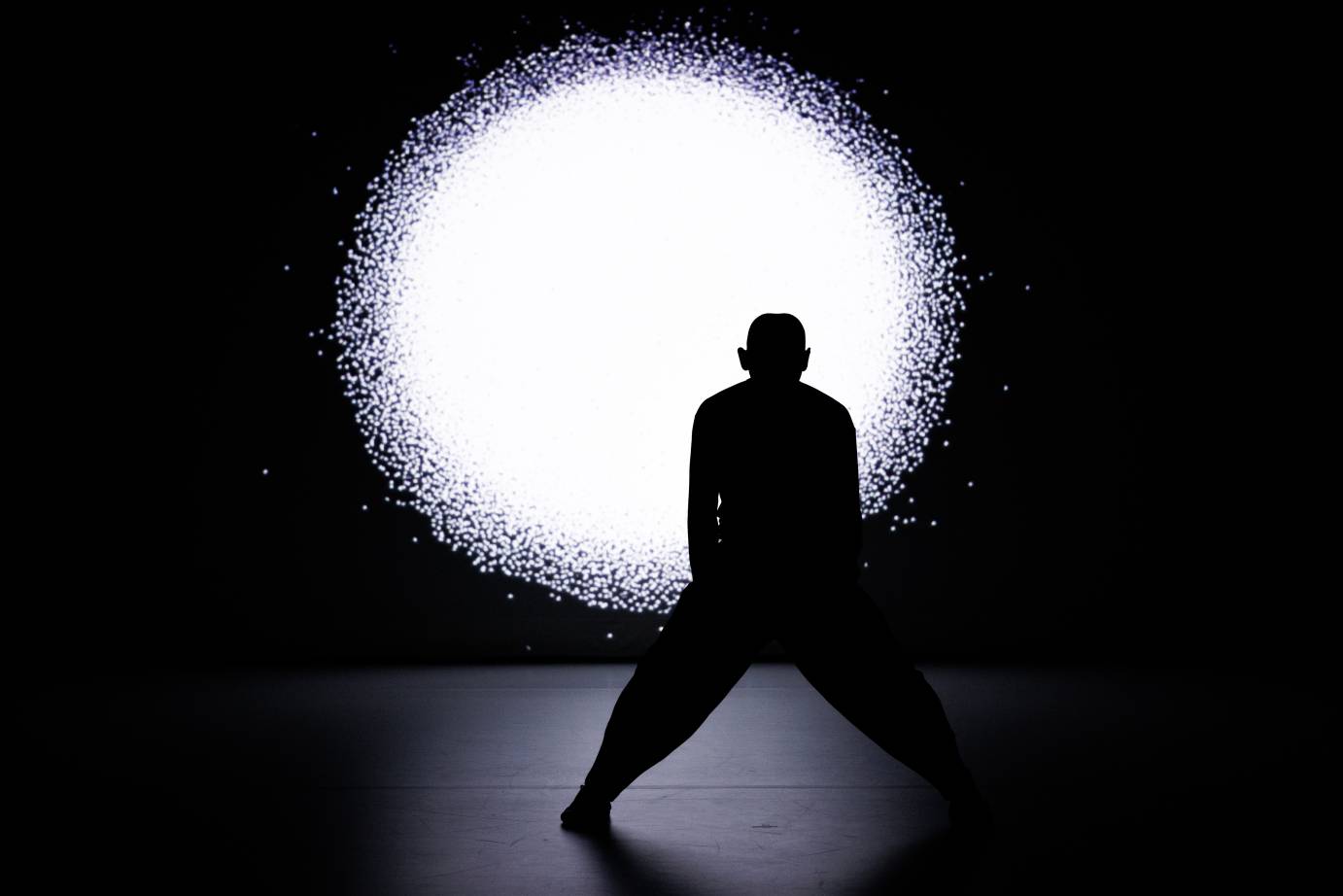
The fruits of our dominion are obvious today, which is why animism is gaining ground in the Western world. It’s a different way of looking at things. It’s also a different way of dancing, yielding to universal forces rather than trying to master them. Umeda stands amid a digital universe that overwhelms the dancer and the dance. It’s a revolution in consciousness that takes us back to the very roots of dance — the fertility rites, festivals, and funeral processions that recognize nature’s dominion, not ours.