


Related Features

IMPRESSIONS: Jack Ferver Presents "My Town" at NYU Skirball

BAREFOOTNOTES: Hoi Polloi's WINNING IS WINNING at JILL@JACK and Summer Constitutional Contemplations

IMPRESSIONS: Yehuda Hyman's Mystical Feet Company in "Dancing Into Roses" at JACK


By Christine Jowers/Follow @cmmjowers on Instagram
View Profile |
More From This Author
Published on November 3, 2026
Yehuda Hyman; Photo:Ethan Hill
Written and Performed by: Yehuda L. Hyman
Directed and Developed by: Leo Egger
Choreographed by: Nelida Tirado and Yehuda L. Hyman
Lighting Design: Lauren Lee
Costume Design: Karen Boyer
Sound Design: Gabe Whitnack
Production Manager: Elsbeth M. Collins
Stage Manager: Sari Klainberg
Performances October 23 through November 1, 2026
Yehuda Hyman’s solo show Dancing Into Roses, presented at JACK, takes us on a 90-minute journey through personal, humorous, unexpected, and devastating stories about Jewish identity. Along the way, Hyman plays himself and every character he encounters, gliding between a multitude of personas with mesmerizing, virtuosic ease.
His first tale recalls a time in the early 1980s when he, Larry (not yet going by Yehuda), a serious and penniless downtown dancer, falls into an unlikely paying gig as a teacher of American disco in Germany.
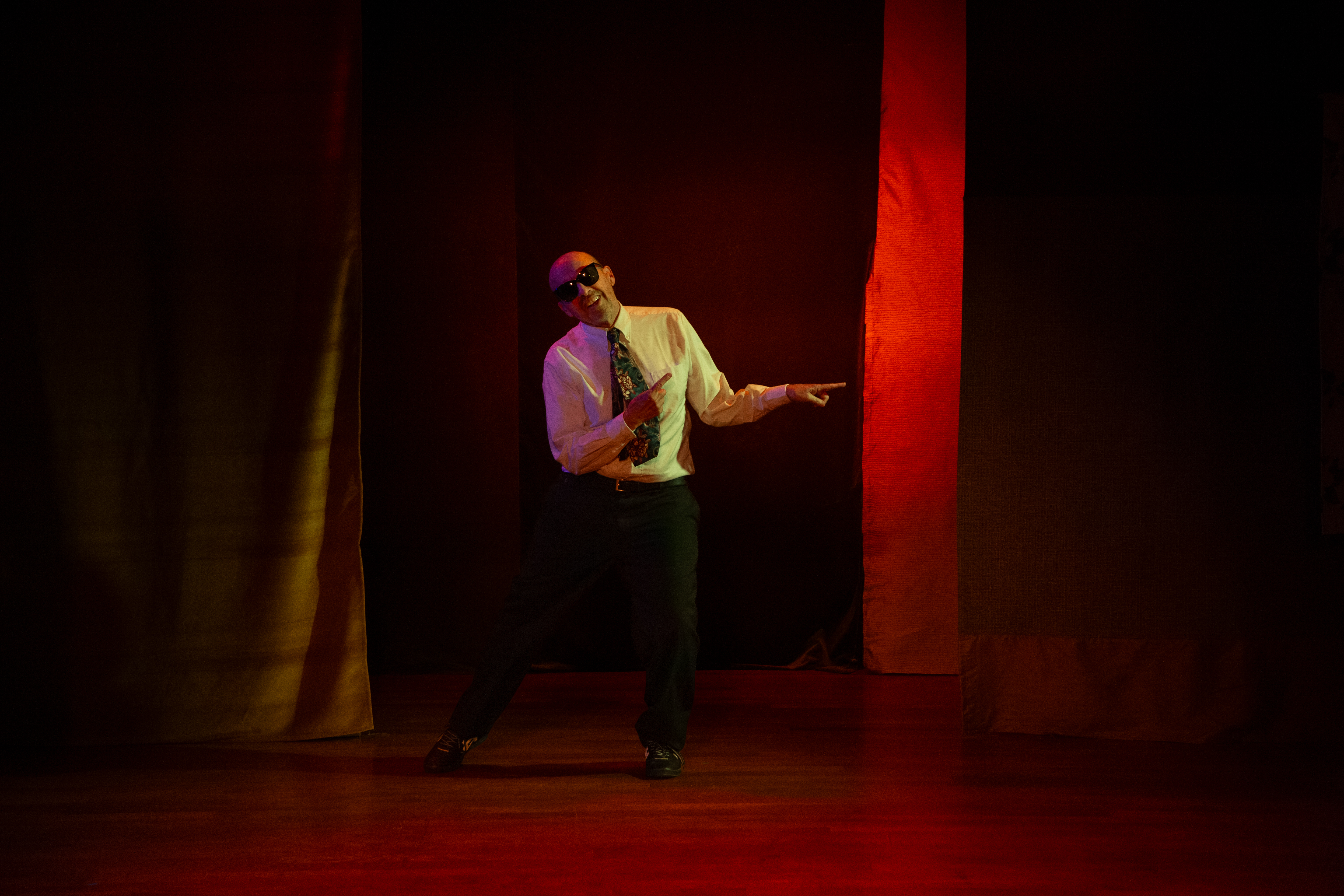
It is the period just after the Saturday Night Fever craze, when the movie Flashdance hit the US and was slowly moving to cinemas throughout Europe. At this time, the European ballroom dancing youth and, more importantly, their tuition-paying parents were no longer interested in foxtrots, cha-cha-chas, and the like. They craved the latest, hottest disco dance around, the FLASHTANZ.
From town to town, train ride after train ride, Hyman, mostly successfully, fakes it as an expert in the tanz of flash. His embodiment of the Jennifer Beals character and the reactions of his pupils and employers to it are superb, laced with acute observational and physical humor.
Yet, every so often, between the absurdity of his situation and its inherent comedy, the people he crosses paths with whisper to him, confidentially and sometimes not so softly, of their antipathy for Jews. Surely, he must understand.
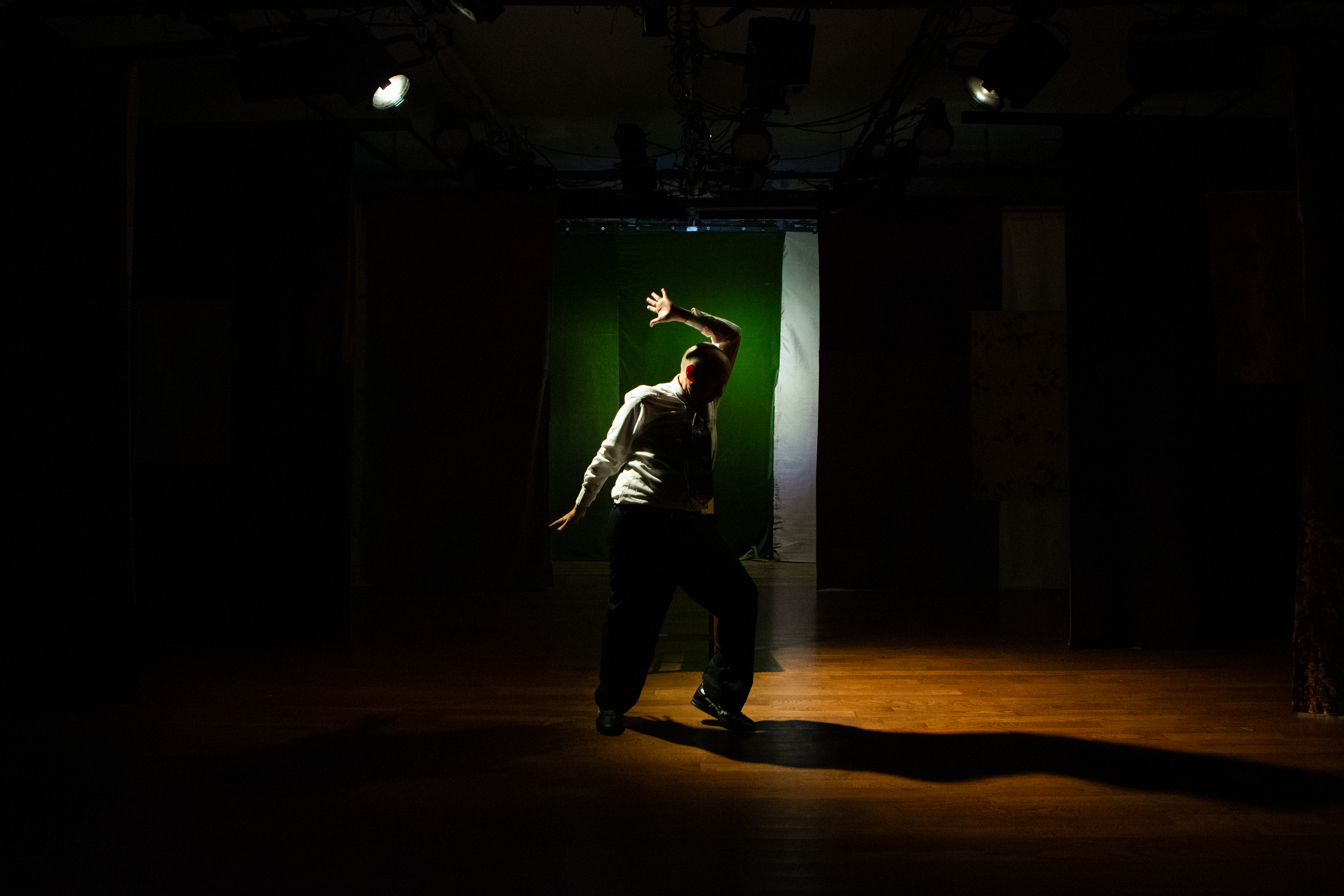
Hyman’s delivery, his impersonations, and his goofy renditions of disco lull us (especially those of us who remember the ‘80s) into nostalgia and laughter. When an insinuation of anti-semitism arises, even if only in a few words or a glance from a character Hyman encounters, we feel walloped. Hate that quietly seeps in instead of bursting with shouts and violence somehow feels uglier.
The second major tale of Dancing Into Roses occurs in the 2000s. It concerns the Black Forest in Germany and the nearby town of Freiburg, whose main synagogue was burnt to rubble by the Nazi’s during the terror of Kristallnacht.
In 2017, Freiburg installed a memorial pool atop the destroyed synagogue’s site. Its footprint outlined the old synagogue's floor plan, but the only signage acknowledging the devastation beneath was minuscule—imperceptible. Soon the pool becomes a center for giddy wading and revelry, and Hyman, along with his friends and Freiburg's Jewish community, is shocked by the disrespect.
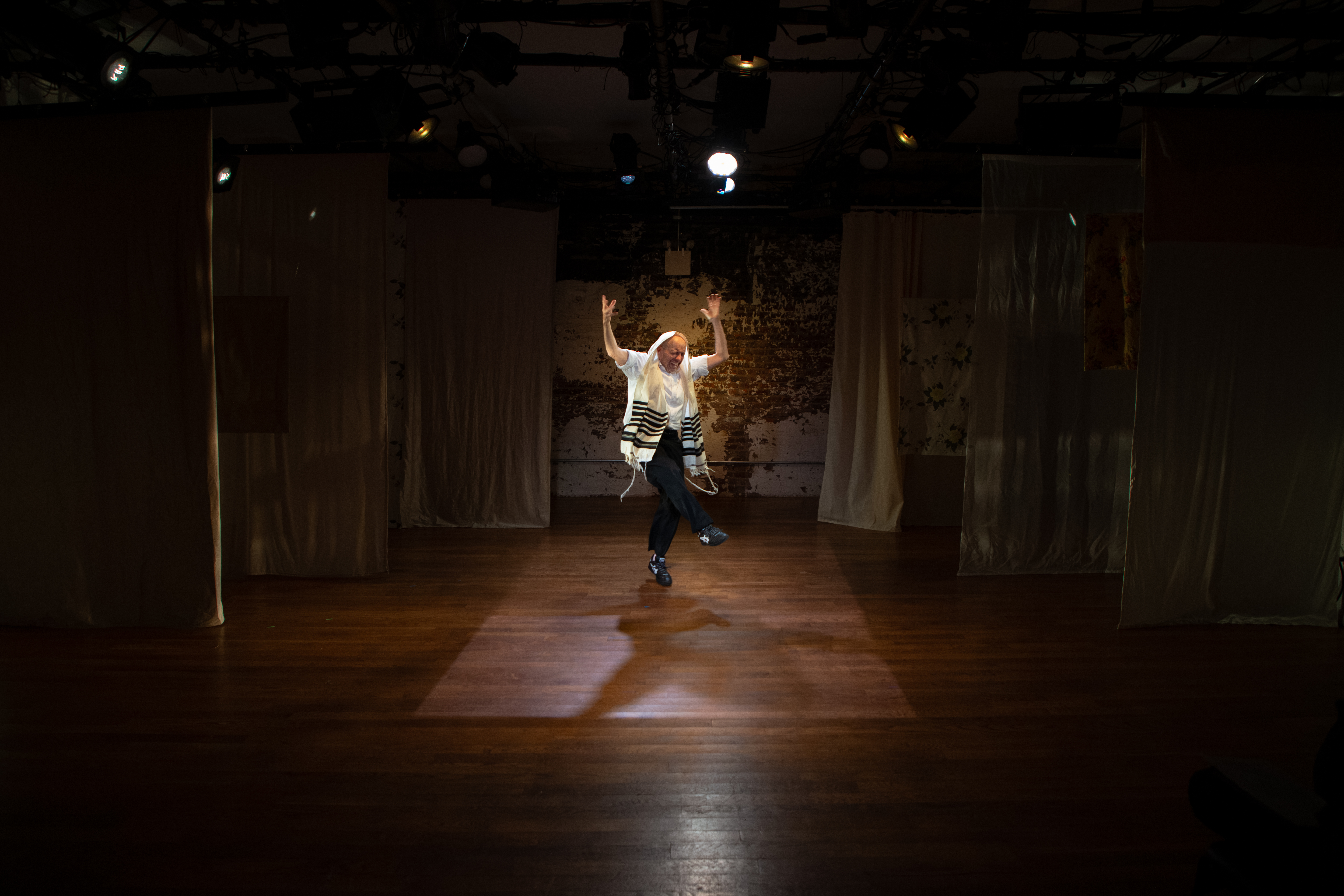
Yehuda Hyman in Dancing into Roses.: Photo: Basil Rodericks for FACE IT FOTO.
This is a story of protest in which Hyman transforms from simply being a lover of peaceful walks along Germany’s forest paths into an activist: “The Jew in the Pool.” Rebelling against the town's callous desecration, he offers a Butoh-like (he calls it Jew-toh) performance art event: a slow, meditative, but disruptive trance-dance in the pool's shallow water while wearing his yarmulke - his prayer shawl dancing in the breeze.
Much of this is explained to us through Hyman and his alter-egos, a historian who offers up a mini-lecture and slide show, and a non-Jewish, German couple, his good, convivial friends and drinking pals. At this point, we also get explanations for why the show is called Dancing into Roses.
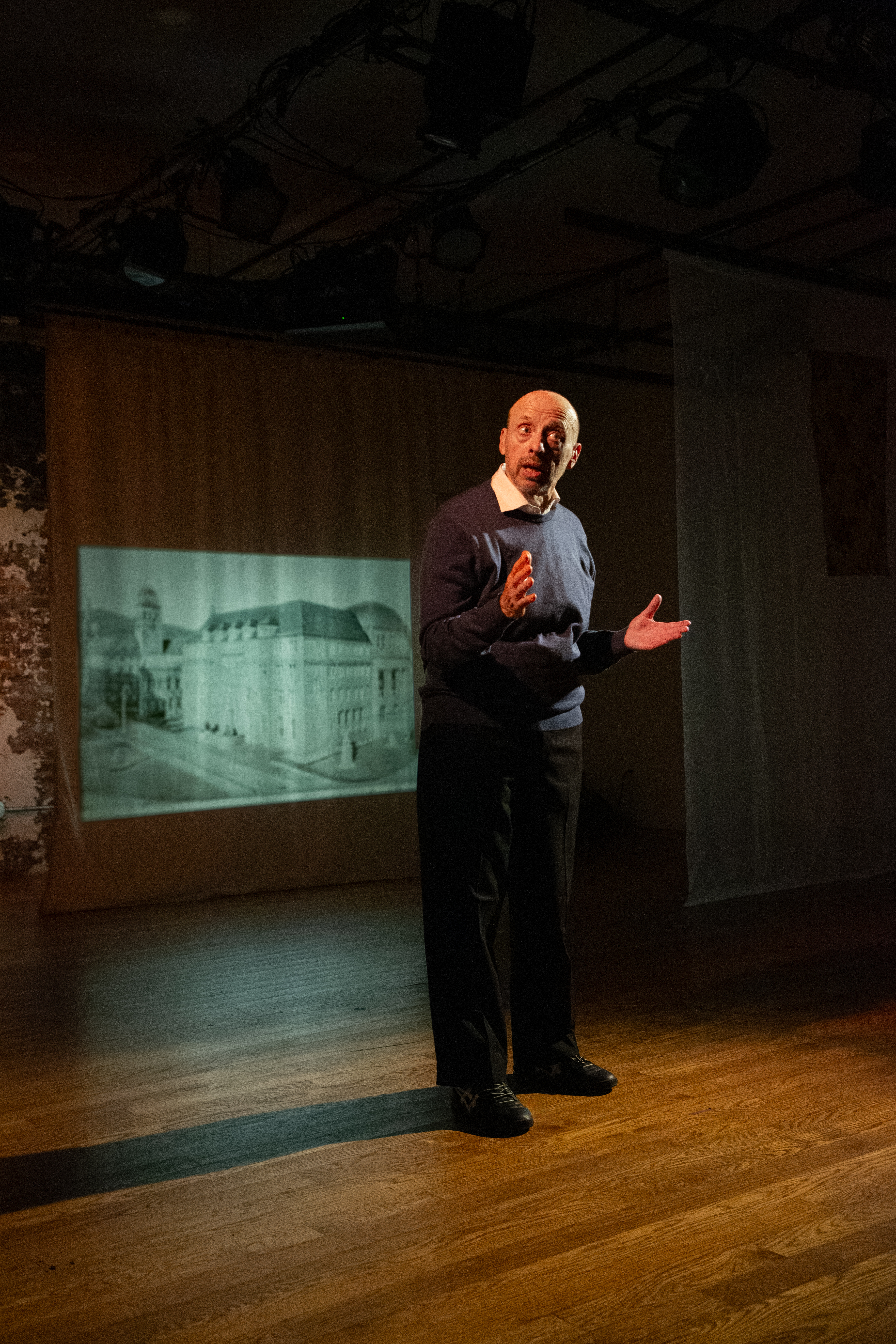
Yehuda Hyman in Dancing into Roses; Photo: Basil Rodericks for FACE IT FOTO.
Of course, we are on Hyman’s side in the protest, and follow him faithfully as he portrays each character in the narrative, yet in the dense forest of words and exposition I feel more as if I am in a seminar receiving instruction than at a play engaging with the humanity of the situation.
In between both the disco and protest tales, Hyman speaks of his father, a devoted man, a tailor, and a survivor of the Holocaust, who diligently transports his son to dance classes, then silently waits in the car until it's time to drive back home. Often, words are never spoken between the two.
Hyman explains that his father’s entire family was gunned down and dumped in a Polish quarry in 1942, and that this experience accounts for his father’s silence. Then, one day, tasked with dancing the part of a Hasid for a production at his school, Hyman shows his father the choreography he comes up with.
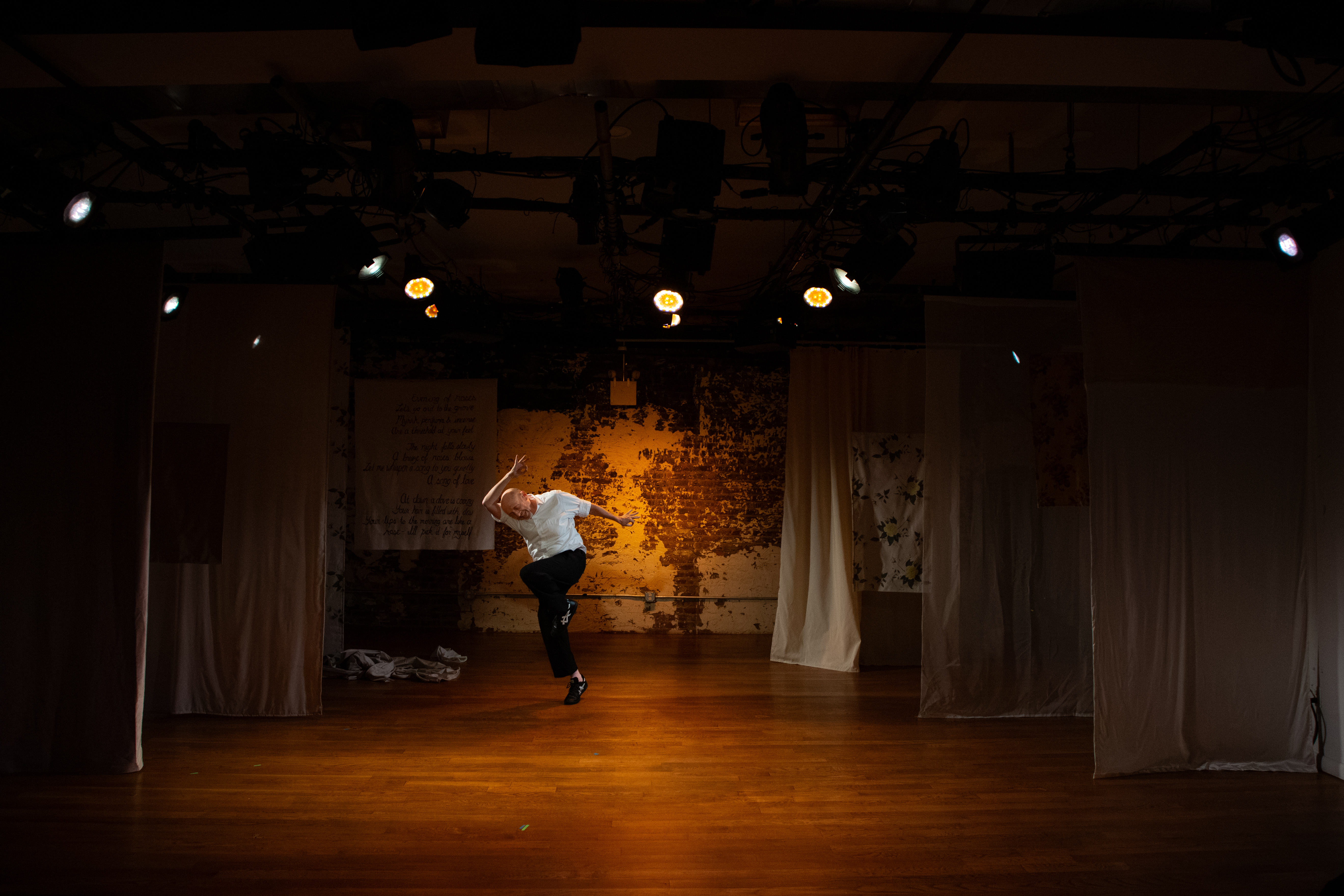
Most unexpectedly, his heretofore reticent father corrects the interpretation. The elder rises to show his son the proper manner of movement of the Hasidim. Cupping one hand behind his ear to listen and holding the other in front of his body in search of a place to go, he moves his feet carefully, one in front of the other, as if balancing on a tightrope. The father makes Hyman repeat the dance and doesn’t rest until his son does it perfectly.
This brief scene of intimate expression and connection through dance is one of the most poignant and memorable of the production. Often, the quieter, simpler interactions reveal what is most profound.