



Related Features
IMPRESSIONS: 2nd Best Dance Company Reimagines Sleeping Beauty in “Slumber” at Triskelion Arts
IMPRESSIONS: Triskelion Arts' Split Bill #47 Presents Ariana Speight and Cristina Moya-Palacios

IMPRESSIONS: (VACA) Valentina Baché’s “Dog God//Germ Angels” Presented by Triskelion Arts

By Rush Johnston
View Profile |
More From This Author
Published on April 7, 2026
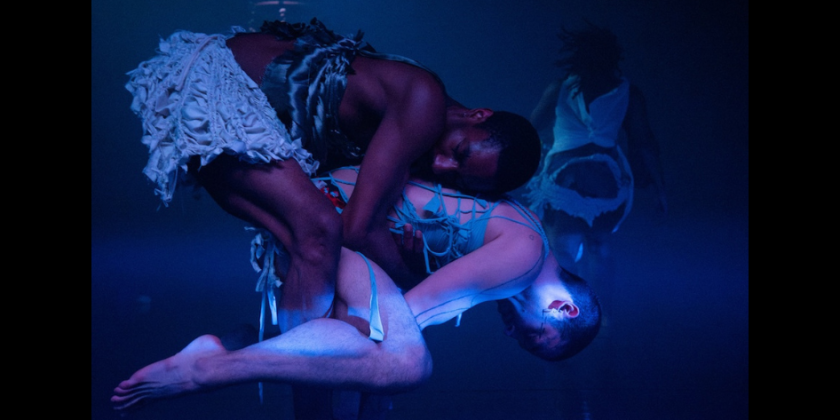
Valentina Baché's "Dog God//Germ Angels." Photo: Blue
Creator: Valentina Baché
Performers: Valentina Baché, Sarahlsoke Days, Kashia Kancey, Cristina Moya-Palacios, Jacob Thoman, and Channce Williams
Lighting Design: Connor Sale
Sound Score: Slic (Cami Dominguez), Sound score includes licensed songs: "Return" and "Breathing" by Chuquimamani Condori
March 12 - 14, 2026
We wait, in absolute darkness and stillness, with bated breath. The dark swallows Triskelion Arts' stage as a mystifying fog drifts over us. A brief rustling occurs. I can't tell if it's coming from the performance space or from the discomfort of the other audience members, as the ominous silence and darkness fill the space with tension. Crack. A loud noise comes from somewhere in front of us. Did something fall? Is everything okay? Crack. The same noise comes again from somewhere slightly left of the first one, followed by another. Crack. The lights ever so slowly build to reveal a web of bodies on the floor and a pair of shiny purple stilettos rising in the air. The shoes fly through the space, and we notice the splayed legs of a dancer in a shoulder stand. The shoes soar to a high peak, then slam onto the floor. Crack. Crack. Crack. I sense a storm coming. It will not be stopped.
Valentina Baché is a choreographer without inhibition. They take risks playing with violence and danger as they carry us on a journey through a hurricane. They hope this experience will jolt us into action. Bachés Dog God//Germ Angels situates itself in the midst of Wilma, a Category 5 hurricane that hit Mexico's Yucatán Peninsula in 2005. The piece introduces us to a subculture of magical realism inspired by Baché's Mexican heritage, as well as to a spiritual confabulation often invoked by such catastrophic events.
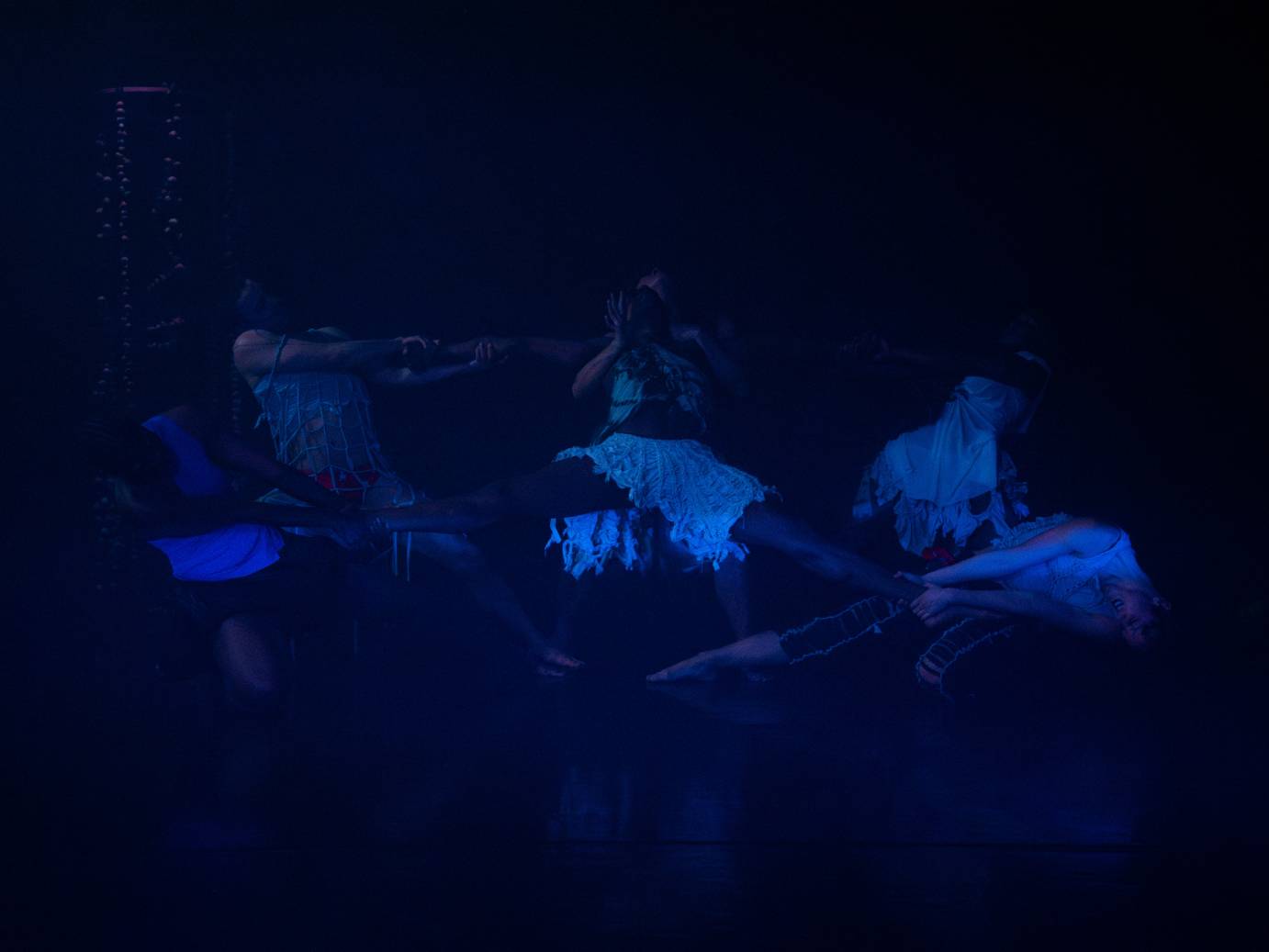
Dancers fill the stage, each enraptured in their own worlds. They speak, bark, cry, laugh, and beckon. "So you're just gonna let them kill me?" one pleads with us at the front of the stage, while others in the background disregard them. Another two lie, on top of each other, one's head at the other's feet. This image evokes humor and eroticism simultaneously as one performer uses the other's foot as a telephone while the other performer kisses their partner's bare feet. "Come sit, baby. You're doing so well," they ask of us. No one moves. "Come sit," they insist. "COME SIT!" Suddenly, the crowded stage empties and we are left alone to make sense of it all.
Baché doesn't give us answers; they generate portrayals using action, fear, and most powerfully, love, to raise questions. Dog God//Germ Angels explores the desperation and uncertainty of turmoil through the catharsis of rage, as though the work were a storm itself. Baché insists that deeper meaning can only be derived through unbridled chaos.
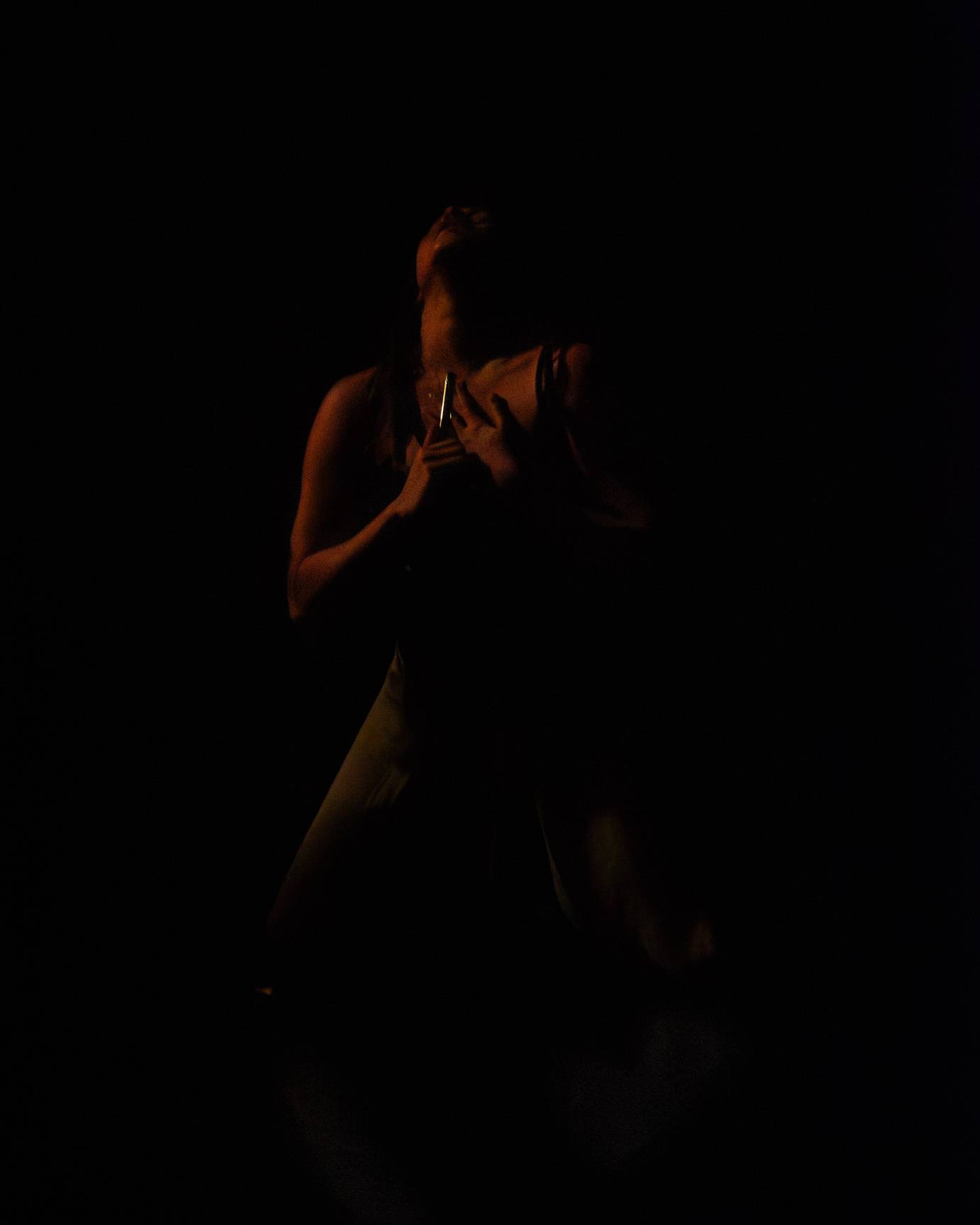
The virtuosic movers in this piece bring awareness to every movement, from displays of physical prowess to minute facial shifts and delicate tracings of their fingernails. But what makes their performances most resonant is their complete commitment to Baché's world. They each find extreme depths of rage, then shift into moments of tenderness and care for one another. They perform both submission and dominance, eroticism and prayer. Kashia Kancey and Cristina Moya-Palacios, the dancers in the foot duet, are particularly worth noting for their vulnerable, unapologetic characterizations. They demonstrate a great command of technical skill as well, from Kancey's sky-scraping pike jumps to Moya-Palacios's wild contortions.
Club music throbs through the speakers, and suddenly the web of bodies morphs into individuals dancing distinctly to the unifying beat. The stage becomes a nightclub. Dancers shimmy down their mini dresses, pulse against each other, and begin to stomp. They stomp and they march, as though they are a militia training for the end of the world. Unconventional weapons emerge - a leaf blower and a long stick, both tied with slings and held as guns. Dancers, still stomping, begin to lose one shoe, then eventually the other. They are still stomping. Individuals leave the group, soloing towards the front of the stage or splitting off into intimate, writhing pairs. They begin to bark.
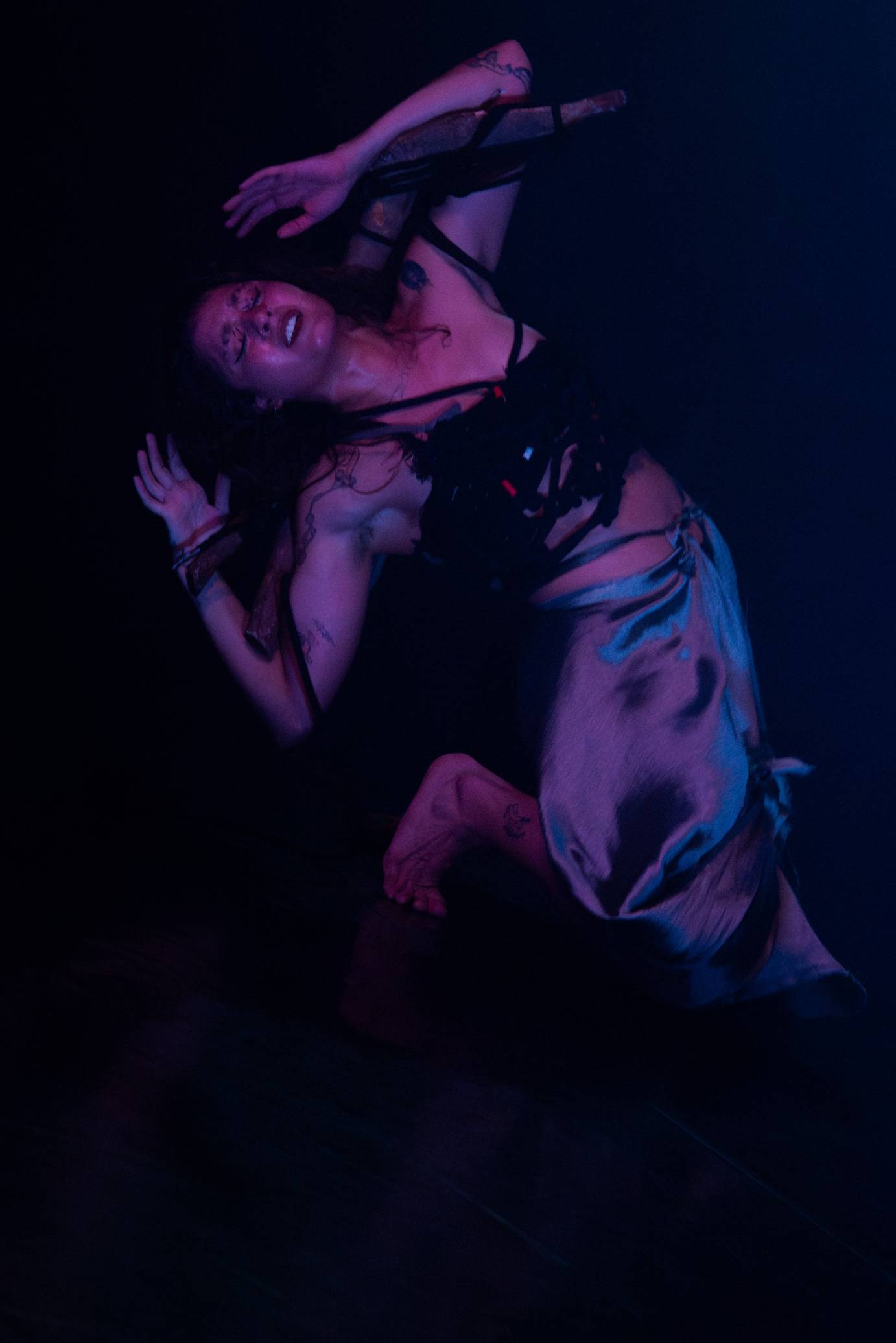
Though this work references a specific time and place, it also transcends time, the rage and catharsis we feel resonating with the social and political warfare occurring in the world today. A storm is coming, beautiful and merciless, and I feel moved to act.
Below is a written excerpt from the program that so poignantly encapsulates the feelings the show left me with:

![IMPRESSIONS: [RE]DEFINING [SPACE] at Triskelion Arts](/images/features_large/3_Trisk_day_3_selects_by_caroline_alarcon_loor_064.png)